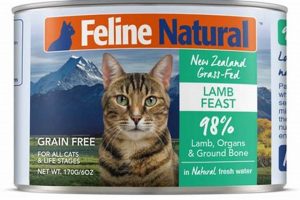
The duration that opened, uneaten canned dog food can safely remain at room temperature before posing a potential health risk to the animal is a critical consideration for pet owners. The primary concern revolves around bacterial growth and spoilage. Once the airtight seal of a canned product is broken, it becomes susceptible to contamination from airborne microorganisms, leading to the degradation of food quality and potential development of harmful toxins. Environmental factors such as ambient temperature and humidity significantly influence the rate of spoilage.
Preventing foodborne illnesses in pets is paramount. Exposure to spoiled food can result in gastrointestinal distress, characterized by symptoms like vomiting, diarrhea, and lethargy. In severe cases, it can lead to more serious health complications. Understanding the appropriate storage and handling procedures for opened canned dog food minimizes the risk of such adverse reactions and ensures the animal’s well-being. Furthermore, proper food handling contributes to efficient resource management by reducing food waste.
Therefore, it is vital to understand the recommended timeframes for leaving opened canned dog food at room temperature, proper storage techniques, and indicators of spoilage. This knowledge is essential to protecting canine health and avoiding unnecessary veterinary expenses related to foodborne illnesses.
Maintaining Food Safety
Proper handling of opened canned dog food is crucial to prevent bacterial contamination and ensure canine health. Adhering to the following guidelines minimizes the risk of food spoilage and potential illness.
Tip 1: Refrigerate Promptly: Immediately refrigerate any unused portion of opened canned dog food. Transfer the contents to an airtight container for optimal preservation.
Tip 2: Time at Room Temperature: Limit the time opened canned food remains at room temperature to a maximum of two hours. In warmer environments (above 90F or 32C), reduce this limit to one hour due to accelerated bacterial growth.
Tip 3: Visual Inspection: Before each feeding, visually inspect the food for any signs of spoilage, such as changes in color, texture, or odor. Discard the food if any abnormalities are detected.
Tip 4: Smell Test: In addition to visual inspection, perform a smell test. A foul or unusual odor is a strong indicator of spoilage and warrants immediate disposal.
Tip 5: Proper Storage Containers: Utilize airtight, food-grade containers for storing refrigerated canned dog food. Avoid using containers that may leach harmful chemicals into the food.
Tip 6: Discard After Maximum Storage: Even when refrigerated properly, discard opened canned dog food after a maximum of three days. Beyond this point, the risk of bacterial contamination increases significantly.
Tip 7: Avoid Double Dipping: Use a clean utensil to remove food from the can to prevent introducing bacteria from the dog’s saliva back into the remaining food.
By diligently following these guidelines, pet owners can effectively minimize the risk of foodborne illnesses in their dogs and maintain the quality and safety of opened canned dog food.
Adhering to these preventative measures supports optimal canine health and well-being. The next section will address factors that can affect spoilage rates.
1. Temperature

Temperature exerts a profound influence on the rate of bacterial proliferation within opened canned dog food. Elevated temperatures create an environment conducive to rapid microbial growth, directly impacting the permissible duration the food can safely remain unrefrigerated. The causal relationship between temperature and bacterial activity is well-established: as temperature increases, the metabolic activity of bacteria accelerates, leading to a faster rate of reproduction and toxin production.
The importance of temperature control as a component of food safety cannot be overstated. For example, leaving opened canned dog food at room temperature (approximately 70F or 21C) for more than two hours significantly increases the risk of bacterial contamination. In hotter climates, where temperatures exceed 90F (32C), this time frame is reduced to a single hour. A practical application of this understanding is the implementation of strict refrigeration protocols for all opened canned pet food, ensuring storage temperatures remain below 40F (4C) to inhibit bacterial growth effectively.
In summary, temperature serves as a primary determinant of the safety of opened canned dog food. Maintaining low storage temperatures is crucial for mitigating bacterial proliferation and preventing potential foodborne illnesses in canines. Challenges arise in environments where temperature control is difficult, emphasizing the need for meticulous monitoring and adherence to shortened time limits for consumption. These considerations highlight the critical role of temperature management in ensuring the ongoing health and well-being of pets.
2. Humidity
Ambient humidity levels significantly influence the rate at which opened canned dog food spoils. Increased moisture in the air provides a more favorable environment for microbial growth, thereby shortening the duration the food remains safe for consumption.
- Increased Microbial Activity
Higher humidity facilitates increased water activity within the food, creating an ideal breeding ground for bacteria, mold, and yeast. These microorganisms thrive in moist environments, accelerating the decomposition process and leading to quicker spoilage. For example, if canned food is left out in a humid kitchen, bacterial growth will be significantly faster than in a dry, air-conditioned room.
- Accelerated Spoilage
The accelerated microbial activity directly contributes to faster spoilage rates. Fungi, for instance, require a certain level of moisture to propagate. With elevated humidity, the likelihood of mold forming on the food increases substantially, rendering it unsafe for consumption. This explains why food left out during humid summer months spoils much quicker.
- Altered Food Composition
High humidity can also cause alterations in the food’s composition, further promoting spoilage. Moisture absorption can lead to changes in texture, creating a more appealing environment for bacteria. These changes can compromise the nutritional value and palatability of the food, discouraging consumption even before visible signs of spoilage are apparent.
- Compromised Preservation Methods
Even with proper refrigeration, high humidity can compromise the effectiveness of storage efforts. Condensation can form inside storage containers, increasing the moisture content of the food. This excess moisture can promote microbial growth even in refrigerated environments, reducing the overall shelf life of the opened canned dog food. Sealing food tightly is essential.
These facets underscore the importance of considering ambient humidity when assessing the safety of opened canned dog food. High humidity environments necessitate more vigilant monitoring, shorter allowable room-temperature exposure times, and meticulous attention to storage methods to mitigate the risk of spoilage and potential health hazards to canines.
3. Air Exposure

Air exposure is a primary factor in determining the safe duration for opened canned dog food to remain consumable. The introduction of air initiates oxidative processes and facilitates the entry of airborne microorganisms, both of which contribute to spoilage.
- Oxidation
Exposure to air causes oxidation of fats and other compounds within the dog food. This process leads to rancidity and alters the food’s palatability and nutritional value. Oxidized fats can become harmful to the animal, necessitating prompt disposal of the exposed food. The rate of oxidation increases with prolonged air exposure.
- Microbial Contamination
Air carries a multitude of microorganisms, including bacteria, mold spores, and yeasts. Once the airtight seal of the can is broken, these microorganisms can colonize the food, leading to spoilage and potential health risks. The longer the food is exposed, the greater the microbial load and the higher the likelihood of illness.
- Moisture Loss
Air exposure causes moisture evaporation from the dog food. This dehydration can alter the food’s texture, making it less palatable to the animal. Furthermore, the drier surface becomes more susceptible to microbial colonization. The extent of moisture loss is directly proportional to the duration of air exposure and the ambient humidity.
- Odor Absorption
Dog food exposed to air can absorb odors from the surrounding environment. This can affect the food’s smell and taste, making it unappealing to the dog. The absorption of undesirable odors can lead to decreased consumption or complete rejection of the food, resulting in nutritional deficiencies.
Given these factors, minimizing air exposure is crucial for preserving the quality and safety of opened canned dog food. Proper storage in airtight containers and prompt refrigeration are essential steps in mitigating the adverse effects of air exposure and extending the consumable lifespan of the product.
4. Bacterial Load

The initial bacterial load in opened canned dog food directly impacts the duration it remains safe for canine consumption. The term “bacterial load” refers to the quantity of viable bacteria present in the food at a given time. A higher initial bacterial load exponentially reduces the time before the food reaches an unsafe level of contamination.
- Initial Contamination
The manufacturing process, even with stringent hygiene protocols, may introduce a baseline level of bacteria into canned dog food. This initial contamination, although typically low, serves as a starting point for subsequent proliferation. A can with a higher initial bacterial count will spoil more rapidly once opened and exposed to room temperature. Testing standards exist to minimize but not eliminate all bacteria from the canning process.
- Proliferation Rate
The rate at which bacteria multiply within the food is directly influenced by the initial bacterial load. A larger initial population allows for more rapid exponential growth under favorable conditions, such as warmth and humidity. For example, if one can of dog food has ten bacteria cells and another has one hundred, the latter will reach unsafe contamination levels much faster if left at room temperature.
- Toxin Production
Many bacterial species produce toxins as a byproduct of their metabolism. The amount of toxin generated is proportional to the bacterial population. A higher initial bacterial load, leading to faster proliferation, results in a more rapid accumulation of toxins within the dog food. These toxins can cause gastrointestinal distress or more severe health problems in canines, necessitating immediate disposal of the contaminated food.
- Visual Spoilage Indicators
Visual indicators of spoilage, such as changes in color, texture, or odor, are often late-stage manifestations of significant bacterial growth. A higher initial bacterial load accelerates the development of these visual cues, shortening the window of time before the food becomes obviously unsafe. Relying solely on visual inspection may not prevent the consumption of food with a moderately elevated bacterial count that has not yet produced noticeable spoilage signs.
In summary, the initial bacterial load is a critical determinant of the consumable lifespan of opened canned dog food. Minimizing the initial contamination through stringent manufacturing processes and employing proper storage techniques to inhibit bacterial growth are essential steps in safeguarding canine health. The interplay between initial bacterial load, environmental conditions, and time dictates the safety of the product, emphasizing the need for diligent monitoring and adherence to recommended storage guidelines.
5. Food Composition

The intrinsic composition of canned dog food significantly influences its susceptibility to spoilage and, consequently, the duration it can safely remain unrefrigerated. The nutrient profile, moisture content, and presence of preservatives all contribute to the overall stability and resistance to microbial growth.
- Moisture Content
High moisture content provides an ideal environment for bacterial proliferation. Canned dog foods typically exhibit elevated moisture levels compared to dry kibble, creating a more conducive medium for microbial growth. This increased water activity accelerates spoilage, reducing the time the food can safely sit out. Pathogens thrive in moist conditions, quickly degrading the food’s quality and safety.
- Protein and Carbohydrate Levels
Protein and carbohydrates serve as nutrients for microorganisms, promoting their growth and multiplication. Dog foods rich in these macronutrients offer a readily available food source for bacteria and fungi. Consequently, these formulations are more prone to rapid spoilage when exposed to ambient temperatures. The microbial breakdown of these components results in undesirable odors and textures, rendering the food unpalatable and potentially harmful.
- Fat Content
The presence of fats, particularly unsaturated fats, can accelerate spoilage through oxidation. Exposure to air causes these fats to become rancid, leading to off-flavors and odors. Rancidity not only decreases palatability but can also produce harmful compounds. Foods with higher fat contents are more susceptible to oxidative spoilage, further limiting the duration they can safely sit out.
- Preservatives
The inclusion of preservatives, such as antioxidants and antimicrobial agents, plays a crucial role in inhibiting microbial growth and retarding spoilage. However, the effectiveness of these preservatives is limited, and their protective effect diminishes over time once the can is opened. Foods lacking preservatives or containing them in insufficient quantities will spoil more rapidly, highlighting the importance of preservative type and concentration in determining shelf life after opening.
Therefore, the inherent properties of canned dog food, particularly its moisture content, nutrient profile, and preservative levels, exert a significant influence on its spoilage rate. Understanding these factors is essential for pet owners to make informed decisions regarding storage and handling, ultimately safeguarding the health and well-being of their canine companions. The composition of the food acts as a primary determinant of its vulnerability to microbial degradation and oxidation, directly impacting the permissible time it can safely remain unrefrigerated.
6. Initial Quality
The initial quality of canned dog food serves as a foundational determinant of its subsequent spoilage rate and, consequently, the duration it can safely remain at room temperature following opening. Initial quality encompasses factors such as ingredient integrity, manufacturing practices, and packaging effectiveness. Compromises in any of these areas can accelerate degradation and reduce the permissible time frame for safe consumption.
For instance, if the raw ingredients used in the manufacturing process are of substandard quality or have already undergone some degree of spoilage, the resulting canned product will inherently possess a higher microbial load and a greater susceptibility to further deterioration. Similarly, inadequate sterilization during the canning process can leave residual bacteria within the product, leading to more rapid spoilage once the can is opened. A real-world example involves instances where dog food recalls were issued due to contamination issues arising from compromised initial quality standards. In these cases, the affected products exhibited shortened safe-to-consume durations, even under optimal storage conditions, underscoring the direct impact of initial quality on spoilage rates.
In conclusion, the initial quality of canned dog food is paramount in determining its post-opening stability. Adherence to stringent quality control measures throughout the manufacturing process, from ingredient selection to sterilization and packaging, is essential for maximizing the safe duration that opened canned food can remain at room temperature. Pet owners should prioritize purchasing products from reputable manufacturers with a proven track record of maintaining high initial quality standards to mitigate the risk of premature spoilage and potential health hazards to their canine companions.
7. Storage Method

The method of storage employed for opened canned dog food directly dictates its spoilage rate and, consequently, the duration it can remain safely edible. Proper storage techniques mitigate bacterial growth and oxidation, extending the consumable lifespan. Conversely, inadequate storage accelerates spoilage, increasing the risk of foodborne illness in canines. The relationship between storage method and food safety is causal and significant.
Refrigeration is the most effective means of preserving opened canned dog food. Lower temperatures significantly inhibit bacterial proliferation, slowing the rate of spoilage. Transferring the contents to an airtight container further enhances preservation by preventing air exposure and moisture absorption. For example, dog food stored in a sealed container in the refrigerator can remain safe for up to three days, while the same food left at room temperature spoils within hours. Neglecting proper refrigeration can lead to rapid bacterial growth, producing toxins that are harmful to pets. Real-world instances of foodborne illnesses in dogs often trace back to improper storage and consumption of spoiled food.
In summary, the storage method is a crucial component in determining the safety and longevity of opened canned dog food. Refrigeration in an airtight container is essential for minimizing bacterial growth and oxidation. The challenges lie in ensuring consistent adherence to these storage practices, particularly in environments where refrigeration is not readily available. Ultimately, understanding and implementing appropriate storage methods are fundamental steps in safeguarding canine health and preventing foodborne illnesses.
Frequently Asked Questions
The following questions address common concerns regarding the duration opened canned dog food can safely remain at room temperature and related storage practices. These answers are intended to provide clear guidance for pet owners.
Question 1: What is the maximum time opened canned dog food can sit out safely at room temperature?
The general recommendation is a maximum of two hours. However, this duration is contingent on environmental factors, specifically temperature and humidity. In warmer conditions, this time frame reduces to one hour.
Question 2: How does temperature affect the safe time limit for opened canned dog food?
Elevated temperatures accelerate bacterial growth. If the ambient temperature exceeds 90F (32C), the opened can should not remain at room temperature for longer than one hour to minimize the risk of bacterial contamination.
Question 3: What are the signs that opened canned dog food has spoiled?
Indications of spoilage include changes in color, texture, or odor. A sour or rancid smell is a definitive sign the food is no longer safe. Visible mold growth is also a clear indication the food has spoiled.
Question 4: Can refrigerating opened canned dog food extend its safe consumption period?
Yes, refrigeration significantly inhibits bacterial growth. However, even when refrigerated, opened canned dog food should be discarded after three days to ensure canine health.
Question 5: Is it safe to leave canned dog food out overnight if the dog did not finish it?
No. Leaving canned dog food out overnight is not safe. The extended period at room temperature allows for substantial bacterial proliferation, rendering the food unsafe for consumption. It should be discarded.
Question 6: Does the type of canned dog food affect how long it can sit out safely?
Yes, the composition of the food plays a role. Foods with higher moisture or protein content provide a more conducive environment for bacterial growth. Consequently, these formulations may spoil more rapidly than others.
In summary, adherence to proper storage practices and awareness of environmental factors are crucial for ensuring the safety of opened canned dog food. Prompt refrigeration and vigilant monitoring for signs of spoilage are essential steps in safeguarding canine health.
The next section will address the consequences of feeding spoiled food to a dog.
Conclusion
The duration “how long can canned dog food sit out” before it poses a health risk to canines is a critical consideration for responsible pet ownership. This exploration has underscored the interplay of environmental factors, food composition, and storage practices in determining the rate of spoilage. Adhering to the recommended two-hour limit at room temperature, or one hour in warmer climates, is paramount. Furthermore, prompt refrigeration and diligent monitoring for signs of spoilage are essential in preventing foodborne illnesses.
Prioritizing canine health through informed food handling practices is not merely a matter of convenience; it is a fundamental responsibility. Neglecting these guidelines can lead to adverse health outcomes for pets, ranging from gastrointestinal distress to more severe complications. Continuous vigilance and adherence to established food safety protocols are imperative to ensure the well-being of canine companions. Pet owners are urged to implement these recommendations consistently, reinforcing a proactive approach to canine health management.
![[FAQ] Can I Feed Goldfish Betta Food? Risks & Tips | World’s Most Delicious Foods: Must-Try Dishes from Every Country](https://lisasfoods.com/wp-content/uploads/2026/05/th-278-300x200.jpg "[FAQ] Can I Feed Goldfish Betta Food? Risks & Tips World’s Most Delicious Foods: Must-Try Dishes from Every Country")