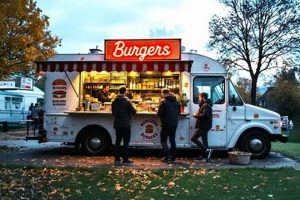
A commercially licensed facility is a necessity for many mobile food vendors. These shared-use spaces offer the resources and infrastructure required for food preparation, storage, and cleaning, often including specialized equipment that would be cost-prohibitive for individual food truck operators to acquire. As an example, a food truck specializing in barbecue might utilize a facilitys large smoker, commercial-grade refrigerator, and industrial dishwashing system.
The availability of such a facility is vital for ensuring compliance with local health codes and regulations. Adherence to sanitation standards minimizes the risk of foodborne illnesses and protects public health. Beyond regulatory requirements, these spaces provide an environment that supports efficient food production and inventory management. Historically, these kitchens arose to address the needs of small food businesses lacking the capital to establish independent brick-and-mortar locations.
The subsequent sections will delve into the selection criteria for choosing such a facility, the operational aspects involved, and the strategies for optimizing its use to maximize efficiency and profitability for a mobile food vending business.
Tips for Optimizing Facility Utilization
Efficient operation within a shared kitchen environment is crucial for the success of any mobile food business. The following tips aim to enhance productivity and minimize operational challenges when utilizing a commercially licensed facility.
Tip 1: Strategic Scheduling: Implement a detailed scheduling system to reserve facility time, ensuring access to necessary equipment and avoiding conflicts with other users. This proactive approach prevents delays and maximizes workflow efficiency.
Tip 2: Comprehensive Inventory Management: Maintain a precise inventory of all ingredients and supplies stored within the facility. This includes regular stocktaking and accurate tracking of usage to minimize waste and ensure timely replenishment. Implement first-in, first-out (FIFO) practices to further optimize inventory control.
Tip 3: Standardized Recipe Documentation: Develop and consistently adhere to standardized recipes. Precise measurements and documented preparation procedures contribute to consistent product quality and streamline production processes within the facility.
Tip 4: Thorough Cleaning Protocols: Establish and diligently follow cleaning schedules and procedures to maintain a sanitary environment. Compliance with these protocols is not only a regulatory requirement but also essential for preventing cross-contamination and ensuring food safety. Document cleaning activities to demonstrate due diligence.
Tip 5: Equipment Familiarization and Maintenance: Prior to utilizing any equipment, thoroughly familiarize oneself with its operation and safety guidelines. Report any malfunctions or maintenance needs promptly to the facility management to ensure equipment availability and prevent disruptions to production schedules.
Tip 6: Efficient Workspace Organization: Optimize the layout of the workspace to facilitate a smooth and logical workflow. Arrange frequently used ingredients and equipment within easy reach to minimize movement and maximize efficiency during food preparation. Utilize designated storage areas for different categories of supplies.
Adopting these strategies enables mobile food vendors to maximize the benefits of shared-use kitchen facilities, ensuring efficient operations, consistent product quality, and adherence to food safety regulations. Effective utilization directly impacts profitability and contributes to the long-term sustainability of the business.
The final section will provide guidance on selecting a suitable facility, considering factors such as location, amenities, and cost.
1. Licensing requirements

The operation of a mobile food vending unit is contingent upon securing the appropriate licenses and permits. These requirements extend beyond the vehicle itself and encompass the facility where food preparation and storage occur. Regulatory agencies mandate that food trucks utilize a commercially licensed establishment to ensure adherence to food safety standards. Consequently, a “commissary kitchen for food truck” must possess all necessary health permits and business licenses relevant to food handling and storage within the jurisdiction it operates. This establishes a direct causal relationship: the ability to legally operate a food truck is dependent upon the licensed status of its supporting commissary kitchen. Failure to comply can result in fines, suspension of operations, or permanent revocation of permits.
The specifics of licensing vary by locality, encompassing requirements such as food handler certifications for kitchen staff, documented pest control measures, and regular inspections by health officials. For instance, a food truck operating in Los Angeles County must verify that its chosen commissary kitchen holds a valid Los Angeles County Health Department permit, along with proof of water and waste disposal agreements. The importance of “Licensing requirements” to the operation of “commissary kitchen for food truck” is not merely compliance-driven; it also impacts the food truck’s brand reputation. A food truck associated with a reputable and meticulously maintained commissary kitchen is better positioned to instill customer confidence and secure repeat business.
Therefore, understanding the licensing obligations associated with “commissary kitchen for food truck” is of paramount practical significance. Food truck operators must meticulously verify that their chosen facility possesses all required permits and maintains a consistent record of compliance. Challenges often arise when navigating the complexities of inter-jurisdictional regulations or when dealing with facilities that fail to uphold stringent sanitation standards. Selecting a compliant and well-maintained commissary kitchen is not merely a logistical consideration, it is a fundamental prerequisite for the legal and sustainable operation of a food truck business.
2. Equipment availability

The functionality of a “commissary kitchen for food truck” is inextricably linked to the equipment it provides. The availability of specialized culinary equipment directly dictates the menu options and operational efficiency achievable by a mobile food vendor. For instance, a food truck specializing in wood-fired pizzas requires access to a high-temperature pizza oven within the commissary. Without this crucial piece of equipment, the food truck cannot produce its signature product, rendering the commissary functionally inadequate. A deficiency in appropriate equipment directly impacts the economic viability and service offering of the mobile unit. This causal relationship underscores the importance of carefully assessing the equipment inventory of a potential commissary kitchen.
Furthermore, the condition and maintenance of the available equipment are critical considerations. A poorly maintained or malfunctioning appliance can cause significant delays, increase operational costs, and compromise food safety. Consider a scenario where a walk-in refrigerator malfunctions, jeopardizing temperature-sensitive ingredients and potentially leading to spoilage. This highlights the importance of regularly inspecting equipment and ensuring prompt repairs. The operational agreement between the food truck and the commissary must clearly define responsibilities for equipment maintenance and repair to avoid disputes and ensure continuous operation. Practical application includes conducting thorough site visits, requesting equipment maintenance logs, and speaking with current users to gauge the reliability of the facility’s equipment.
In summary, “Equipment availability” constitutes a foundational element of any effective “commissary kitchen for food truck”. It transcends mere convenience, directly impacting menu capabilities, operational efficiency, and ultimately, the profitability of the mobile food business. Challenges often stem from outdated equipment, inadequate maintenance schedules, or a mismatch between the commissary’s equipment and the food truck’s culinary needs. Thorough due diligence in assessing equipment is, therefore, essential to mitigating operational risks and ensuring a sustainable business model.
3. Storage capacity

Adequate storage is a foundational element for any “commissary kitchen for food truck” operation. Efficient management of inventory and supplies directly impacts food safety, operational efficiency, and ultimately, profitability. Insufficient or poorly managed storage can lead to spoilage, wasted resources, and compromised compliance with health regulations.
- Refrigerated Storage:
Refrigerated storage is critical for maintaining perishable ingredients at safe temperatures. The capacity must align with the food truck’s menu and projected sales volume. Overcrowding refrigerators hinders proper air circulation, leading to inconsistent temperatures and increased spoilage risk. Adequate shelving and temperature monitoring systems are essential. For example, a food truck serving seafood requires substantial refrigerated space to store fresh fish, shrimp, and other delicate items, adhering to strict temperature guidelines to prevent bacterial growth. Without this capacity, the menu offerings would be severely limited.
- Dry Storage:
Dry storage accommodates non-perishable items such as flour, sugar, spices, and canned goods. The space should be clean, dry, and pest-controlled to prevent contamination and spoilage. Shelving should be organized to facilitate easy inventory management and prevent expired items from being used. A food truck specializing in baked goods will require considerable dry storage for various flours, sugars, and baking ingredients. Inadequate space would necessitate frequent resupply trips, increasing operational costs and potentially disrupting service.
- Freezer Storage:
Freezer storage is necessary for preserving frozen ingredients, pre-made dishes, and ice. Capacity should be sufficient to meet anticipated demand, while maintaining proper temperature control to prevent freezer burn and spoilage. Regularly defrosting freezers and implementing a FIFO (First-In, First-Out) system are crucial practices. A food truck selling ice cream or frozen desserts relies heavily on freezer storage to maintain product quality and ensure sufficient supply during peak demand. Limited freezer capacity would restrict menu options and potential sales.
- Dedicated Equipment Storage:
Beyond food items, a functional “commissary kitchen for food truck” must offer dedicated space for storing food truck equipment, such as spare parts, cleaning supplies, and tools. This area must be separate from food storage to prevent contamination and maintain hygiene standards. Proper organization and labeling are vital for efficient access to needed items. A lack of dedicated equipment storage could lead to disorganization, safety hazards, and potential damage to equipment, increasing maintenance costs and disrupting operations.
The interplay between these storage facets and the overall functionality of a “commissary kitchen for food truck” is undeniable. A well-designed and adequately sized storage system contributes to food safety, operational efficiency, and cost control. Choosing a commissary with insufficient storage capacity will create logistical challenges, potentially limiting menu options, increasing waste, and jeopardizing regulatory compliance. Conversely, a thoughtfully planned and properly maintained storage system enhances the food truck’s ability to operate efficiently and profitably.
4. Location accessibility

The logistical efficiency of a “commissary kitchen for food truck” is directly determined by its accessibility. The physical proximity of the commissary to the food truck’s primary operating locations significantly impacts transportation costs, food freshness, and overall operational timelines. A commissary situated far from the food truck’s designated areas results in increased fuel consumption, longer transit times, and a greater risk of ingredient spoilage, particularly for temperature-sensitive items. This necessitates more frequent restocking trips, adding to both time and financial burdens. Conversely, a conveniently located commissary streamlines operations, allowing for quicker restocking, reduced transportation expenses, and enhanced food safety. The location’s impact is causal; an inaccessible commissary directly reduces the operational effectiveness of the food truck.
Real-world examples underscore this relationship. Consider a food truck operating in downtown Austin, Texas. If its designated commissary is located 30 miles outside the city, the food truck incurs significant costs in time and fuel each day to restock and dispose of waste. This translates to reduced operating hours, increased overhead, and potentially compromised food quality due to prolonged transport. In contrast, a food truck with a commissary located within a few miles of its downtown route benefits from rapid restocking, minimizing downtime and maximizing service hours. Furthermore, ease of access facilitates more frequent cleaning and maintenance, contributing to enhanced hygiene and regulatory compliance. The practicality of this understanding extends to initial site selection; food truck operators must prioritize location accessibility as a key criterion when evaluating potential commissary kitchens.
In conclusion, location accessibility is not merely a matter of convenience, but rather a critical component in optimizing the operational efficiency and profitability of a “commissary kitchen for food truck”. The challenges associated with an inaccessible location, such as increased transportation costs and potential food spoilage, directly impact the viability of the mobile food business. By prioritizing accessibility during commissary selection, food truck operators can mitigate these risks and establish a more sustainable and profitable enterprise. The understanding of this relationship is fundamental to the successful integration of the commissary into the food truck’s overall business strategy.
5. Cost considerations

The financial implications of utilizing a “commissary kitchen for food truck” are paramount, directly influencing a food truck’s profitability and long-term sustainability. Analyzing cost structures associated with these facilities is crucial for informed decision-making.
- Rental Fees
Commissary kitchens typically charge rental fees based on hourly, daily, or monthly usage. The fee structure often depends on the size of the space required, the equipment utilized, and the services provided. For example, a food truck requiring extensive prep space and specialized equipment, such as a commercial smoker, can expect to pay higher rental fees than a truck with minimal needs. These fees are a fixed cost that must be factored into pricing strategies.
- Equipment Usage Charges
Beyond rental fees, some facilities impose additional charges for the use of specific equipment. Ovens, mixers, and specialized appliances may incur per-use fees, particularly if they are high-demand items. Understanding these charges is crucial for accurately estimating production costs. A food truck specializing in baked goods should carefully assess the costs associated with using the facility’s commercial ovens and mixers to determine the profitability of its menu items.
- Storage Fees
The availability and cost of storage space are significant considerations. Refrigerated, frozen, and dry storage may incur separate fees based on volume and duration. Inefficient inventory management can lead to increased storage costs and potential waste. A food truck operating with a diverse menu requiring various refrigerated ingredients needs to carefully consider the cost of refrigerated storage when evaluating different commissary options.
- Waste Disposal Fees
Proper waste disposal is a regulatory requirement and a cost factor. Commissaries often charge for waste removal services, including grease disposal and recycling. Food trucks generating significant waste volumes, such as those serving fried foods, should factor in these disposal fees to accurately assess operational expenses.
These cost components collectively determine the financial viability of utilizing a “commissary kitchen for food truck”. Careful evaluation of rental fees, equipment usage charges, storage fees, and waste disposal expenses is essential for developing a sound business plan and ensuring profitability. Failure to accurately account for these costs can lead to underpricing, reduced profit margins, and ultimately, financial instability.
6. Sanitation standards

Stringent adherence to sanitation standards is paramount within any “commissary kitchen for food truck” operation. These standards are not merely guidelines; they represent legally mandated requirements designed to protect public health and ensure food safety. Consistent compliance with these standards is non-negotiable for the sustained operation of both the commissary and the food truck it supports.
- Personal Hygiene Practices
Proper personal hygiene among all personnel within a food handling environment is a cornerstone of sanitation. This includes frequent and thorough handwashing with soap and water, especially after handling raw foods, using the restroom, or touching potentially contaminated surfaces. Additionally, the use of appropriate hair restraints, clean clothing, and the prohibition of jewelry are essential to prevent contamination of food products. For instance, a cook failing to wash their hands after handling raw chicken can directly introduce harmful bacteria, such as Salmonella, into the prepared food, leading to widespread illness among consumers.
- Surface Sanitation and Disinfection
Maintaining clean and disinfected surfaces within the commissary is crucial for preventing cross-contamination. Food contact surfaces, such as cutting boards, countertops, and utensils, must be thoroughly cleaned and sanitized after each use. This involves washing with hot, soapy water, followed by disinfection with an approved sanitizing solution. The use of color-coded cutting boards for different food types (e.g., raw meat, cooked foods, vegetables) can further minimize cross-contamination risks. A failure to properly sanitize a cutting board after preparing raw meat could transfer harmful bacteria to subsequent food items, posing a significant health hazard.
- Proper Food Storage and Handling
Safe food storage and handling practices are essential for preventing bacterial growth and maintaining food quality. This includes storing food at appropriate temperatures, using FIFO (First-In, First-Out) inventory management, and preventing cross-contamination between raw and cooked foods. Refrigerated foods must be maintained at or below 40F (4C), and hot foods must be held at or above 140F (60C) to inhibit bacterial growth. Neglecting proper food storage can lead to rapid spoilage and the proliferation of pathogens, increasing the risk of foodborne illness outbreaks.
- Pest Control and Prevention
Effective pest control is vital for maintaining a sanitary environment and preventing food contamination. This involves implementing preventative measures, such as sealing cracks and crevices, storing food in airtight containers, and regularly cleaning the facility. In the event of a pest infestation, professional pest control services should be employed to eliminate the pests and prevent recurrence. The presence of pests, such as rodents or insects, can introduce harmful pathogens and contaminate food products, posing a direct threat to public health.
The intersection of these facets emphasizes the critical role of sanitation within a “commissary kitchen for food truck.” Neglecting any aspect of sanitation can have severe consequences, including foodborne illness outbreaks, regulatory penalties, and damage to reputation. Regular inspections, comprehensive training programs for staff, and strict adherence to established protocols are essential for maintaining the highest standards of hygiene and ensuring the safety of food products served by the mobile food vendor.
7. Scheduling flexibility

Scheduling flexibility within a “commissary kitchen for food truck” arrangement directly impacts operational efficiency and the capacity of a mobile food vendor to respond to fluctuating market demands. The ability to access the commissary during diverse hours, including evenings, weekends, and holidays, can determine a food truck’s capacity to serve customers effectively and capitalize on revenue opportunities.
- Adaptation to Event-Driven Demand
Mobile food vending often experiences surges in demand during special events, festivals, and concerts. Scheduling flexibility within the commissary allows food trucks to prepare larger quantities of food outside of standard business hours to meet these peak demands. Without this flexibility, food trucks may be unable to capitalize on event-driven opportunities, resulting in lost revenue. For instance, a food truck participating in a weekend music festival requires access to the commissary on evenings and early mornings to prepare and restock for the event. Limited scheduling access would severely hinder their ability to serve festival attendees adequately.
- Menu Preparation Timelines
Some menu items necessitate extended preparation times, requiring access to the commissary outside of typical operating hours. This is particularly relevant for food trucks specializing in slow-cooked meats, baked goods, or complex culinary creations. Scheduling flexibility allows for the preparation of these items without disrupting regular food truck service. Consider a barbecue food truck that smokes meats overnight. Access to the commissary during overnight hours is essential for commencing the smoking process and ensuring the availability of slow-cooked meats for the following day’s service.
- Maintenance and Cleaning Schedules
Thorough cleaning and maintenance of the food truck are crucial for maintaining hygiene and complying with health regulations. Scheduling flexibility allows food trucks to access the commissary during off-peak hours to conduct these essential tasks without disrupting regular service. A food truck operating during daytime hours might utilize evening or early morning hours at the commissary to perform deep cleaning and preventative maintenance, minimizing downtime and maximizing operational efficiency.
- Inventory Management and Restocking
Efficient inventory management requires timely restocking of ingredients and supplies. Scheduling flexibility allows food trucks to access the commissary at various times throughout the day to replenish their stock as needed. This prevents shortages and ensures the availability of all menu items. A food truck experiencing unexpectedly high demand during lunchtime hours can utilize flexible scheduling to quickly restock ingredients at the commissary, ensuring continued service and customer satisfaction.
The multifaceted nature of scheduling flexibility within a “commissary kitchen for food truck” framework demonstrates its essential role in supporting the operational agility and economic viability of mobile food businesses. The examples cited illustrate how adaptable scheduling enables food trucks to meet fluctuating customer demand, manage complex preparation processes, maintain stringent hygiene standards, and ensure consistent inventory levels. Failure to secure a commissary with sufficient scheduling flexibility can significantly constrain a food truck’s operational capabilities and hinder its ability to compete effectively in the marketplace.
Frequently Asked Questions Regarding Commissary Kitchens for Food Trucks
This section addresses common inquiries regarding the utilization of commercially licensed facilities by mobile food vendors, providing clarification and essential information.
Question 1: What constitutes a “commissary kitchen for food truck” and why is its utilization often mandated?
A commercially licensed facility utilized by mobile food vendors is a space equipped for food preparation, storage, and sanitation, meeting health code requirements. Utilization is mandated to ensure food safety compliance, as food trucks often lack the necessary infrastructure for these activities independently.
Question 2: What are the key factors to consider when selecting a “commissary kitchen for food truck”?
Key factors include location accessibility to minimize transportation costs, equipment availability matching menu requirements, adequate storage capacity for ingredients and supplies, adherence to stringent sanitation standards, scheduling flexibility to accommodate operational needs, and cost-effectiveness aligning with budget constraints.
Question 3: How do licensing and permitting requirements impact the selection of a “commissary kitchen for food truck”?
The chosen facility must possess all relevant health permits and business licenses mandated by local regulatory agencies. Food truck operators must verify compliance to avoid legal repercussions and ensure food safety standards are met.
Question 4: What types of equipment should be expected in a well-equipped “commissary kitchen for food truck”?
A well-equipped facility typically includes commercial-grade refrigerators, freezers, ovens, stoves, sinks, dishwashers, and ample prep space. Specialized equipment may be available depending on the facility and the needs of its users.
Question 5: How does scheduling flexibility influence the operational efficiency of a “commissary kitchen for food truck”?
Flexible scheduling allows food trucks to access the facility during diverse hours, accommodating event-driven demand, extended preparation timelines, maintenance schedules, and inventory management needs.
Question 6: What are the potential consequences of failing to adhere to sanitation standards within a “commissary kitchen for food truck”?
Failure to comply with sanitation standards can result in foodborne illness outbreaks, regulatory penalties (including fines and permit suspensions), and damage to the reputation of both the commissary and the food truck.
Adhering to these guidelines is essential for the smooth and legally compliant operation of any mobile food vending business.
The subsequent section will explore best practices in managing waste disposal related to commissary kitchens.
Commissary Kitchen for Food Truck
This exploration has underscored the critical role of commercially licensed facilities in supporting mobile food operations. The availability of properly equipped and maintained kitchens is essential for regulatory compliance, operational efficiency, and ensuring food safety. Factors such as location, equipment, storage, and scheduling flexibility must be carefully evaluated to maximize the benefits derived from such partnerships.
The selection and effective utilization of a commissary kitchen directly impacts the viability and longevity of a food truck business. Prioritizing these considerations is not merely a logistical task, but a strategic imperative for success in a competitive marketplace. Continued attention to best practices within these shared spaces is necessary to promote public health and sustainable food systems.