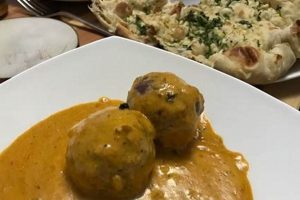
The integration of festive holiday traditions with the diverse culinary landscape of the Indian subcontinent results in unique gastronomic experiences. Celebrations often incorporate elements of traditional Christmas feasts with the vibrant flavors and ingredients characteristic of Indian cuisine. For example, a Christmas dinner may feature tandoori turkey alongside spiced cranberry chutney, or a cardamom-infused plum cake prepared with desi ghee.
This fusion offers several benefits, including fostering inclusivity and cultural exchange. It allows individuals to honor both their heritage and the spirit of the season, creating memorable moments centered around shared meals. Historically, the blending of Western and Indian traditions has occurred in various aspects of life, reflecting the country’s diverse cultural influences and adaptability.
The following sections will delve into specific examples of such culinary blends, explore regional variations in festive dishes, and consider the role of spices and flavors in defining these celebratory meals. The exploration will also touch on popular recipes and the evolution of this unique fusion over time.
Culinary Adaptation
The fusion of traditional holiday fare with the intricacies of Indian gastronomy necessitates careful consideration. The following tips aim to guide individuals in effectively integrating the essence of both culinary traditions.
Tip 1: Spice Selection: Understand the nuanced application of Indian spices. Begin with familiar flavors such as cardamom, cinnamon, and cloves, gradually incorporating more complex blends like garam masala. Experiment with small quantities to gauge potency.
Tip 2: Protein Preparation: Adapt traditional Christmas proteins with Indian cooking techniques. Marinating turkey or chicken in yogurt-based marinades infused with ginger, garlic, and chili provides flavor and tenderizes the meat before roasting or grilling.
Tip 3: Vegetable Accompaniments: Incorporate traditional Indian vegetable dishes. Saag paneer (spinach and cheese), aloo gobi (potato and cauliflower), or baingan bharta (smoked eggplant mash) offer flavorful alternatives to standard Christmas side dishes.
Tip 4: Bread Alternatives: Supplement traditional bread rolls with naan or roti. Garlic naan, butter naan, or plain roti offer a complementary textural and flavor profile alongside main courses.
Tip 5: Dessert Integration: Modify traditional desserts with Indian ingredients. Incorporate saffron and cardamom into bread pudding, or utilize mango and pistachios in traditional Christmas cookies for a unique flavor profile.
Tip 6: Balance Sweetness: Adjust sweetness levels to accommodate Indian palates. Many traditional Christmas desserts can be excessively sweet for individuals accustomed to Indian sweets. Reduce sugar content and consider substituting with natural sweeteners such as jaggery or dates.
The successful integration of these culinary styles hinges on understanding flavor profiles, employing appropriate techniques, and being mindful of cultural nuances. Experimentation and adaptation are key to creating a harmonious blend.
The subsequent section will explore regional variations and specific recipe adaptations in greater detail, providing further insights into the art of blending these festive culinary traditions.
1. Spice Blends
Spice blends are instrumental in bridging traditional Christmas culinary practices and the Indian culinary landscape. The integration of spices, such as cardamom, cinnamon, cloves, and nutmeg, found in classic Christmas recipes, with regionally specific spice combinations like garam masala or vindaloo paste, results in unique flavor profiles. The effect of these blends is to transform familiar dishes, adding warmth, depth, and aromatic complexity distinct to Indian cuisine. Consider, for example, a traditional roast turkey seasoned with garam masala and ginger-garlic paste. The result is a fusion dish that retains the familiar texture of roast turkey but delivers a distinctly Indian aromatic experience.
The importance of spice blends stems from their ability to modify and enhance the flavor profile of dishes without fundamentally altering their core structure. This is critical for creating dishes that are both recognizable and novel. Real-life examples include cardamom-infused plum cake, a common Christmas dessert in India, and spiced cranberry chutney, where traditional Christmas flavors are enhanced with Indian spices. In practical terms, understanding spice blending principles enables chefs and home cooks to experiment and innovate, creating customized versions of festive dishes that resonate with their specific tastes and regional preferences. The combination of spices is a key factor in enhancing the Indian taste for any food in general.
In summary, spice blends represent a critical component in integrating Christmas culinary traditions with Indian gastronomy. This understanding allows for the creation of dishes that honor both cultural backgrounds, providing a flavorful and inclusive dining experience. Challenges may include balancing the intensity of Indian spices with the delicate flavors of traditional Christmas dishes, but careful experimentation and a nuanced understanding of spice combinations can mitigate these issues. This focus on spice blends contributes to a broader theme of cultural fusion and culinary innovation.
2. Protein Adaptation

Protein adaptation forms a cornerstone of integrating traditional Christmas culinary practices with Indian gastronomy. The modification of conventional Christmas proteins, such as turkey, ham, or roast beef, through Indian cooking techniques is essential to create dishes that resonate with local palates and reflect the diverse culinary landscape of the subcontinent. This adaptation involves applying Indian marinades, spice rubs, and cooking methods to these proteins, resulting in a fusion of flavors and textures. For instance, instead of a traditional baked ham, one might find a tandoori-spiced ham, where the meat is marinated in a yogurt-based mixture containing garam masala, ginger, garlic, and chili, then cooked in a tandoor or oven to achieve a smoky, spiced flavor. This process directly influences the overall taste profile and presentation of the Christmas meal.
The importance of protein adaptation lies in its capacity to cater to local preferences while maintaining the celebratory spirit of Christmas. Indians are accustomed to intense flavor combinations and spices in their regular diet. Adapting traditional Christmas proteins to these preferences not only makes the meal more palatable but also fosters a sense of inclusivity and cultural exchange. Practical applications include marinating roast chicken in a blend of turmeric, coriander, and cumin, then serving it with a side of mint chutney. Alternatively, a beef roast could be prepared as a vindaloo, a Goan specialty, incorporating vinegar, chilies, and a blend of spices for a spicy and tangy flavor. The careful selection of spices and cooking techniques ensures the protein retains its inherent qualities while acquiring the desired Indian flavor characteristics.
In summary, protein adaptation is a vital element in the fusion of Christmas and Indian food traditions. Its success hinges on understanding the principles of Indian cooking and applying them creatively to traditional Christmas proteins. This adaptation addresses the challenge of creating dishes that are both familiar and novel, providing a memorable and culturally enriching dining experience. This approach ensures that the fusion reflects the spirit of cultural integration, promoting inclusivity and shared culinary enjoyment.
3. Vegetable Fusion

Vegetable fusion represents a critical element within the context of Christmas celebrations incorporating Indian cuisine. The strategic integration of traditional Indian vegetable dishes alongside or within conventional Christmas meals addresses both dietary preferences and cultural nuances. It extends beyond mere substitution; it entails a deliberate blending of flavors and textures to create a cohesive and culturally sensitive dining experience. For example, serving saag paneer, a creamy spinach and cheese dish, alongside roast turkey offers a vegetarian option while introducing a familiar Indian flavor profile. This thoughtful inclusion directly influences the appeal and inclusivity of the meal.
The significance of vegetable fusion arises from the diverse dietary requirements and cultural backgrounds present in many Christmas gatherings. Providing vegetarian alternatives is essential in a country where a substantial portion of the population adheres to vegetarianism. Additionally, integrating familiar Indian vegetable preparations reduces the perceived foreignness of the Christmas meal, making it more approachable and enjoyable for individuals less accustomed to Western cuisine. Practical applications include the inclusion of vegetable biryani as a starch alternative to mashed potatoes, or serving aloo gobi, a spiced potato and cauliflower dish, as a side dish alongside roasted vegetables. These integrations demonstrate a mindful consideration of local tastes, thereby enhancing the overall dining experience.
In summary, vegetable fusion is a crucial component in creating harmonious and inclusive Christmas celebrations with an Indian culinary influence. Its success hinges on thoughtful planning and a deep understanding of both Indian and Western culinary traditions. Addressing the challenge of balancing familiar Christmas flavors with distinct Indian spices requires careful consideration. This dedication to vegetable fusion contributes to a broader theme of cultural integration, making festive meals both enjoyable and representative of a diverse culinary landscape.
4. Dessert Innovation

Dessert innovation, within the framework of festive holiday traditions integrated with Indian culinary arts, represents a pivotal area of culinary adaptation. It goes beyond mere replication, instead emphasizing creative fusion to produce desserts suitable for the celebratory season while acknowledging local palates and ingredient availability.
- Ingredient Substitution
The replacement of traditional Western dessert ingredients with indigenous Indian alternatives forms the bedrock of innovation. Refined sugar may be supplanted by jaggery, desi ghee replaces butter in some recipes, and wheat flour gives way to besan (gram flour). The result yields altered textures and distinct flavor profiles. A traditional plum cake, for example, could incorporate dates and figs in lieu of solely relying on imported dried fruits, thus infusing it with a localized character.
- Flavor Infusion
This facet involves the introduction of quintessential Indian flavors into classic Christmas desserts. Cardamom, saffron, rosewater, and pistachio are commonly used to enhance the aroma and taste of traditional recipes. Consider a bread pudding infused with saffron and cardamom or incorporating pistachios into traditional shortbread cookies. The inclusion of these flavors significantly alters the sensory experience, aligning the dessert with Indian taste preferences.
- Technique Adaptation
The adaptation of Indian cooking techniques for dessert preparation is crucial. Traditional Indian methods like slow cooking, tempering, and the use of specific utensils contribute to the uniqueness of fusion desserts. The preparation of phirni (rice pudding) can be adapted to create a Christmas-themed dessert, incorporating cranberries and nutmeg while retaining the creamy texture achieved through slow cooking. Such adaptations demonstrate an understanding of both culinary traditions.
- Presentation Modification
The presentation of fusion desserts often involves elements inspired by Indian aesthetics. Using traditional Indian serving ware, garnishing with edible silver leaf (varak), and incorporating motifs from Indian art and culture enhance the visual appeal. A Christmas yule log, for instance, might be decorated with marzipan elephants or peacocks, reflecting Indian artistic traditions. This visual integration further contributes to the cultural fusion.
These facets collectively demonstrate how dessert innovation operates within the context of festive holiday celebrations, when integrated with Indian cuisine. By carefully considering ingredient substitution, flavor infusion, technique adaptation, and presentation modification, chefs and home cooks can craft desserts that are both familiar and novel, enhancing the celebratory dining experience with a unique and culturally enriched flavor profile. This blend underscores the adaptability and fusion of global traditions within a local culinary context.
5. Regional Variations

The adaptation of Christmas culinary traditions within India is not monolithic; distinct regional variations emerge, reflecting the diverse culinary landscapes and cultural influences present across the country. These variations represent localized interpretations of both Christmas and Indian cuisine, resulting in a spectrum of unique festive dishes and practices.
- Goan Influence
Goa, with its Portuguese colonial heritage, exhibits a prominent integration of Western culinary practices with local flavors. Christmas celebrations often feature dishes like bebinca, a layered coconut cake, and vindaloo, a spicy curry, alongside traditional Christmas staples. The use of vinegar and chili peppers, characteristic of Goan cuisine, imparts a distinct flavor profile to festive meals.
- Kerala’s Syrian Christian Tradition
Kerala’s Syrian Christian community boasts a unique culinary heritage. Christmas celebrations often include dishes like stew and appam (rice pancakes), duck roast, and a variety of achappams (rose cookies). The emphasis on coconut milk and aromatic spices distinguishes these dishes from those found in other regions.
- Mangalorean Catholic Cuisine
The Mangalorean Catholic community presents another distinctive variation. Christmas meals typically include dishes such as pork bafat, a spicy pork curry, and kuswar, a collection of traditional Christmas sweets. The integration of vinegar and unique spice blends lends these dishes a characteristic tang and heat.
- North Eastern Adaptations
In the North Eastern states, where Christianity is prevalent, Christmas feasts often incorporate local ingredients and cooking methods. Dishes might include bamboo shoot preparations, smoked pork, and indigenous rice varieties. The use of fermented ingredients and unique spice blends reflects the distinct culinary traditions of this region.
These regional variations underscore the adaptability of Christmas culinary traditions within India. Each region’s unique culinary heritage shapes the festive meal, resulting in a rich tapestry of flavors and practices. These localized interpretations contribute to the overall diversity and complexity of “Christmas in Indian food,” reflecting the country’s rich cultural mosaic.
6. Cultural Exchange
The phenomenon of integrating Christmas traditions with Indian cuisine serves as a palpable manifestation of cultural exchange, wherein distinct culinary practices intersect and influence one another. This exchange is not merely a superficial blending of ingredients but a deeper interaction that redefines festive meals within the Indian context.
- Adaptation of Festive Dishes
This involves altering traditional Christmas recipes to incorporate Indian ingredients and techniques. For example, a turkey roast might be seasoned with garam masala, or a plum cake infused with cardamom and saffron. This adaptation reflects a willingness to embrace local flavors and cater to regional preferences, thereby facilitating a meaningful cultural dialogue.
- Introduction of New Ingredients
Cultural exchange introduces ingredients previously uncommon in Christmas celebrations. The inclusion of mangoes in desserts, the use of coconut milk in sauces, or the incorporation of Indian spices in meat preparations exemplifies this. These novel ingredients broaden the culinary palette and contribute to a richer, more diverse festive dining experience.
- Hybrid Culinary Techniques
This involves blending Western and Indian cooking methods to create unique dishes. Utilizing the tandoor to cook Christmas meats or adapting traditional Indian bread-making techniques for Christmas rolls are examples. Such hybridization results in innovative flavor profiles and textures that transcend conventional culinary boundaries.
- Creation of Shared Traditions
The integration of Christmas and Indian cuisine fosters the development of new, shared traditions. Families might adopt specific fusion recipes as part of their annual Christmas meal or incorporate elements of Indian hospitality into their celebrations. These shared traditions strengthen cultural understanding and promote a sense of inclusivity.
In conclusion, the interaction between Christmas and Indian food practices illustrates a dynamic process of cultural exchange. Through adaptation, ingredient introduction, hybrid techniques, and the creation of shared traditions, this fusion redefines the festive experience, fostering greater appreciation for both culinary heritages and promoting cross-cultural understanding within the Indian milieu.
7. Flavor Profiles

The successful fusion of Christmas and Indian culinary traditions hinges significantly on the strategic manipulation and understanding of flavor profiles. These profiles, encompassing the complex interplay of sweet, sour, salty, bitter, and umami elements, dictate the overall palatability and cultural resonance of the resultant dishes. In the context of integrating Christmas and Indian cuisine, achieving harmonious flavor profiles involves carefully balancing the often milder tastes of traditional Christmas fare with the robust and assertive flavors characteristic of Indian gastronomy. For example, a cardamom-infused plum cake retains the sweetness of a classic Christmas dessert while introducing the aromatic warmth associated with Indian sweets. Conversely, a tandoori turkey necessitates a careful calibration of spices to complement, rather than overwhelm, the inherent flavor of the poultry.
The importance of mastering flavor profiles becomes particularly evident when considering specific regional adaptations. In Goa, for instance, the Portuguese influence is apparent in dishes that combine sweet and sour elements, often with a touch of spice. Adapting a Christmas ham to this flavor profile might involve incorporating tamarind paste and a chili-infused glaze. Similarly, in Kerala, the frequent use of coconut milk and curry leaves necessitates adjustments to maintain the delicate balance of flavors in Christmas stews or vegetable preparations. The practical significance of this understanding lies in the ability to create dishes that are both familiar, invoking the spirit of Christmas, and culturally relevant, appealing to the Indian palate. Real-life examples include the creation of spiced cranberry chutney with hints of ginger and cumin or a modified bread pudding incorporating saffron and pistachios. Without a keen awareness of flavor profiles, such fusion efforts risk resulting in disharmonious and unpalatable combinations.
In conclusion, a thorough understanding of flavor profiles is paramount to the successful integration of Christmas and Indian culinary traditions. The challenge lies in harmonizing distinct flavor paradigms to create dishes that are both innovative and culturally sensitive. A failure to address this aspect undermines the fundamental goal of cultural fusion, resulting in culinary missteps rather than harmonious blends. This focus on flavor profiles contributes directly to the overarching theme of creating a meaningful and enjoyable festive dining experience.
Frequently Asked Questions
The following section addresses common inquiries and clarifies potential misconceptions regarding the integration of Christmas culinary traditions with Indian cuisine.
Question 1: How does the integration of Christmas and Indian food traditions impact the authenticity of each culinary style?
The integration seeks not to diminish authenticity but rather to create a fusion that respects both traditions. Modified dishes retain core elements while incorporating flavors and techniques from the other culinary style, resulting in a new, distinct culinary expression.
Question 2: What are the common challenges associated with combining Christmas and Indian flavors?
Balancing the often subtle flavors of traditional Christmas fare with the robust spices of Indian cuisine presents a primary challenge. Careful calibration of spice levels and flavor combinations is essential to prevent overpowering the dish.
Question 3: Is it necessary to be an experienced cook to attempt fusion dishes?
While experience is beneficial, many simple fusion recipes are accessible to novice cooks. Starting with basic dishes and gradually incorporating more complex techniques is a recommended approach.
Question 4: Are there dietary considerations to keep in mind when preparing Christmas-Indian fusion meals?
Dietary restrictions, such as vegetarianism or gluten intolerance, should be carefully considered. Adapting recipes to accommodate these needs ensures inclusivity and accessibility for all diners.
Question 5: How can one ensure that the fusion dishes are culturally sensitive and respectful?
Researching and understanding the cultural significance of both Christmas and Indian food traditions is crucial. Avoiding stereotypes and honoring the origins of ingredients and techniques promotes cultural sensitivity.
Question 6: Where can one find reliable resources for Christmas-Indian fusion recipes?
Cookbooks focusing on fusion cuisine, reputable food blogs, and online culinary resources offer a range of recipes. Evaluating the credibility of the source is recommended before attempting any recipe.
In summary, the integration of Christmas and Indian food traditions presents both opportunities and challenges. Careful planning, respect for cultural nuances, and a willingness to experiment are key to creating successful and enjoyable fusion meals.
The subsequent section will provide concluding remarks and synthesize the key themes explored throughout this discourse.
Conclusion
The exploration of “Christmas in Indian food” reveals a multifaceted interaction between distinct culinary traditions. The integration of Christmas staples with Indian spices, techniques, and ingredients demonstrates a dynamic process of cultural adaptation. Regional variations further enrich this fusion, reflecting the diverse culinary landscape of the Indian subcontinent. The successful implementation of this integration requires a nuanced understanding of flavor profiles, cultural sensitivities, and dietary considerations.
As globalization continues to shape culinary practices, the exploration of cross-cultural gastronomic fusions, exemplified by “Christmas in Indian food,” offers opportunities for culinary innovation and cultural exchange. Further research and experimentation will likely yield new and creative expressions of this culinary blend, potentially influencing mainstream dining trends and promoting a greater appreciation for culinary diversity.