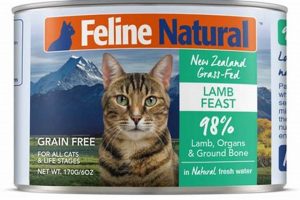
The central concern involves methods for transitioning a feline’s diet to include prepared moist meals. This issue arises frequently, particularly when a cat exhibits a preference for dry kibble. Successful introduction of this food type often necessitates patience and strategic implementation.
Incorporating moist food into a cat’s dietary regimen offers several advantages. It contributes significantly to hydration, which is particularly beneficial for feline kidney health. Furthermore, the higher moisture content can aid in weight management due to its lower caloric density compared to dry alternatives. Historically, while dry food has been favored for convenience, awareness of the health benefits of moisture-rich diets has led to increased interest in encouraging felines to consume moist food formulations.
The following strategies address the various approaches one can employ to encourage acceptance of moist food, including gradual introduction, flavor enhancement, and environmental adjustments to mealtime routines.
Strategies for Encouraging Feline Consumption of Moist Food
The following recommendations provide various methods for introducing and encouraging the acceptance of moist food into a feline’s diet. These suggestions address common feline preferences and feeding behaviors.
Tip 1: Gradual Introduction: Begin by mixing a small amount of moist food with the cat’s current dry food. Slowly increase the ratio of moist food to dry food over a period of several days or weeks. This allows the cat to adjust to the new texture and flavor gradually, minimizing resistance.
Tip 2: Flavor Enhancement: Cats can be particular about flavors and textures. Experiment with different brands and flavors of moist food to find one that appeals to the feline’s palate. Warming the food slightly can also enhance its aroma and palatability.
Tip 3: Texture Modification: Some cats prefer pate-style moist food, while others prefer shredded or gravy-based options. Observe the cat’s preferences with dry food textures and attempt to match them with moist food options.
Tip 4: Mealtime Routine: Establish a consistent feeding schedule. Offer the moist food at the same time each day, and remove any uneaten food after a designated period (e.g., 30 minutes). This can help the cat associate the moist food with mealtime.
Tip 5: Minimize Dry Food Availability: During the transition period, reduce the amount of dry food offered. This may encourage the cat to sample and consume the moist food due to increased hunger. However, ensure the cat is still consuming an adequate amount of food overall.
Tip 6: Location and Bowl Preference: Some cats are sensitive to the location of their food bowl and the type of bowl used. Experiment with different bowl materials (e.g., ceramic, stainless steel) and locations to find what the cat prefers.
Tip 7: Toppers and Temptations: Sprinkle a small amount of a favored dry food or treat on top of the moist food to entice the cat to sample it. Tuna flakes or a small amount of meat-based baby food (without onion or garlic) can also be used as toppers.
Successful integration of moist food into a feline’s diet can improve hydration and potentially enhance overall health. Patience and observation are key to determining the most effective strategies for individual cats.
The subsequent section will address potential challenges encountered during the transition and provide solutions for overcoming them.
1. Gradual Introduction

The process of enabling a cat to consume moist food often hinges on a strategy of incremental dietary adjustments. The “Gradual Introduction” methodology is a cornerstone for inducing acceptance, mitigating the potential for complete food refusal. This approach centers on minimizing abrupt alterations in a cat’s feeding habits, a factor that can significantly affect its willingness to try new foods. The underlying cause-and-effect relationship is straightforward: a sudden shift to a completely new food, particularly one with a different texture and odor profile, frequently results in rejection. By contrast, gradual integration allows the feline to acclimate over time, reducing anxiety and increasing the likelihood of acceptance. For example, instead of immediately replacing a cat’s regular dry food with moist food, one might begin by mixing a small spoonful of moist food into a familiar dry portion, slowly increasing the proportion over a period of days or weeks.
The practical significance of this understanding lies in its effectiveness in preventing food aversion, a common challenge faced when attempting to change a cat’s diet. Should a cat develop a negative association with a particular food type, the task of introducing it becomes exponentially more difficult. Gradual Introduction also facilitates the identification of potential sensitivities or preferences. Observing the feline’s reaction to small amounts of moist food mixed with its regular diet enables owners to gauge tolerance and refine flavor choices, such as transitioning from a chicken-based to a fish-based wet food. It helps to find the perfect taste for your feline.
In summary, the success of converting a cat to moist food relies heavily on the principle of Gradual Introduction. It addresses the underlying behavioral tendencies of felines regarding dietary change, preventing food aversion and allowing for personalized adjustment of flavor and texture. While other factors such as flavor and texture play roles, this preliminary step provides a foundation for broader dietary acceptance and is most important to consider if wanting to change what you are feeding your feline.
2. Flavor Variety

The acceptance of moist food by felines is inextricably linked to the availability and selection of flavor varieties. Introducing multiple flavors is a critical component of dietary transition, addressing inherent feline preferences and aversions. By offering a range of flavors, the probability of identifying a palatable option increases, facilitating the integration of moist food into the dietary regimen.
- Addressing Feline Taste Preferences
Felines possess a limited range of taste receptors compared to humans, with a notable absence of the ability to taste sweetness. Primary taste preferences are geared toward umami, savory, and meaty flavors. Introducing moist foods with chicken, fish, or beef flavor profiles may align better with innate feline preferences. Flavor aversion can stem from unfamiliar or unpalatable ingredients, emphasizing the need for careful selection based on established feline tastes. The palatability of moist food directly influences consumption behavior. Therefore, aligning flavor offerings with natural inclinations increases the likelihood of acceptance.
- Rotating Flavor Profiles
Even when a cat initially accepts a particular flavor of moist food, prolonged exposure to the same flavor can result in decreased interest or outright rejection. Implementing a rotation of different flavor profiles can help maintain interest and prevent flavor fatigue. This rotation strategy should incorporate a variety of protein sources and flavor enhancers to ensure continued palatability. Observe feline eating habits and adjust flavor rotations accordingly. For instance, if a feline demonstrates waning interest in chicken-flavored food after several weeks, transition to a fish-based flavor.
- Flavor Enhancement Strategies
When a feline displays reluctance toward moist food, flavor enhancement techniques may prove beneficial. This can involve incorporating small amounts of palatable additives such as tuna juice, salmon oil, or commercially available feline flavor enhancers. These additives can mask unfamiliar or less desirable flavors, encouraging initial consumption. It is imperative to use additives sparingly to avoid creating an unhealthy dependence or masking potential underlying health issues affecting appetite.
- The Importance of Ingredient Quality
The perceived flavor and palatability of moist food are directly influenced by the quality of its ingredients. Low-quality ingredients can result in off-flavors or undesirable textures that deter consumption. Opting for moist food formulations with high-quality protein sources and minimal artificial additives can improve overall palatability. Scrutinizing ingredient lists and selecting brands with a reputation for quality can mitigate potential flavor-related aversions.
The strategic implementation of flavor variety, encompassing consideration of feline taste preferences, flavor rotation, enhancement techniques, and ingredient quality, is a key element in achieving successful integration of moist food into a feline’s dietary routine. By understanding and catering to these factors, the probability of long-term acceptance and consumption of moist food is significantly enhanced, supporting improved hydration and overall feline health.
3. Texture Preferences

Texture plays a pivotal role in determining feline acceptance of moist food. A cat’s preference for a particular texture can significantly influence its willingness to consume prepared moist meals, underscoring the necessity of considering textural attributes when introducing this food type.
- Pt Versus Shredded/Gravy Forms
Moist food formulations are commonly available in pt, shredded, and gravy forms, each presenting a distinct textural experience. Some felines exhibit a preference for the smooth consistency of pt, while others favor the more fibrous texture of shredded varieties or the moisture-rich environment of gravy-based options. Identifying the feline’s textural preference is a prerequisite for maximizing acceptance. Observe the cat’s interaction with dry food; a preference for small, easily chewed kibble may indicate a greater likelihood of accepting pt, whereas a cat that prefers larger kibble might respond better to shredded forms.
- Influence of Moisture Content
Moisture content is integral to texture perception. A moist food that is excessively dry or overly saturated may be rejected. The ideal moisture level provides sufficient lubrication to facilitate swallowing without creating a perceived sliminess or stickiness. Adjusting the moisture content, for example, by adding a small amount of water to dry pt, can sometimes improve palatability.
- Textural Aversion and Neophobia
Neophobia, or the fear of new things, can manifest as textural aversion in felines. A cat accustomed to dry kibble may initially reject moist food due to its unfamiliar texture. Mitigation strategies include introducing small amounts of the new texture alongside familiar food, gradually increasing the proportion over time. This desensitization process can help overcome textural resistance.
- Correlation with Oral Health
A feline’s oral health status can influence its textural preferences. Cats experiencing dental pain or discomfort may prefer softer textures that require minimal chewing. In such cases, pt or gravy-based moist foods may be more palatable than shredded varieties. Regular dental check-ups and appropriate dental care are essential to ensure that textural preferences are not solely dictated by oral discomfort.
Comprehending and accommodating feline texture preferences is paramount for successful introduction of moist food. A methodical approach involving observation, experimentation with diverse textures, and attention to moisture content can significantly improve acceptance rates. Addressing potential textural aversions and considering the impact of oral health contributes to a more holistic approach to dietary management.
4. Environmental Factors

The surrounding environment during feeding significantly influences a feline’s willingness to consume prepared moist meals. Understanding and manipulating these environmental factors can facilitate a more positive and receptive feeding experience, directly impacting the success of introducing moist food.
- Bowl Placement and Accessibility
The location of the food bowl affects the cat’s comfort and sense of security while eating. Bowls placed in high-traffic areas or near sources of noise may create anxiety, reducing the likelihood of the cat eating. Ideally, the bowl should be positioned in a quiet, low-traffic area, away from other pets or disturbances. Ensure the bowl is easily accessible; for older cats or those with mobility issues, elevated bowls may be beneficial. Insufficient bowl height can cause discomfort, potentially leading to food refusal.
- Bowl Hygiene and Material
Felines possess a heightened sense of smell, and a dirty food bowl can deter consumption. Residual food particles and bacterial build-up can create unpleasant odors undetectable to humans, but highly perceptible to cats. Bowls should be cleaned daily with soap and water to eliminate odors. The material of the bowl can also be a factor; some cats exhibit preferences for ceramic or stainless steel over plastic, which can retain odors more readily. Whisker fatigue, a condition resulting from the whiskers repeatedly touching the sides of a narrow bowl, can also discourage eating; wide, shallow bowls may alleviate this issue.
- Competition and Social Dynamics
In multi-cat households, competition for resources can affect individual feeding behaviors. If one cat is dominant or aggressive, subordinate cats may feel threatened and avoid eating, particularly if the food is located in a shared area. Providing separate feeding stations for each cat, located in different areas of the house, can reduce competition and anxiety. Microchip-activated feeders can also ensure that each cat only has access to its allocated food, preventing food theft and promoting individual consumption.
- Temperature and Lighting
Ambient temperature and lighting can influence appetite. Extremely cold or hot environments may reduce a cat’s desire to eat. Providing a comfortable and consistent temperature can improve appetite. Lighting should be adequate but not harsh; dimming the lights during feeding can create a more relaxed atmosphere. Avoid placing the food bowl in direct sunlight, as this can warm the food and alter its palatability.
Manipulating the environmental factors surrounding feeding provides a means to improve the likelihood of feline acceptance of moist food. By considering bowl placement, hygiene, social dynamics, temperature, and lighting, it becomes possible to cultivate a more positive and secure feeding experience, thereby enhancing the cat’s willingness to consume prepared moist meals.
5. Routine Establishment

The consistent establishment of a feeding schedule functions as a crucial element in promoting feline acceptance of moist food. The predictable nature of routine fosters a sense of security and anticipation, which can positively influence a cat’s willingness to try and consume new food items. Implementing a regular feeding time, location, and even the order of events leading up to meal presentation creates a positive association with the feeding process. For instance, if a cat consistently receives food at 7:00 AM and 6:00 PM in a designated area, it anticipates these times, making it more receptive to the offerings, including moist food.
Deviations from the established routine, such as inconsistent feeding times or abrupt changes in location, can induce stress and anxiety in felines, negatively impacting appetite and food acceptance. For example, if a cat expects to be fed at a certain time but is consistently fed late, or if the feeding location is changed without gradual adjustment, the cat may become hesitant to approach the food bowl. Routine extends beyond just the timing of meals; it also encompasses the pre-feeding rituals. If the act of preparing the food, such as opening a can or placing the bowl in its designated spot, consistently precedes the meal, the cat begins to associate these actions with food and approaches the bowl with anticipation. Therefore, maintaining consistency in these pre-feeding rituals enhances the likelihood of moist food acceptance. In scenarios where a cat initially rejects moist food, maintaining the routine while gradually introducing the food alongside familiar dry kibble is key to building a positive association.
In summary, the adherence to a consistent feeding routine is a significant factor when attempting to transition a feline to moist food. By providing predictability and creating positive associations with the feeding process, the likelihood of acceptance increases. Consistency in timing, location, and pre-feeding rituals all contribute to a cat’s sense of security and predictability, thereby facilitating a smoother transition to moist food and supporting long-term adherence to a balanced diet. Recognizing the importance of routine can help prevent food aversion and promote healthy eating habits in felines.
Frequently Asked Questions
This section addresses common inquiries regarding the introduction of moist food into a feline’s diet. The following questions and answers provide guidance on overcoming potential challenges and promoting successful dietary transitions.
Question 1: How long should one persist in attempting to transition a cat to moist food before concluding it is not feasible?
The duration varies based on individual feline temperament and prior dietary experiences. A period of several weeks to a few months may be required, employing gradual introduction techniques. If, after this extended period, the cat consistently refuses moist food and exhibits signs of stress or weight loss, consulting a veterinarian for alternative dietary strategies is advised.
Question 2: Is warming moist food necessary, and what are the potential risks associated with this practice?
Warming moist food can enhance its aroma and palatability, potentially encouraging consumption. However, overheating can denature proteins and alter the food’s nutritional profile. Warming should be gentle, using a microwave for short intervals or adding a small amount of warm water. Uneaten warmed food should be discarded promptly to prevent bacterial growth.
Question 3: How does one determine the appropriate amount of moist food to feed a cat, considering its caloric density relative to dry food?
Moist food generally possesses a lower caloric density than dry food. Consult the feeding guidelines provided on the moist food packaging, adjusting the quantity based on the cat’s age, weight, activity level, and body condition score. Monitoring the cat’s weight and adjusting the portion size accordingly is crucial. A veterinarian can provide individualized feeding recommendations.
Question 4: Are there any health concerns associated with the sudden introduction of moist food into a cat’s diet?
Abrupt dietary changes can disrupt the feline’s gastrointestinal flora, leading to digestive upset such as vomiting or diarrhea. Gradual introduction minimizes this risk. If signs of gastrointestinal distress appear, discontinue the moist food and consult a veterinarian. Probiotics may be administered to help restore gut health.
Question 5: What strategies can be implemented if a cat demonstrates aversion to all commercially available moist food flavors?
If a cat exhibits aversion to all commercial flavors, consider preparing homemade moist food under the guidance of a veterinary nutritionist. This allows for precise control over ingredients and flavor profiles. Ensure the homemade diet is nutritionally complete and balanced. Alternatively, explore novel protein sources or flavor enhancers approved by a veterinarian.
Question 6: Is it acceptable to mix moist food with dry kibble indefinitely, or should the goal be to transition to a solely moist food diet?
Mixing moist food with dry kibble indefinitely is acceptable, provided the combination meets the cat’s nutritional requirements. The primary benefits of moist food, such as increased hydration, are still realized. However, a solely moist food diet may be preferable for certain cats, particularly those with kidney issues or a predisposition to urinary tract problems. Consult a veterinarian to determine the optimal diet for the individual cat’s health needs.
Adhering to these guidelines and consulting with veterinary professionals will assist in the successful incorporation of moist food into a feline’s dietary regimen.
The subsequent section will address the benefits of incorporating this food to your feline diet.
Facilitating Feline Consumption of Prepared Moist Meals
The exploration of “how can i get my cat to eat wet food” encompasses a multifaceted approach to dietary modification. Gradual introduction, flavor variety, texture consideration, environmental adjustments, and routine establishment represent the core strategies for fostering acceptance. Success hinges on understanding individual feline preferences and behaviors, adapting techniques accordingly.
Implementing these informed strategies may improve feline hydration and overall well-being. Continuous monitoring of the cat’s health and consulting with veterinary professionals remain paramount in ensuring optimal nutrition and long-term dietary success. A commitment to informed and adaptable feeding practices provides the best path toward a healthy outcome.


![[FAQ] Can I Feed Goldfish Betta Food? Risks & Tips | World’s Most Delicious Foods: Must-Try Dishes from Every Country](https://lisasfoods.com/wp-content/uploads/2026/05/th-278-300x200.jpg "[FAQ] Can I Feed Goldfish Betta Food? Risks & Tips World’s Most Delicious Foods: Must-Try Dishes from Every Country")