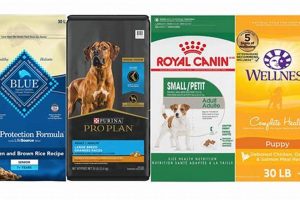
Selecting optimal nutrition for German Shepherds is a critical aspect of responsible pet ownership. The dietary requirements of this breed are influenced by their size, activity level, and predisposition to certain health conditions. Formulations tailored to their specific needs aim to support healthy growth, maintain ideal weight, and mitigate potential joint issues. For example, a diet rich in chondroitin and glucosamine may benefit their joints, while controlled levels of protein and fat can aid in weight management.
Providing suitable nourishment offers numerous advantages, contributing significantly to the dog’s overall well-being. A balanced diet promotes a healthy coat, strong bones, and robust immune system. Historically, this breed, initially developed as herding dogs, required sustenance to fuel their demanding work. Today, even as primarily companion animals, their nutritional needs remain substantial, reflecting their high energy levels and athletic build.
The subsequent discussion will explore key considerations when choosing appropriate sustenance for this breed, encompassing ingredient analysis, life-stage requirements, and addressing common dietary sensitivities. Factors to consider encompass protein sources, carbohydrate content, and the inclusion of essential vitamins and minerals.
Nutritional Guidance for German Shepherds
Optimizing canine health involves careful attention to dietary choices. The following guidance provides key considerations for selecting suitable sustenance for German Shepherds, promoting their well-being through informed nutritional decisions.
Tip 1: Prioritize High-Quality Protein Sources: Lean animal protein, such as chicken, beef, or fish, should constitute a significant portion of the diet. These sources provide essential amino acids crucial for muscle development and maintenance. Ensure the protein source is clearly identified on the ingredient list.
Tip 2: Manage Fat Content Judiciously: While fats are essential for energy and nutrient absorption, excessive amounts can contribute to weight gain. Opt for formulations with moderate fat levels, prioritizing healthy sources like fish oil or flaxseed, which also offer omega-3 fatty acids.
Tip 3: Choose Complex Carbohydrates: Select dog food that incorporates complex carbohydrates, such as brown rice or oats, rather than simple sugars or fillers like corn or wheat. Complex carbohydrates provide sustained energy and fiber for digestive health.
Tip 4: Supplement with Joint Support Ingredients: German Shepherds are prone to hip and elbow dysplasia. Diets supplemented with glucosamine and chondroitin sulfate may help support joint health and alleviate symptoms.
Tip 5: Consider Life Stage Requirements: Nutritional needs vary depending on age. Puppies require formulations specifically designed for growth, while senior dogs may benefit from diets lower in calories and supplemented with antioxidants.
Tip 6: Monitor for Food Sensitivities: Observe the dog for any signs of food allergies or intolerances, such as skin irritation, digestive upset, or ear infections. If sensitivities are suspected, consider a limited-ingredient diet to identify potential allergens.
Tip 7: Consult with a Veterinarian: Seek professional advice from a veterinarian to determine the ideal dietary plan for an individual German Shepherd, taking into account its specific health status and activity level.
Following these guidelines will contribute to the German Shepherd’s overall health, vitality, and longevity. Careful consideration of these nutritional factors promotes optimal physical condition and well-being.
The subsequent section will delve into common misconceptions surrounding canine nutrition and provide evidence-based information to dispel these myths.
1. High-Quality Protein

The presence of high-quality protein is not merely a desirable component but a cornerstone of sustenance deemed optimal for German Shepherds. Its role extends beyond basic nutritional needs, directly influencing muscle development, immune function, and overall vitality. The selection of “best german shepherd dog food” necessitates a thorough evaluation of protein sources and their biological value.
- Muscle Development and Maintenance
High-quality protein provides the essential amino acids required for building and repairing muscle tissue. German Shepherds, being a large and active breed, demand sufficient protein to support their musculoskeletal system. Inadequate protein intake can lead to muscle wasting and reduced physical performance.
- Immune System Support
Proteins are critical for the production of antibodies and other immune components. A robust immune system is vital for German Shepherds, predisposing them to fewer illnesses and infections. High-quality protein ensures that the body has the necessary building blocks to mount effective immune responses.
- Digestibility and Bioavailability
The source of protein influences its digestibility and bioavailability, determining how efficiently the dog can utilize the nutrients. Animal-based proteins, such as chicken, beef, or fish, generally offer superior digestibility compared to plant-based proteins. Selecting easily digestible protein sources minimizes digestive distress and maximizes nutrient absorption.
- Coat and Skin Health
Protein contributes significantly to coat and skin health. Amino acids, particularly cysteine and methionine, are essential for keratin production, a primary component of hair. Deficiencies in protein can manifest as a dull coat, hair loss, or skin lesions. Sufficient high-quality protein ensures a healthy and lustrous coat.
In summary, the integration of high-quality protein is not simply an ingredient consideration but a critical determinant of suitable sustenance for German Shepherds. Its impact on muscle maintenance, immune function, digestibility, and coat health underscores its indispensable role in promoting the overall well-being of this breed. Therefore, “best german shepherd dog food” must prioritize protein sources that offer optimal bioavailability and nutritional value.
2. Joint Health Support

Due to their size and genetic predisposition, German Shepherds exhibit a heightened risk of developing joint problems, such as hip and elbow dysplasia. Consequently, integrating joint health support into their diet is a crucial consideration when selecting optimal nutrition. The following outlines key facets of joint health support within the framework of “best german shepherd dog food”.
- Glucosamine and Chondroitin Supplementation
Glucosamine and chondroitin sulfate are naturally occurring compounds found in cartilage. Supplementation with these substances aims to support cartilage health by providing building blocks and inhibiting cartilage breakdown. For German Shepherds, this can translate to improved joint mobility and reduced discomfort, particularly during aging.
- Omega-3 Fatty Acids
Omega-3 fatty acids, particularly EPA and DHA found in fish oil, possess anti-inflammatory properties. Inflammation contributes significantly to joint pain and degradation. By incorporating omega-3 fatty acids, sustenance for German Shepherds can help mitigate inflammation within the joints, promoting comfort and function.
- Weight Management
Excess weight places undue stress on joints, accelerating wear and tear. Maintaining an optimal body weight is therefore paramount in preserving joint health. Sustenance formulated for German Shepherds should provide controlled caloric density and balanced nutrition to prevent obesity and minimize joint stress.
- Antioxidant Protection
Oxidative stress can contribute to joint damage and inflammation. Antioxidants, such as Vitamin E and Vitamin C, help neutralize free radicals and protect joint tissues from oxidative damage. Inclusion of these antioxidants in the formulation of sustenance can provide additional support for joint health.
The aforementioned facets illustrate the multifaceted approach to joint health support within the context of nutrition. While supplementation with glucosamine and chondroitin directly targets cartilage health, omega-3 fatty acids, weight management, and antioxidant protection provide indirect support by reducing inflammation, minimizing joint stress, and combating oxidative damage. Sustenance that effectively incorporates these components can significantly contribute to the long-term joint health and well-being of German Shepherds, solidifying its position as a contender for “best german shepherd dog food”.
3. Appropriate Caloric Density
Caloric density, referring to the number of calories per unit of food, is a critical determinant of suitable sustenance for German Shepherds. Its significance stems from the breed’s size, activity level, and predisposition to both obesity and specific metabolic conditions. A formulation’s caloric density directly influences the dog’s ability to maintain a healthy weight, obtain sufficient energy, and avoid nutritional imbalances. If caloric density is excessive, regardless of other beneficial ingredients, weight gain and associated health complications become probable. Conversely, insufficient caloric density may lead to malnutrition, reduced energy levels, and impaired physical performance. For instance, a German Shepherd puppy requires a higher caloric density formulation to support rapid growth and development compared to a senior dog, whose metabolic needs are reduced.
The selection of the sustenance needs to consider the dog’s life stage, activity level, and individual metabolism. Highly active German Shepherds, such as those involved in working roles or intense training, necessitate a higher caloric density to fuel their energy expenditure. Sedentary or senior dogs, in contrast, require a lower caloric density to prevent weight gain. The absence of appropriate caloric density, even in a formulation rich in other nutrients, can negate its purported benefits. Practical application necessitates careful monitoring of the dog’s body condition score, adjusting the feeding amount or selecting a different formulation to maintain an ideal weight.
In summary, appropriate caloric density is not merely a desirable attribute but a fundamental requirement in the pursuit of optimal nutrition for German Shepherds. Its influence on weight management, energy levels, and overall health underscores its importance. Formulations touted as “best german shepherd dog food” must demonstrably provide caloric density tailored to the individual dog’s needs, informed by life stage, activity level, and metabolic considerations. The challenges lie in accurately assessing individual needs and selecting or adjusting sustenance accordingly, emphasizing the need for veterinary consultation and careful monitoring.
4. Digestive Health Focus

Digestive health constitutes a vital consideration in the selection of sustenance deemed optimal for German Shepherds. The breed’s predisposition to certain gastrointestinal sensitivities necessitates careful attention to dietary components that promote efficient digestion and nutrient absorption. The integration of ingredients supporting digestive well-being is a key differentiator among various formulations.
- Fiber Content and Stool Quality
Adequate fiber intake is essential for regulating bowel movements and maintaining stool consistency. Sources such as beet pulp or psyllium husk can help prevent both constipation and diarrhea by adding bulk to the stool and promoting regularity. In the context of “best german shepherd dog food,” sufficient fiber content contributes to consistent stool quality and reduces the risk of digestive upset.
- Prebiotics and Gut Microbiome
Prebiotics, such as inulin and fructooligosaccharides (FOS), are non-digestible fibers that promote the growth of beneficial bacteria in the gut. A balanced gut microbiome is crucial for optimal digestion, nutrient absorption, and immune function. “Best german shepherd dog food” formulations often incorporate prebiotics to support a healthy gut flora, thereby enhancing digestive efficiency.
- Digestive Enzymes
Some formulations incorporate digestive enzymes, such as amylase, protease, and lipase, to aid in the breakdown of carbohydrates, proteins, and fats, respectively. These enzymes can be particularly beneficial for German Shepherds with compromised digestive function or those transitioning to a new diet. Inclusion of digestive enzymes in “best german shepherd dog food” may enhance nutrient availability and minimize digestive discomfort.
- Limited Ingredient Diets and Sensitivities
German Shepherds are susceptible to food sensitivities and allergies. Limited ingredient diets, featuring a single protein source and minimal additives, can help identify and manage potential allergens. These diets minimize the risk of adverse reactions and promote digestive comfort. When considering “best german shepherd dog food”, limited ingredient options are advantageous for dogs with known or suspected food sensitivities.
The facets outlined above underscore the integral role of digestive health in selecting suitable sustenance for German Shepherds. The inclusion of fiber, prebiotics, digestive enzymes, and the consideration of limited ingredient diets collectively contribute to a formulation that promotes efficient digestion, nutrient absorption, and overall well-being. The absence of a digestive health focus may compromise the benefits of other nutritional components, highlighting its importance in the context of optimal sustenance.
5. Breed-Specific Formulation
The concept of “Breed-Specific Formulation” is intrinsically linked to identifying sustenance deemed “best german shepherd dog food.” This connection is founded on the premise that distinct breeds possess unique physiological and metabolic characteristics that necessitate tailored nutritional profiles. A German Shepherd’s dietary requirements, influenced by its size, activity level, and genetic predispositions, differ substantially from those of smaller breeds or breeds with different activity patterns. Therefore, a formulation that fails to acknowledge these breed-specific nuances cannot be considered optimal.
The importance of “Breed-Specific Formulation” manifests in several key areas. Firstly, the breed’s propensity for joint issues necessitates a higher concentration of chondroprotective agents, such as glucosamine and chondroitin, than might be found in general dog food formulations. Secondly, their deep chest and risk of bloat may benefit from specific kibble shapes and sizes, encouraging slower eating and reducing the likelihood of gastric dilation-volvulus. Furthermore, the German Shepherd’s coat and skin health may be optimized through specific fatty acid ratios and vitamin supplementation, which are carefully calibrated within “Breed-Specific Formulations.” A practical example involves observing the coat quality and joint mobility of a German Shepherd fed a breed-specific diet versus one fed a generic diet. In many cases, the dog on the breed-specific formulation will exhibit a glossier coat, improved joint flexibility, and a reduced risk of digestive upset.
In conclusion, “Breed-Specific Formulation” constitutes a cornerstone of “best german shepherd dog food”. The challenges lie in discerning legitimate breed-specific needs from marketing tactics and in ensuring that the formulation is based on sound scientific evidence rather than anecdotal claims. A careful consideration of these factors, coupled with veterinary guidance, is essential in selecting sustenance that truly caters to the unique requirements of the German Shepherd breed, thereby maximizing its health, vitality, and longevity. Recognizing this connection facilitates a more informed and responsible approach to canine nutrition.
Frequently Asked Questions About Optimal German Shepherd Nutrition
The following section addresses common inquiries pertaining to dietary considerations for German Shepherds. The intent is to provide clarification and evidence-based information to assist owners in making informed decisions regarding their dog’s nutritional needs.
Question 1: Is specialized sustenance truly necessary for German Shepherds, or is generic dog food adequate?
German Shepherds possess specific dietary needs owing to their size, activity level, and predisposition to certain health conditions. Specialized sustenance formulations account for these factors, providing tailored nutrition that generic options often lack. While generic food may meet basic nutritional requirements, it may not adequately address the breed’s unique needs for joint support, digestive health, or optimal weight management.
Question 2: How does the protein source impact the quality of “best german shepherd dog food”?
The protein source significantly influences the nutritional value of sustenance. High-quality animal proteins, such as chicken, beef, or fish, provide essential amino acids crucial for muscle development and overall health. Plant-based proteins can be included, but their digestibility and amino acid profile may be less optimal than animal-based sources. Formulations listing named protein sources as primary ingredients are generally preferred.
Question 3: What role do carbohydrates play in a German Shepherd’s diet, and what types are most beneficial?
Carbohydrates serve as a primary energy source for German Shepherds. Complex carbohydrates, such as brown rice, oats, and sweet potatoes, provide sustained energy release and fiber for digestive health. Simple carbohydrates, such as corn or wheat, offer limited nutritional value and may contribute to digestive upset or weight gain. The ideal sustenance prioritizes complex carbohydrates over simple sugars and fillers.
Question 4: Can a German Shepherd’s dietary needs change throughout its life stages?
A German Shepherd’s dietary needs vary considerably throughout its life stages. Puppies require formulations designed for growth, with higher protein and calcium levels. Adult dogs benefit from balanced nutrition to maintain optimal weight and activity levels. Senior dogs may require sustenance with lower calorie content and added joint support. Adjusting the diet to accommodate life stage changes is essential for maintaining health and vitality.
Question 5: What are common signs of food sensitivities or allergies in German Shepherds, and how can these be addressed?
Common signs of food sensitivities or allergies include skin irritation, digestive upset (vomiting or diarrhea), ear infections, and excessive scratching. Identifying and eliminating the offending ingredient is crucial. Limited ingredient diets, featuring a single protein source and minimal additives, can assist in identifying potential allergens. Veterinary consultation is recommended to manage food sensitivities effectively.
Question 6: Is grain-free sustenance inherently superior for German Shepherds?
Grain-free sustenance is not necessarily superior for all German Shepherds. While some dogs may benefit from avoiding grains due to sensitivities, others may thrive on formulations containing grains. The overall nutritional profile, including protein source, fat content, and vitamin and mineral composition, is more critical than the presence or absence of grains. Veterinary guidance can help determine whether a grain-free diet is appropriate for an individual dog.
In summary, optimal nutrition for German Shepherds requires careful consideration of various factors, including breed-specific needs, ingredient quality, and life stage requirements. A proactive approach to dietary management, coupled with veterinary consultation, contributes significantly to the dog’s long-term health and well-being.
The subsequent section will explore specific sustenance brands and formulations available in the market, providing a comparative analysis of their nutritional profiles and suitability for German Shepherds.
Determining Optimal Nutrition for German Shepherds
The preceding exploration of “best german shepherd dog food” has illuminated several critical considerations. High-quality protein sources, appropriate caloric density, joint health support, digestive well-being, and breed-specific formulation are paramount. Sustenance lacking these features may compromise the health and vitality of the animal. Selecting an appropriate diet is not a passive undertaking but rather an active process requiring diligent research and veterinary consultation.
The health and well-being of the German Shepherd depend significantly on informed nutritional choices. Sustained vigilance in dietary selection and monitoring is essential to ensure that the dog receives the necessary nutrients to thrive throughout its life. The ongoing refinement of understanding canine nutritional needs suggests that future advancements will further optimize breed-specific dietary recommendations, necessitating continued attention to developments in the field.