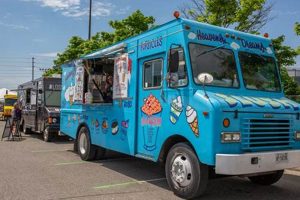
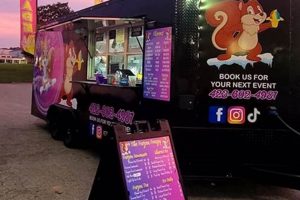
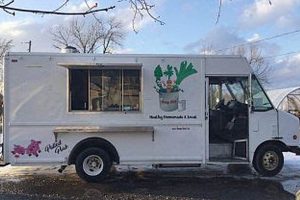
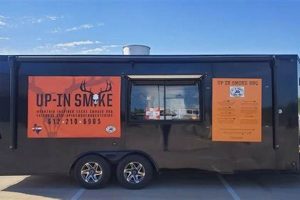
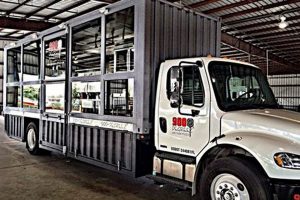
Mobile culinary businesses operating within the Indianapolis metropolitan area offer a diverse range of dining options. These ventures, typically based out of modified vehicles, provide readily accessible meals and snacks at various locations throughout the city. Examples include vendors specializing in gourmet sandwiches, ethnic cuisines, and desserts, often found at public events, business districts, and designated food truck gatherings.
The presence of these mobile kitchens contributes to the vibrancy and accessibility of the city’s food scene. They serve as incubators for culinary innovation, allowing chefs to experiment with new concepts and reach a wider audience with lower overhead costs compared to traditional brick-and-mortar restaurants. Historically, this type of food service has evolved from basic lunch wagons to sophisticated mobile eateries, reflecting changing consumer preferences and culinary trends.
The following sections will explore the specific types of cuisine available, common locations for operation, relevant permitting and regulations, and the impact these businesses have on the local economy and community.
The Indianapolis mobile culinary scene presents unique opportunities and challenges. The following tips offer guidance for both patrons and operators within this sector.
Tip 1: Verify Location and Hours: Mobile vendors often operate on variable schedules and locations. Confirm operational details through official websites or social media channels before visiting.
Tip 2: Prioritize Licensing and Permitting: Ensure that any establishment patronized displays the necessary health and operating permits. This demonstrates compliance with local regulations.
Tip 3: Explore Diverse Culinary Options: Mobile vendors offer a wide range of cuisines, from gourmet burgers to international specialties. Take advantage of the opportunity to sample diverse flavors.
Tip 4: Consider Peak Hours and Wait Times: Popular vendors can experience high demand during peak hours. Plan accordingly and anticipate potential wait times, especially during lunchtime or events.
Tip 5: Inquire About Payment Methods: While many mobile vendors accept credit and debit cards, some may operate on a cash-only basis. It is advisable to inquire about accepted payment methods beforehand.
Tip 6: Adhere to Posted Guidelines: Respect any posted rules or guidelines at the service location, including queuing procedures, trash disposal, and designated seating areas.
Tip 7: Support Local Businesses: Patronizing these businesses contributes to the local economy and fosters culinary innovation within the Indianapolis community.
Adherence to these suggestions ensures a positive experience for both consumers and operators within the mobile culinary sector, promoting a thriving and regulated environment.
The article now proceeds to a concluding summary of the key aspects of this dynamic food sector.
1. Cuisine Variety

The Indianapolis mobile culinary scene is distinguished by the breadth of its cuisine variety. This diversity not only enhances the dining landscape but also reflects the city’s cultural richness and entrepreneurial spirit. The availability of numerous culinary styles from mobile vendors demonstrates a dynamic and adaptable food ecosystem.
- Global Cuisine Representation
The mobile vendor sector provides a platform for culinary entrepreneurs to showcase international flavors. Examples include trucks specializing in Mexican street tacos, Vietnamese bnh m, Korean BBQ, and Ethiopian stews. This representation offers residents and visitors access to diverse culinary experiences without the need to travel extensively.
- Specialty and Niche Offerings
Beyond standard fare, mobile vendors often cater to niche culinary interests. Offerings may include vegan and vegetarian options, gluten-free baked goods, gourmet grilled cheese sandwiches, and artisanal ice cream. These specialized offerings fulfill specific dietary needs and preferences, attracting a diverse clientele.
- Fusion and Innovative Concepts
The mobile culinary sector often serves as an incubator for culinary innovation, with vendors experimenting with fusion concepts and unique flavor combinations. Examples include vendors blending Asian and Latin American flavors, creating unconventional dessert offerings, or serving reimagined comfort food classics. This constant innovation keeps the mobile food scene dynamic and engaging.
- Regional American Specialties
In addition to international and fusion cuisines, mobile vendors also represent various regional American culinary traditions. Offerings may include Texas-style barbecue, New Orleans-style po’boys, Philadelphia cheesesteaks, and Midwestern-style comfort food. This representation showcases the diversity of American cuisine and provides a taste of home for individuals from different regions.
The proliferation of diverse culinary offerings within the Indianapolis mobile food sector underscores its importance as a platform for culinary innovation, cultural representation, and entrepreneurial opportunity. This variety contributes significantly to the overall vibrancy and appeal of the city’s food scene.
2. Mobility

Mobility constitutes a fundamental characteristic of Indianapolis food trucks, distinguishing them from stationary restaurants. This inherent ability to relocate provides vendors with a strategic advantage in accessing diverse customer bases and adapting to varying demand patterns across the city. The very nature of these businesses depends on the capability to operate in different locales.
The practical significance of mobility manifests in several ways. Food trucks can strategically position themselves near business districts during lunchtime to cater to the working population, then move to event venues in the evening to capture recreational audiences. Construction sites, parks, and residential neighborhoods also represent potential service locations. This adaptability allows vendors to maximize revenue potential and mitigate risks associated with fixed locations. The capacity to promptly respond to emerging opportunities or avoid adverse conditions, such as inclement weather or low traffic, is a critical element of operational success. A local example is a vendor observed shifting from Monument Circle during weekday lunch hours to Broad Ripple on weekend evenings, effectively targeting different demographics at peak times.
However, mobility also presents challenges. Vendors must navigate logistical complexities, including transportation, power sourcing (generators or hookups), and waste disposal, at each new location. Furthermore, securing permits for operation at different sites requires adherence to varying municipal regulations. Despite these hurdles, the flexibility afforded by mobility remains a core benefit, enabling Indianapolis food trucks to thrive in a competitive and dynamic market. It is an element deeply integrated into operational planning for many of these businesses.
3. Permitting Compliance

The operation of Indianapolis food trucks is intrinsically linked to strict permitting compliance. This is not merely a procedural formality, but a crucial determinant of legitimacy, safety, and operational longevity within the city’s mobile food sector. Non-compliance can result in significant penalties, including fines, suspension of operations, and potential legal repercussions.
Permitting requirements in Indianapolis encompass multiple facets, including food safety certifications, mobile vendor licenses, fire safety inspections, and adherence to zoning regulations. Food safety certifications, often mandated for all personnel involved in food preparation, ensure proper handling and storage practices, mitigating the risk of foodborne illnesses. Mobile vendor licenses validate the legal right to conduct business within the city, while fire safety inspections verify compliance with fire prevention codes, safeguarding both operators and the public. Zoning regulations dictate permissible locations for operation, preventing conflicts with existing businesses and residential areas. For example, a vendor operating without a valid mobile vendor license in a designated prohibited zone is subject to immediate shutdown by city authorities.
Successful navigation of the permitting process requires diligence, proactive communication with relevant city agencies (e.g., the Marion County Public Health Department), and a comprehensive understanding of applicable regulations. Regular updates to permits and adherence to ongoing compliance requirements are essential to maintaining operational integrity. Failure to prioritize permitting compliance not only poses legal risks but also undermines the credibility of the entire Indianapolis food truck community. Consistent adherence to regulatory standards fosters public trust and promotes a safe and sustainable mobile food ecosystem.
4. Location Variance

The Indianapolis food truck sector is significantly defined by location variance, which refers to the dynamic and often unpredictable nature of where these mobile businesses operate. This variance is not arbitrary; it is driven by a complex interplay of factors including permit regulations, event schedules, customer demographics, and even seasonal weather patterns. The inherent mobility of these businesses allows them to capitalize on opportunities that fixed-location restaurants cannot, but it also necessitates a high degree of adaptability and strategic planning. For instance, a truck specializing in lunch service might position itself near downtown office buildings during the work week, then shift to a local brewery or park on weekends to cater to leisure crowds. The ability to effectively manage this location variance is a key determinant of success for food truck operators.
Understanding the causes and effects of location variance is crucial for several reasons. First, it allows food truck owners to optimize their revenue by targeting the most profitable locations at any given time. This requires careful analysis of event calendars, local demographics, and competitor activity. Second, it informs decisions about menu planning and inventory management. A truck serving a family-friendly event might emphasize different items than one located near a college campus. Third, effective management of location variance can minimize operational costs. By strategically selecting locations with access to power or water, vendors can reduce their reliance on costly generators and water tanks. A practical example is a food truck that strategically parks near locations with public utilities to cut down its operational costs.
In conclusion, location variance is an intrinsic characteristic of the Indianapolis food truck landscape, driven by a mix of regulatory factors, market demand, and operational considerations. While it presents unique challenges in terms of logistical planning and permitting, it also offers significant opportunities for revenue optimization and market penetration. A comprehensive understanding of this concept is essential for anyone seeking to operate or analyze the food truck industry in Indianapolis, as it highlights the dynamism and adaptability that define this sector. The effective exploitation of diverse locations provides mobile vendors with an edge in a saturated marketplace.
5. Economic Impact

The Indianapolis food truck sector generates discernible economic impact within the city. This impact extends beyond direct revenue for truck owners, encompassing job creation, support for local suppliers, and increased economic activity in areas where these businesses operate. The presence of food trucks can revitalize underutilized spaces, attracting foot traffic and stimulating commerce for surrounding businesses. For example, a cluster of food trucks operating in a previously vacant lot during lunchtime can transform the area into a vibrant hub, benefiting nearby retail establishments.
Furthermore, food trucks often serve as incubators for culinary entrepreneurs, providing a lower-barrier entry point into the restaurant industry compared to traditional brick-and-mortar establishments. This facilitates innovation and diversification within the local food scene. Successful food truck businesses may eventually expand into traditional restaurants, further contributing to economic growth and job creation. The purchase of supplies, ingredients, and maintenance services from local vendors also creates a multiplier effect, channeling revenue back into the community. The local economic benefits can be identified by observing the increased use of area commissaries and food suppliers by the increased food truck activity.
In summary, the economic impact of the Indianapolis food truck sector is multifaceted and substantial. By creating jobs, supporting local businesses, revitalizing underutilized spaces, and fostering culinary innovation, these mobile businesses contribute significantly to the city’s overall economic vitality. The sustained growth and responsible operation of this sector can further enhance its positive economic influence, providing lasting benefits to the Indianapolis community. Understanding this impact is crucial for policy makers as they consider regulations and support initiatives for the industry.
6. Community Engagement
Community engagement represents a vital aspect of the Indianapolis food truck sector. It fosters reciprocal relationships between mobile vendors and the communities they serve, extending beyond mere transactional exchanges to cultivate social connections and mutual support.
- Local Events and Festivals
Indianapolis food trucks frequently participate in local events and festivals, becoming integral parts of community gatherings. Their presence at such events offers convenient dining options and enhances the overall atmosphere, drawing larger crowds and supporting event organizers. This active participation fosters a sense of belonging and provides vendors with direct exposure to potential customers within a community context. For example, the “First Friday” art walks in the Fountain Square neighborhood often feature a rotating selection of trucks, thereby drawing foodies.
- Charitable Initiatives and Fundraising
Many Indianapolis food trucks actively engage in charitable initiatives and fundraising activities. Some vendors donate a portion of their proceeds to local charities, while others participate in events specifically designed to raise funds for community organizations. This demonstrates a commitment to social responsibility and strengthens the bond between the businesses and the communities they serve. An example might be a vendor donating a portion of sales of a particular item to a local youth sports league.
- Neighborhood Revitalization Efforts
Indianapolis food trucks can play a role in neighborhood revitalization efforts by operating in underserved areas and providing accessible food options. Their presence can attract foot traffic, create a sense of vibrancy, and stimulate economic activity in areas that may lack traditional restaurant options. Strategic placement of trucks in designated zones may foster community interaction and provide safe places to convene. This can breathe new life into struggling business areas.
- Direct Consumer Interaction and Feedback
The mobile nature of food trucks facilitates direct interaction between vendors and consumers, allowing for immediate feedback and personalized service. This close relationship fosters a sense of community and enables vendors to adapt their offerings to meet the specific needs and preferences of their customers. The ability to receive, and act on, immediate customer commentary leads to better satisfaction. This can be seen in trucks quickly altering the menu based on local preference.
In conclusion, the integration of “Community Engagement” is critical for sustainable operation within the Indianapolis food truck industry. By participating in local events, supporting charitable causes, contributing to neighborhood revitalization, and fostering direct consumer interaction, mobile vendors strengthen their connection to the community, build brand loyalty, and contribute to the overall well-being of the city.
Frequently Asked Questions
The following questions address common inquiries and concerns regarding the Indianapolis mobile food vendor sector. Information presented is intended to provide clarity and promote a better understanding of this industry.
Question 1: What regulations govern the operation of mobile food vendors in Indianapolis?
The operation is governed by Marion County Public Health Department regulations, including food safety standards, permitting requirements, and zoning restrictions. Compliance with these regulations is mandatory for all mobile food vendors.
Question 2: How can one locate the daily operating locations of specific food trucks?
Operating locations frequently vary. It is advised to consult vendor websites, social media profiles, or mobile applications dedicated to tracking food truck locations. This information is typically updated daily.
Question 3: Are there designated “food truck zones” within the city?
While specific designated zones may exist, particularly during events, vendors are generally permitted to operate in various locations subject to zoning regulations and permitting approvals. Consult local regulations for specific permissible areas.
Question 4: What types of cuisine are commonly available from these mobile vendors?
A wide variety of cuisines are represented, ranging from traditional American fare to international specialties, gourmet sandwiches, and desserts. The specific offerings depend on the individual vendor.
Question 5: How does the cost of food from a mobile vendor compare to that of a traditional restaurant?
Pricing varies depending on the vendor, cuisine, and portion size. While some items may be comparable to restaurant prices, others may offer a more affordable option due to lower overhead costs for the vendor.
Question 6: What are the health inspection protocols for these mobile food units?
The Marion County Public Health Department conducts regular inspections of mobile food units to ensure compliance with food safety standards. Inspection reports are typically available upon request from the Health Department.
Understanding these common questions offers greater insight into this specific food business niche.
The article proceeds with information for establishing a food truck business.
Indianapolis Food Trucks
This exploration of Indianapolis food trucks has revealed a sector that is both a vibrant component of the city’s culinary scene and a significant contributor to its economy. The industry’s dynamism stems from its cuisine variety, mobility, and community engagement. Permitting compliance and location variance represent key operational considerations. The sectors success relies on balancing entrepreneurial spirit with regulatory adherence.
The future trajectory of Indianapolis food trucks depends on continued innovation, responsible operation, and supportive policies. As the industry evolves, its ability to adapt to changing consumer preferences and economic conditions will determine its long-term sustainability. Continued support for local sourcing and community initiatives will further solidify the sectors role as a valuable asset to Indianapolis.
![Essential Food Truck Ventilation Fan Guide | [Your Brand] | World’s Most Delicious Foods: Must-Try Dishes from Every Country](https://lisasfoods.com/wp-content/uploads/2026/04/th-172-300x200.jpg "Essential Food Truck Ventilation Fan Guide | [Your Brand] World’s Most Delicious Foods: Must-Try Dishes from Every Country")