



Specialized feline diets formulated to address urinary health concerns often incorporate wet food options. These formulations prioritize controlled mineral levels and ingredients that promote optimal urine pH, contributing to a reduced risk of crystal and stone formation within the urinary tract. The increased moisture content, inherent in wet food, also plays a significant role in promoting hydration, a crucial factor in maintaining a healthy urinary system. For instance, a veterinarian might recommend a wet food diet specifically designed for urinary support in cats predisposed to lower urinary tract disease.
The significance of such diets lies in their preventative and therapeutic potential. Feline lower urinary tract disease (FLUTD) is a common ailment in cats, causing discomfort, pain, and potentially life-threatening urinary blockages. These specially formulated diets aim to manage the underlying causes of FLUTD through dietary modification. Historically, the understanding of the link between nutrition and urinary health has driven the development of increasingly sophisticated feline diets, incorporating scientific advancements in animal nutrition and veterinary medicine.
The following sections will delve into the specific nutritional components of these diets, examine their effectiveness in managing urinary health, and provide guidance on appropriate feeding practices and considerations when selecting a suitable product for individual feline needs.
Guidance on the Use of Specialized Feline Urinary Wet Food
The following provides essential guidance when incorporating a specialized urinary diet into a feline’s feeding regimen. These tips are intended to support optimal urinary health management.
Tip 1: Veterinary Consultation is Paramount: Prior to initiating a specialized urinary diet, a consultation with a veterinarian is critical. A veterinarian can accurately diagnose urinary tract issues and recommend the most appropriate dietary intervention based on the individual cat’s health status and needs. Self-diagnosis and dietary changes can be detrimental.
Tip 2: Gradual Dietary Transition is Essential: Abrupt dietary changes can lead to gastrointestinal upset in cats. A gradual transition, spanning 7-10 days, is recommended. Mix small amounts of the specialized food with the current food, gradually increasing the proportion of the new food over time, allowing the digestive system to adjust.
Tip 3: Precise Portion Control is Necessary: Overfeeding can negate the benefits of a specialized diet. Adhere strictly to the feeding guidelines provided by the manufacturer or the veterinarian. Measure portions accurately using a kitchen scale or measuring cup to ensure appropriate caloric intake and maintain a healthy body weight.
Tip 4: Maintain Hydration Levels: Wet food contributes significantly to a cat’s daily water intake, supporting urinary health. Ensure fresh water is always available. Consider using water fountains to encourage increased water consumption. Monitor urine output for any changes, and report any concerns to the veterinarian.
Tip 5: Monitor Urine pH: Regular urine pH testing, conducted by a veterinarian, is important to ensure the diet is achieving the desired urinary environment. This helps to prevent the formation of crystals and stones. The frequency of testing should be determined by the veterinarian.
Tip 6: Avoid Supplemental Feeding: The specialized diet is formulated to provide complete and balanced nutrition while addressing urinary health concerns. Supplementing with other foods or treats can disrupt the balance of nutrients and potentially compromise the effectiveness of the diet. Adhere to the prescribed diet exclusively.
Tip 7: Consistency is Key: The benefits of a specialized urinary diet are realized through consistent adherence. Discontinuing the diet or intermittently feeding regular cat food can lead to a recurrence of urinary issues. Maintain the diet long-term, as directed by the veterinarian, to ensure ongoing urinary health support.
Consistent adherence to these guidelines, in conjunction with regular veterinary check-ups, maximizes the potential for specialized urinary diets to effectively manage and prevent feline lower urinary tract issues.
The subsequent section will explore common misconceptions surrounding specialized feline urinary diets and provide clarification based on scientific evidence and veterinary best practices.
1. Moisture content

Moisture content is a paramount factor in specialized feline urinary wet food formulations. Its presence significantly impacts urinary health by influencing urine concentration and overall hydration. This attribute is intentionally maximized to mitigate risks associated with feline lower urinary tract disease (FLUTD).
- Dilution of Urinary Minerals
Increased moisture intake, facilitated by wet food, directly leads to a greater volume of urine production. This dilutes the concentration of minerals, such as struvite and calcium oxalate, that can precipitate and form crystals or stones within the urinary tract. Lower mineral concentrations reduce the likelihood of crystal formation, mitigating a key risk factor for FLUTD.
- Promotion of Hydration
Cats often have a low thirst drive, making adequate hydration challenging to achieve through dry food alone. Wet food, with its high moisture content, passively increases water intake, supporting overall hydration. Proper hydration is crucial for maintaining healthy kidney function and flushing out the urinary system, preventing the build-up of irritants and mineral deposits.
- Influence on Urine Specific Gravity
Urine specific gravity (USG) is a measure of urine concentration. Higher moisture intake leads to lower USG values, indicating more dilute urine. Maintaining a low USG is a primary goal in managing FLUTD, as it reduces the risk of crystal formation. Specialized wet food formulations are designed to promote urine dilution and maintain a healthy USG range.
- Impact on Bladder Irritants
A higher moisture content helps in flushing out inflammatory substances and other irritants from the bladder. This can aid in reducing inflammation and discomfort associated with conditions such as idiopathic cystitis, a common form of FLUTD where the underlying cause is often unknown. Regular flushing through increased fluid intake helps maintain a healthier bladder environment.
The elevated moisture content inherent in specialized wet food formulations directly contributes to the management and prevention of urinary issues in cats. By promoting dilute urine, supporting hydration, and reducing the concentration of potential irritants, these diets play a crucial role in maintaining feline urinary health.
2. Mineral balance
The composition of specialized feline urinary diets is meticulously formulated to achieve a precise mineral balance. This control is paramount in managing and preventing feline lower urinary tract disease (FLUTD). The concentration of minerals, particularly magnesium, phosphorus, and calcium, directly influences urine pH and the potential for crystal formation. Excessively high levels of these minerals can lead to the supersaturation of urine, promoting the precipitation of struvite or calcium oxalate crystals, common components of urinary stones. Conversely, excessively low levels may create other metabolic imbalances. Therefore, a carefully controlled mineral profile is essential.
Specialized diets achieve this balance through precise ingredient selection and controlled manufacturing processes. Real-world examples demonstrate the effectiveness of this approach. Cats with a history of struvite crystal formation, when switched to a diet with reduced magnesium and phosphorus content, often exhibit a reduction in crystal recurrence. Similarly, cats prone to calcium oxalate stones may benefit from diets with controlled calcium and oxalate levels. The practical significance lies in the reduced risk of urinary obstruction, decreased inflammation, and improved overall urinary comfort for the feline patient. Diagnostic monitoring of urine pH and crystal presence allows for continued fine-tuning of the dietary approach.
In conclusion, mineral balance represents a critical component of specialized feline urinary diets. The meticulous control over mineral concentrations directly impacts urine chemistry, mitigating the risk of crystal formation and supporting overall urinary tract health. While challenges may arise in individual cases requiring personalized dietary adjustments, the understanding and application of balanced mineral principles remain fundamental to effective FLUTD management. The integration of these dietary strategies with appropriate veterinary care offers the best approach to supporting feline urinary well-being.
3. pH regulation

pH regulation constitutes a core principle in the formulation of specialized feline urinary diets. The primary objective is to maintain urine pH within a specific range that minimizes the risk of crystal formation, a frequent cause of feline lower urinary tract disease (FLUTD). Specifically, the pH level influences the solubility of minerals within the urine. An excessively alkaline urine environment favors the formation of struvite crystals, composed of magnesium ammonium phosphate, while an overly acidic environment promotes the precipitation of calcium oxalate crystals. The strategic design of these diets aims to achieve a slightly acidic urine pH, typically between 6.2 and 6.8, which is considered optimal for reducing the likelihood of both struvite and calcium oxalate crystallization.
The attainment of this target pH is achieved through careful manipulation of dietary ingredients. For example, incorporating specific protein sources and adjusting mineral levels, such as reducing magnesium and phosphorus, can effectively lower urine pH. Clinical studies have demonstrated that cats consuming diets formulated for urinary health exhibit a statistically significant reduction in urine pH compared to those on standard maintenance diets. Moreover, consistent consumption of these specialized diets has been shown to decrease the recurrence rate of urinary crystal formation in cats with a history of FLUTD. The practical application translates to a reduction in urinary tract inflammation, decreased risk of urinary obstruction, and improved overall comfort for the affected feline.
Challenges in pH regulation may arise due to individual variations in feline metabolism and dietary compliance. Regular monitoring of urine pH, ideally performed by a veterinarian, is crucial to ensure the diet is achieving the desired effect. While specialized urinary diets represent a powerful tool in managing FLUTD, they are not a substitute for comprehensive veterinary care. Integrating these dietary strategies with appropriate diagnostics and therapeutic interventions offers the most effective approach to promoting long-term feline urinary health and preventing recurrence of urinary issues. Ultimately, proper pH regulation is key to addressing, resolving, and preventing a great deal of FLUTD situations, increasing cat life and their owners peace of mind.
4. Ingredient composition
The ingredient composition of feline urinary wet food products is directly linked to their efficacy in managing feline lower urinary tract disease (FLUTD). The selection and proportion of ingredients determine the diet’s ability to influence urine pH, mineral concentration, and overall urinary health. A products ingredient list is therefore not merely a list of components but a blueprint for its physiological effects on the feline urinary system. For example, a diet designed to dissolve struvite crystals typically features reduced levels of magnesium and phosphorus, alongside ingredients that promote a slightly acidic urine pH. The specific proteins used can also impact urine acidity and mineral excretion. Therefore, understanding the rationale behind the inclusion of specific ingredients is crucial for assessing the suitability of a particular urinary diet.
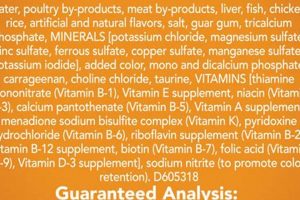
Further examination reveals the practical implications of ingredient choices. The inclusion of specific amino acids, such as methionine or taurine, can aid in urine acidification, while the source of carbohydrates impacts overall glycemic control and potential influence on urine pH. The presence of added water, characteristic of wet food, supports increased urine volume, diluting mineral concentrations and reducing the risk of crystal formation. Moreover, some formulations incorporate antioxidants to mitigate inflammation within the urinary tract. These targeted additions underscore the proactive approach in mitigating FLUTD risk. In contrast, ingredients known to exacerbate urinary issues, such as excessive amounts of plant-based proteins which can increase urine pH, are typically avoided or minimized.
In summary, ingredient composition represents a critical determinant of the effectiveness of feline urinary wet food. A thorough understanding of the relationship between individual ingredients and their impact on urinary physiology is essential for informed decision-making. Veterinary guidance remains paramount in selecting the most appropriate diet, considering individual feline needs and underlying health conditions. The strategic manipulation of ingredient composition forms the cornerstone of dietary management strategies aimed at promoting optimal urinary health in cats. Challenges will always come to the fore, but good ingredients will improve a feline’s health better than bad ones.
5. Palatability

Palatability, referring to the appeal of food to an animal’s sense of taste and smell, is a crucial factor influencing the efficacy of any feline diet, particularly specialized formulations such as urinary-specific wet food. Even with optimal nutritional composition tailored to address feline lower urinary tract disease (FLUTD), a diet’s benefits are unrealized if the cat refuses to consume it. Palatability issues can arise due to altered ingredient profiles necessitated by urinary health considerations, potentially making the food less appealing than standard maintenance diets. Therefore, manufacturers invest in palatability enhancers, flavor profiles, and texture adjustments to ensure adequate consumption of these specialized diets. The direct effect of enhanced palatability is increased adherence to the prescribed dietary management, leading to improved urinary health outcomes.
Specifically, in the context of urinary-specific wet food, palatability challenges are compounded by the often-restricted ingredient lists and targeted nutrient profiles. Real-world examples demonstrate that cats with FLUTD may initially reject urinary diets due to unfamiliar tastes or textures. To counter this, manufacturers may incorporate hydrolyzed proteins, which are less likely to trigger allergic reactions and can enhance flavor, or add palatable fats at controlled levels. Ensuring sufficient intake is particularly critical in wet food formulations, as their high moisture content aids in urine dilution, a primary mechanism for managing FLUTD. The practical significance lies in the cat receiving the intended therapeutic benefits of the diet, such as reduced mineral saturation in urine and optimized urine pH, only if it consistently consumes the food in adequate quantities. Diets that are not palatable simply don’t work as they should.
In conclusion, palatability is not a mere secondary attribute but an integral component of specialized feline urinary wet food. It directly impacts dietary compliance and, consequently, the success of managing FLUTD. Continuous research and development efforts are dedicated to improving the palatability of these diets without compromising their therapeutic benefits. While individual preferences vary, ensuring a high degree of palatability is crucial for promoting long-term adherence and supporting optimal urinary health in cats. It can be a challenge to create a balanced diet that is also palatable but it is one of the more important factors when addressing and preventing urinary concerns in cats.
6. Veterinary recommendation
The veterinary recommendation serves as the cornerstone for appropriate utilization of specialized feline urinary diets, including wet food formulations. The inherent complexity of feline lower urinary tract disease (FLUTD) necessitates professional veterinary assessment and guidance to ensure optimal health outcomes.
- Accurate Diagnosis and Needs Assessment
A veterinarian’s expertise is essential for accurately diagnosing the underlying cause of urinary signs in cats. FLUTD encompasses a spectrum of conditions, including struvite or calcium oxalate urolithiasis, idiopathic cystitis, and urinary tract infections. Each condition requires specific dietary management strategies. A veterinarian can differentiate between these conditions through diagnostic testing (urinalysis, imaging) and recommend the appropriate dietary intervention. Furthermore, the veterinarian considers other health factors, such as age, weight, and concurrent medical conditions, to tailor the dietary recommendation to the individual cat’s needs. Without accurate diagnosis, feeding an inappropriate diet could be ineffective or even detrimental.
- Product Selection and Brand Specifics
The market offers a variety of feline urinary diets, each with distinct formulations and ingredient profiles. A veterinarian possesses the knowledge to evaluate these products based on scientific evidence and clinical experience. They understand the nuances of specific ingredients, mineral levels, and pH targets. Given that “purina urinary cat food wet” is a specific brand and formulation, a veterinarian can assess its suitability for a particular cat based on its unique needs and response to therapy. They may recommend this specific product based on its proven efficacy, palatability, and availability. Understanding the brand’s formulation and research backing is key to an informed veterinary recommendation.
- Monitoring and Adjustments
Following the initiation of a specialized urinary diet, ongoing monitoring by a veterinarian is crucial. Regular urinalysis, physical examinations, and assessment of clinical signs allow for evaluation of the diet’s effectiveness and potential need for adjustments. Urine pH, specific gravity, and the presence of crystals are key parameters monitored. If the initial diet is not achieving the desired results, the veterinarian can modify the dietary plan, potentially switching to a different formulation or adjusting the feeding schedule. This iterative process ensures that the cat receives the most appropriate and effective dietary management over time. A veterinarian may recommend specific diagnostic testing when using Purina or other urinary cat foods to make sure it’s benefiting the animal.
- Integration with Comprehensive Treatment Plans
Dietary management is often one component of a broader treatment plan for FLUTD. Depending on the underlying cause, other interventions may be necessary, such as pain management, antibiotics for urinary tract infections, or procedures to relieve urinary obstructions. A veterinarian can integrate the dietary recommendations with these other therapies to provide comprehensive and coordinated care. They can also counsel owners on environmental modifications to reduce stress, which can be a contributing factor to FLUTD. The veterinary recommendation ensures that the dietary approach is not implemented in isolation but rather as part of a holistic strategy to manage the cat’s overall health.
The veterinary recommendation for “purina urinary cat food wet,” or any similar specialized diet, ensures that it is used appropriately, effectively, and safely as part of a well-rounded approach to promoting feline urinary health. This recommendation guides the selection of a suitable product and provides a method for monitoring the pet to address concerns. It is a partnership between the veterinarian and the cat owner to provide the pet with a healthy life.
7. Frequency feeding

Frequency feeding, the practice of dividing a cat’s daily food ration into multiple smaller meals, holds significance when employing a specialized diet such as “purina urinary cat food wet.” This approach can influence urinary pH, mineral saturation, and overall urinary tract health.
- Impact on Urine pH Stability
Frequent meals can contribute to a more stable urine pH compared to providing food ad libitum or in large, infrequent portions. When a cat consumes a large meal, a temporary alkaline tide can occur as the body processes the food. This pH fluctuation can increase the risk of struvite crystal formation. Smaller, more frequent meals minimize these fluctuations, supporting the desired slightly acidic urine pH promoted by “purina urinary cat food wet.”
- Regulation of Mineral Excretion
The timing of food consumption can influence the rate at which minerals are excreted in the urine. Infrequent large meals may lead to a surge in mineral excretion, potentially increasing the concentration of minerals in the urine and raising the risk of crystal formation. Frequent, smaller meals can promote a more consistent and controlled rate of mineral excretion, reducing the likelihood of mineral supersaturation, a key objective of “purina urinary cat food wet.”
- Enhanced Water Intake and Urine Dilution
While “purina urinary cat food wet” inherently provides a higher moisture content than dry food, coordinating feeding times with opportunities for water intake can further enhance urine dilution. Cats often drink water shortly after eating. By offering small, frequent meals, the cat has more frequent opportunities to drink, supporting a higher overall water intake and promoting the dilute urine essential for managing FLUTD. This is especially useful for cats who drink infrequently.
- Behavioral and Metabolic Considerations
Frequency feeding can also address behavioral needs and metabolic factors. Cats are naturally inclined to eat multiple small meals throughout the day. Mimicking this natural feeding pattern can reduce stress and anxiety, which can indirectly benefit urinary health by minimizing inflammation. Furthermore, frequent meals can help regulate blood glucose levels, potentially reducing the risk of metabolic imbalances that could impact urinary health. Pairing such a strategy with “purina urinary cat food wet” can boost its benefits for a cat prone to urinary and metabolic issues.
In conclusion, frequency feeding represents a valuable strategy for maximizing the benefits of “purina urinary cat food wet.” By promoting stable urine pH, regulating mineral excretion, encouraging water intake, and addressing behavioral and metabolic considerations, this feeding approach can contribute to improved urinary tract health in cats. Individual responses may vary, underscoring the importance of veterinary guidance in determining the optimal feeding plan for each feline patient.
Frequently Asked Questions About Purina Urinary Cat Food Wet
The following addresses common inquiries regarding Purina Urinary Cat Food Wet. These questions aim to provide clarity and understanding of its use and efficacy in managing feline urinary health.
Question 1: Is Purina Urinary Cat Food Wet intended for long-term feeding?
Purina Urinary Cat Food Wet is often formulated for long-term maintenance in cats predisposed to urinary issues. However, veterinary guidance is paramount. The duration of feeding should align with the cat’s individual needs and response, as determined by a veterinarian’s assessment.
Question 2: Can Purina Urinary Cat Food Wet dissolve existing urinary crystals or stones?
Some formulations of Purina Urinary Cat Food Wet are designed to dissolve struvite crystals. However, not all urinary stones are struvite. Veterinary diagnostics are necessary to determine the crystal type. For other types of stones, such as calcium oxalate, dissolution may not be possible through diet alone, and alternative treatments may be required.
Question 3: Does Purina Urinary Cat Food Wet prevent all types of feline urinary issues?
Purina Urinary Cat Food Wet is primarily designed to address specific types of feline lower urinary tract disease (FLUTD), particularly those related to struvite and calcium oxalate crystal formation. It may not prevent all urinary issues, especially those stemming from bacterial infections, anatomical abnormalities, or behavioral factors. A comprehensive approach, guided by veterinary expertise, is crucial for managing diverse urinary conditions.
Question 4: How quickly should improvements be noticed after starting Purina Urinary Cat Food Wet?
The timeline for observing improvements varies depending on the severity and nature of the urinary issue. Some cats may exhibit noticeable relief within a few days, while others may require several weeks of consistent feeding. Regular veterinary check-ups and urinalysis are essential to monitor progress and make necessary adjustments to the treatment plan.
Question 5: Is Purina Urinary Cat Food Wet safe for cats with other health conditions?
While generally safe, Purina Urinary Cat Food Wet may not be appropriate for all cats, particularly those with certain underlying health conditions, such as kidney disease or heart disease. Veterinary consultation is essential to assess the diet’s suitability in light of the cat’s complete medical history.
Question 6: Can Purina Urinary Cat Food Wet be fed to healthy cats as a preventative measure?
While Purina Urinary Cat Food Wet may offer some preventative benefits for cats predisposed to urinary issues, it is generally not recommended for long-term feeding in healthy cats without a veterinary recommendation. The specialized formulation may not provide the optimal nutrient balance for cats with no underlying urinary concerns. A balanced maintenance diet is typically more appropriate for healthy cats.
In summary, Purina Urinary Cat Food Wet can be an effective tool in managing specific feline urinary issues. However, its use should be guided by veterinary expertise and tailored to the individual cat’s needs. Regular monitoring and adherence to veterinary recommendations are essential for maximizing its benefits and ensuring optimal urinary health.
The following sections will provide guidance on selecting and implementing Purina Urinary Cat Food Wet, as well as address potential challenges and considerations.
Purina Urinary Cat Food Wet
This exploration has detailed the multifaceted aspects of “purina urinary cat food wet,” emphasizing its role in managing feline lower urinary tract disease. Key considerations include moisture content, mineral balance, pH regulation, ingredient composition, palatability, veterinary recommendation, and frequency of feeding. Each element contributes to the diet’s effectiveness in promoting optimal urinary health. The importance of veterinary guidance has been consistently underscored, highlighting the necessity of professional assessment and monitoring to ensure appropriate utilization and achieve desired outcomes.
The responsible use of “purina urinary cat food wet” necessitates a commitment to proactive veterinary care and informed decision-making. While this specialized diet offers a valuable tool in addressing specific feline urinary issues, it is not a substitute for comprehensive veterinary management. Continued research and advancements in feline nutrition will undoubtedly refine dietary strategies for urinary health, yet the foundation of responsible pet ownership lies in prioritizing professional veterinary guidance and adhering to evidence-based recommendations. The health of the feline remains at the forefront.
![Easy Homemade Gravy Cat Food Recipe [DIY] | World’s Most Delicious Foods: Must-Try Dishes from Every Country](https://lisasfoods.com/wp-content/uploads/2026/04/th-168-300x200.jpg "Easy Homemade Gravy Cat Food Recipe [DIY] World’s Most Delicious Foods: Must-Try Dishes from Every Country")