



The assessment of a feline diet’s quality involves evaluating its ingredients, nutritional balance, and suitability for a cat’s specific life stage and health condition. Considerations include the protein source, carbohydrate content, presence of essential nutrients, and absence of potentially harmful additives. The palatability and digestibility of the food also contribute to its overall value as a sustenance option for cats.
Quality pet food plays a vital role in maintaining a cat’s overall health, energy levels, and longevity. Proper nutrition supports healthy growth, a strong immune system, and optimal bodily functions. Historically, cat diets consisted primarily of table scraps or rudimentary formulations. However, advancements in veterinary science and nutritional understanding have led to the development of more sophisticated and complete cat food options.
This discussion will delve into the factors that contribute to a well-regarded cat food product. It will examine ingredient quality, nutritional profiles, manufacturing processes, and consumer reviews to offer a comprehensive understanding of what constitutes a beneficial dietary choice for felines.
Guidelines for Evaluating Feline Nutritional Products
Selecting an appropriate diet for a cat requires careful consideration of several factors. The following guidelines provide a framework for evaluating a food product’s suitability.
Tip 1: Analyze the Ingredient List: Scrutinize the ingredient list, prioritizing products where named animal protein sources (e.g., chicken, salmon, lamb) are listed as the first few ingredients. Avoid products with excessive amounts of fillers, such as corn or soy.
Tip 2: Assess the Protein Content: Cats are obligate carnivores and require a high protein intake. Verify that the food meets the minimum protein requirements specified by AAFCO (Association of American Feed Control Officials) for the cat’s life stage.
Tip 3: Evaluate the Fat Content: Fats are essential for energy and nutrient absorption. Look for healthy fat sources like fish oil or poultry fat. Avoid excessive amounts of saturated fats.
Tip 4: Consider the Carbohydrate Content: While cats do not require carbohydrates in their diet, a moderate amount can provide energy. Opt for products with easily digestible carbohydrates, such as rice or oats, in limited quantities.
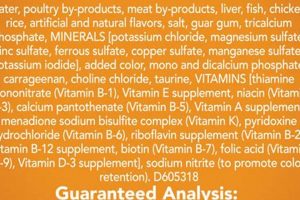
Tip 5: Check for Essential Nutrients: Ensure the food contains essential vitamins and minerals, such as taurine, vitamin A, and vitamin D, which are critical for feline health. Verify that these nutrients are included at appropriate levels.
Tip 6: Review the Guaranteed Analysis: The guaranteed analysis provides information on the minimum and maximum percentages of key nutrients, such as protein, fat, fiber, and moisture. Use this information to compare different food options.
Tip 7: Research the Manufacturer: Investigate the manufacturer’s reputation and quality control practices. Look for companies with a history of producing safe and reliable pet food products.
By adhering to these guidelines, individuals can make informed decisions regarding a cat’s dietary needs, supporting optimal health and well-being. Understanding the composition and quality of a feline food product is paramount for responsible pet ownership.
The next section will discuss potential benefits and drawbacks associated with specific ingredients commonly found in cat food formulations.
1. Ingredient Quality

Ingredient quality is a fundamental determinant of a cat food’s overall nutritional value and its impact on feline health. The source, processing, and composition of ingredients directly influence digestibility, nutrient absorption, and potential allergenic responses. Therefore, assessing ingredient quality is paramount when evaluating a brand’s suitability.
- Protein Sources and Their Impact
The primary protein source should be clearly identified and of animal origin, such as chicken, fish, or beef. The quality of the protein is determined by its amino acid profile and digestibility. Lower-quality protein sources, such as rendered by-products or excessive plant-based proteins, may lack essential amino acids or be poorly digested, leading to nutritional deficiencies or digestive issues.
- Fats and Fatty Acid Profiles
Fats are critical for energy and the absorption of fat-soluble vitamins. The type and source of fat are important considerations. Fish oils, for example, are rich in omega-3 fatty acids, which offer anti-inflammatory benefits. Poultry fat is another common source. Conversely, generic “animal fat” without specific identification may indicate lower-quality ingredients or inconsistent sourcing.
- Carbohydrate Composition and Digestibility
While cats have limited carbohydrate requirements, they are often included as a source of energy and fiber. The types of carbohydrates used significantly impact digestibility. Highly processed grains or fillers like corn and wheat can be difficult for cats to digest and may contribute to digestive upset. More digestible options include rice, oats, and barley, which provide a source of energy without excessive digestive strain.
- Presence of Additives and Preservatives
Many cat food formulations include additives and preservatives to enhance palatability, extend shelf life, or provide additional nutrients. However, the type and quantity of these additives are important considerations. Artificial colors, flavors, and preservatives, such as BHA and BHT, may pose potential health risks. Natural preservatives, like tocopherols (vitamin E), are generally preferred.
The presence of high-quality, identifiable protein sources, beneficial fats, digestible carbohydrates, and minimal artificial additives contributes positively to a cat food’s overall assessment. Conversely, formulations relying on low-quality ingredients, excessive fillers, and artificial additives raise concerns regarding nutritional value and potential health consequences. Therefore, careful scrutiny of the ingredient list is essential for informed pet ownership.
2. Nutritional Adequacy
Nutritional adequacy is a critical factor in determining the overall quality of any feline dietary product. Meeting established nutritional standards ensures that a cat receives all the essential nutrients required for optimal health, growth, and maintenance. The following facets detail how nutritional adequacy is evaluated and its impact on a cat’s well-being.
- AAFCO Standards and Compliance
The Association of American Feed Control Officials (AAFCO) establishes nutrient profiles for cat food, defining minimum and maximum levels of essential nutrients based on life stage. A product labeled as “complete and balanced” must meet or exceed these AAFCO standards through testing or formulation. Compliance with AAFCO guidelines provides a benchmark for assessing nutritional adequacy, ensuring that the food contains sufficient levels of protein, fat, vitamins, and minerals. Failure to meet these standards can result in nutritional deficiencies and associated health problems.
- Macronutrient Balance: Protein, Fat, and Carbohydrates
The appropriate balance of macronutrientsprotein, fat, and carbohydratesis essential for feline health. Cats require a high-protein diet due to their obligate carnivorous nature. Adequate fat levels provide energy and support the absorption of fat-soluble vitamins. While cats do not have a dietary requirement for carbohydrates, they can be included in limited quantities as an energy source. An imbalance in these macronutrients can lead to obesity, muscle loss, or digestive issues. A nutritionally adequate food provides these macronutrients in appropriate proportions to support a cat’s specific needs.
- Micronutrient Completeness: Vitamins and Minerals
Micronutrients, including vitamins and minerals, play vital roles in various physiological processes. Vitamins such as A, D, and E are essential for vision, bone health, and immune function. Minerals like calcium, phosphorus, and taurine are critical for skeletal development, nerve function, and heart health. A nutritionally complete food contains adequate levels of all essential vitamins and minerals. Deficiencies in these micronutrients can result in a range of health problems, including vision impairment, bone deformities, and heart disease.
- Life Stage Considerations: Kitten, Adult, and Senior
Nutritional requirements vary based on a cat’s life stage. Kittens require higher levels of protein and calories to support growth and development. Adult cats require a balanced diet to maintain optimal health and body weight. Senior cats may benefit from formulations with reduced calorie content and added supplements to support joint health and cognitive function. A nutritionally adequate food is formulated to meet the specific needs of each life stage, ensuring that cats receive the appropriate nutrients throughout their lives. Products that are labeled for “all life stages” must meet the strictest nutritional requirements.
The nutritional adequacy of any feline diet directly impacts a cat’s overall health and well-being. Compliance with AAFCO standards, a balanced macronutrient profile, complete micronutrient content, and life-stage-specific formulations are all critical factors to consider. Evaluating a product’s nutritional adequacy ensures that the dietary choice supports optimal feline health. When considering the quality and suitability of a specific cat food product, these elements are crucial considerations.
3. Digestibility

Digestibility, referring to the proportion of ingested nutrients that are absorbed and utilized by the body, is a pivotal factor in evaluating a feline dietary product’s overall quality. A highly digestible food ensures that cats can efficiently extract essential nutrients, reducing waste and supporting optimal health. In the context of assessing the merit of a specific cat food brand, digestibility becomes a key performance indicator.
- Impact of Ingredient Quality on Nutrient Absorption
The quality of ingredients directly affects nutrient absorption. High-quality protein sources, such as named animal proteins, are generally more digestible than plant-based proteins or rendered by-products. Similarly, easily digestible carbohydrates, such as rice or oats, are preferable to less digestible fillers like corn or soy. Ingredients that are difficult to digest can lead to reduced nutrient absorption, increased stool volume, and potential digestive upset. In evaluating the food brand, the use of high-quality, easily digestible ingredients is a positive indicator of its overall value.
- Role of Fiber Content and Type
Fiber plays a crucial role in digestive health, but the type and amount of fiber are important considerations. Moderate amounts of soluble fiber can aid in digestion and nutrient absorption, while excessive amounts of insoluble fiber can decrease digestibility. Sources of fiber, such as beet pulp or cellulose, should be carefully balanced to support optimal digestive function. Products with excessive fiber content may lead to decreased nutrient availability and increased stool volume. This aspect requires consideration when assessing the effectiveness of a cat food.
- Influence of Processing Methods on Digestion
The manufacturing process can significantly impact the digestibility of a cat food product. Extreme heat during processing can denature proteins and reduce their digestibility. Gentle cooking methods or the inclusion of digestive enzymes can help preserve nutrient integrity and enhance digestibility. The food brand’s processing methods should be examined to determine whether they support or hinder nutrient absorption. Products that utilize gentle processing techniques are generally considered more desirable.
- Indicators of Poor Digestibility: Stool Quality and Volume
Stool quality and volume provide indirect indicators of a cat food’s digestibility. Small, firm stools are generally indicative of good digestion, while large, loose stools suggest that a significant portion of the food is not being properly absorbed. Frequent vomiting or diarrhea can also be signs of poor digestibility. Monitoring stool quality and volume can help assess how well a cat is digesting a particular food. Consistent digestive issues may indicate that the food is not well-suited for that individual animal.
Digestibility, therefore, is a cornerstone in the assessment of any cat food product. Its relationship to ingredient quality, fiber content, processing methods, and observable indicators like stool quality emphasizes its importance. This factor must be considered to determine if the cat food brand supports optimal nutrient absorption and digestive health in felines.
4. Palatability

Palatability, the degree to which a cat finds a food appealing, is a significant determinant of a feline diet’s success. Even if a cat food possesses an optimal nutritional profile, it will be ineffective if the cat refuses to consume it. Therefore, palatability directly influences whether a feline can derive any benefit from a particular food. The relationship between palatability and a food’s effectiveness is causal; low palatability leads to inadequate consumption, which, in turn, negates any potential nutritional advantages. Real-life examples of this are abundant, ranging from cats consistently avoiding a specific brand despite its purported health benefits to cats developing food aversions after being forced to consume an unpalatable diet. This understanding is of practical significance for cat owners, as it highlights the necessity of considering palatability as a core aspect of the nutritional value of any food.
Further analysis reveals that various factors contribute to palatability. These include aroma, texture, flavor, and the presence of specific ingredients that cats find appealing. For example, many cats are attracted to foods with high levels of animal protein or those containing certain types of fats. The manufacturing process can also affect palatability; methods that preserve the natural flavors of ingredients tend to result in more palatable products. Moreover, individual cats have distinct preferences, meaning that a food that is highly palatable to one cat might be rejected by another. This variability underscores the importance of observing a cat’s feeding behavior and adjusting the diet accordingly. Veterinary practitioners often recommend considering different flavors or textures within a brand to accommodate individual feline preferences, highlighting the active role owners must take in finding palatable options. For example, some cats prefer wet food due to its stronger aroma and higher moisture content, while others favor dry kibble for its crunchy texture.
In conclusion, palatability is not merely a secondary consideration but an integral component of a cat food’s overall value. While nutritional content and ingredient quality are undoubtedly essential, a food’s palatability dictates whether a cat will consume it consistently enough to receive those benefits. Addressing the challenges of identifying palatable options requires attentive observation of a cat’s preferences and a willingness to experiment with different flavors, textures, and formulations within a brand. By recognizing the significance of palatability and actively seeking palatable diets, cat owners can positively impact their pet’s health and well-being, ensuring they consistently receive the nutrition needed to thrive.
5. Manufacturing Standards

The integrity of any cat food product is inextricably linked to the manufacturing standards upheld during its production. These standards encompass a range of quality control measures, facility protocols, and ingredient handling practices, all of which directly influence the safety and nutritional value of the final product. The assessment of a cat food’s worth necessitates a careful evaluation of these manufacturing standards, as deviations from established protocols can compromise the health and well-being of felines.
- Ingredient Sourcing and Traceability
Rigorous manufacturing standards dictate stringent protocols for ingredient sourcing and traceability. Suppliers must adhere to established quality benchmarks, and each ingredient batch should be traceable back to its origin. This ensures that any potential contamination or quality issues can be quickly identified and addressed. For example, a manufacturer that requires suppliers to provide certificates of analysis for each ingredient lot demonstrates a commitment to quality control. Conversely, a lack of traceability mechanisms raises concerns about the safety and consistency of the ingredients used. The implementation of such systems directly reflects a manufacturer’s commitment to ensuring the quality of “is fromm cat food good”.
- Quality Control Testing and Monitoring
Comprehensive quality control testing is a cornerstone of high manufacturing standards. This involves regular testing of ingredients and finished products for contaminants, pathogens, and nutrient levels. These tests may include checks for bacteria (e.g., Salmonella, E. coli), mycotoxins, heavy metals, and accurate nutrient composition. For example, some manufacturers conduct regular audits of their facilities and processes by independent third-party organizations to ensure compliance with established safety standards. The absence of robust testing protocols indicates a lack of commitment to product safety and quality, potentially impacting the overall value proposition of “is fromm cat food good”.
- Facility Hygiene and Sanitation
Strict hygiene and sanitation protocols within the manufacturing facility are essential for preventing contamination and ensuring product safety. This includes regular cleaning and disinfection of equipment, proper waste disposal procedures, and pest control measures. For example, some facilities implement a “clean room” environment for critical processing steps to minimize the risk of contamination. Poor sanitation practices can lead to the introduction of harmful bacteria or other contaminants into the cat food, posing a significant health risk to felines. Therefore, evaluating the facility’s adherence to hygiene standards is crucial in assessing “is fromm cat food good”.
- Production and Packaging Processes
Manufacturing standards also encompass the production and packaging processes. This includes ensuring that the food is properly cooked to eliminate pathogens, accurately weighed and packaged, and protected from environmental contamination during storage and transportation. For instance, some manufacturers use modified atmosphere packaging to extend shelf life and prevent spoilage. Proper packaging should also protect the food from moisture and light, which can degrade nutrient quality. Deviations from these standards can lead to nutrient loss, spoilage, or contamination, ultimately diminishing the value of “is fromm cat food good”.
In summary, manufacturing standards play a pivotal role in ensuring the safety, quality, and nutritional value of cat food. Rigorous ingredient sourcing, comprehensive quality control testing, strict facility hygiene, and adherence to proper production processes are all essential components of high manufacturing standards. A cat food’s value is directly dependent on the manufacturer’s commitment to these standards, as they ultimately determine the safety and efficacy of the final product. Consequently, an informed assessment of any cat food must include a thorough consideration of the manufacturing standards employed during its production.
6. Consumer Feedback

Consumer feedback constitutes a crucial element in evaluating the overall quality and suitability of feline diets. The aggregated experiences of cat owners provide valuable insights into aspects such as palatability, digestibility, and long-term health outcomes that may not be immediately apparent from ingredient lists or nutritional analyses. Specifically, regarding judgments of a product’s merit, such feedback serves as a real-world test, supplementing laboratory data with practical observations. For instance, a food may theoretically meet all nutritional requirements, but widespread reports of digestive upset among consumers would indicate a significant issue not captured by standard analyses. Therefore, it is important to consider the influence of direct consumer reporting.
The impact of consumer feedback on product perception and reformulation is significant. Widespread positive reviews can enhance brand reputation and drive sales, while negative reviews can trigger product recalls or alterations in formulation. For example, if numerous consumers report that their cats experience improved coat health or increased energy levels after consuming a specific diet, this contributes positively to the product’s overall evaluation. Conversely, consistent complaints about poor palatability, allergic reactions, or other adverse effects can lead to a decline in consumer confidence and necessitate corrective action by the manufacturer. These adjustments, driven directly by user experiences, highlight the practical importance of listening and adapting based on real-world outcomes.
In conclusion, while nutritional analysis and manufacturing standards provide a foundation for assessing cat food quality, consumer feedback offers a vital layer of validation. Analyzing and incorporating consumer experiences allows for a more holistic understanding of a product’s strengths and weaknesses, leading to more informed decisions by cat owners and more effective product development by manufacturers. Challenges remain in ensuring the reliability and representativeness of online reviews, but the overall value of consumer feedback as a component in assessing cat food is undeniable. It links theoretical specifications to actual outcomes, contributing to a more nuanced assessment of a food’s true merit.
Frequently Asked Questions Regarding Feline Dietary Quality
This section addresses common inquiries regarding the quality and suitability of feline dietary products, offering concise and informative responses.
Question 1: What are the primary indicators of high-quality feline nutrition?
Key indicators include a named animal protein source as the first ingredient, compliance with AAFCO standards, balanced macronutrient ratios, complete micronutrient content, and the absence of excessive fillers or artificial additives. Transparent manufacturing processes are also indicative of superior quality.
Question 2: How important is ingredient sourcing when evaluating feline diets?
Ingredient sourcing is critically important. Transparent sourcing practices and high-quality suppliers ensure the safety and nutritional value of the ingredients. Traceability allows for rapid identification and resolution of any potential contamination issues.
Question 3: What role does the Association of American Feed Control Officials (AAFCO) play in feline nutrition?
AAFCO establishes nutrient profiles for feline diets, defining minimum and maximum levels of essential nutrients. Products labeled as “complete and balanced” must meet or exceed these standards, providing a benchmark for nutritional adequacy.
Question 4: How does digestibility impact a feline’s health?
High digestibility ensures that a cat can efficiently extract essential nutrients from its food, reducing waste and supporting optimal health. Poor digestibility can lead to reduced nutrient absorption, increased stool volume, and digestive upset.
Question 5: Why is palatability an important consideration in feline diets?
Even if a cat food possesses an optimal nutritional profile, it will be ineffective if the cat refuses to consume it. Palatability influences whether a feline can derive any benefit from the product. Different cats have varying palatability preferences, necessitating a level of experimentation for owners.
Question 6: What steps can be taken to assess the manufacturing standards of feline diets?
Examine the manufacturer’s website for information on quality control processes, ingredient sourcing, and facility hygiene. Look for certifications from independent third-party organizations. Contact the manufacturer directly to inquire about specific quality control measures.
The preceding questions provide essential insights for discerning the nutritional value of feline diets. Consideration of these points allows owners to make more informed choices.
This document will now present concluding remarks to solidify core concepts.
Concluding Assessment
The analysis has presented various facets critical to evaluating feline dietary options. Ingredient quality, nutritional adequacy based on AAFCO standards, digestibility, palatability, manufacturing standards, and consumer feedback are all vital considerations. These factors collectively determine the nutritional benefit and suitability of any cat food product.
Selecting a feline diet involves a careful evaluation of these elements, ensuring that the chosen product aligns with individual feline needs and supports long-term health and well-being. A continued commitment to informed decision-making will contribute to improved feline health outcomes.
![Easy Homemade Gravy Cat Food Recipe [DIY] | World’s Most Delicious Foods: Must-Try Dishes from Every Country](https://lisasfoods.com/wp-content/uploads/2026/04/th-168-300x200.jpg "Easy Homemade Gravy Cat Food Recipe [DIY] World’s Most Delicious Foods: Must-Try Dishes from Every Country")