



Specialized feline diets formulated to promote epidermal health and a lustrous fur covering are prevalent in the pet food market. These products often incorporate specific nutrients designed to nourish the skin and enhance the quality of the coat. An example would be a dry kibble or wet food option that includes omega fatty acids and vitamins.
The consumption of appropriately formulated diets can contribute significantly to a feline’s overall well-being. Benefits include reduced shedding, diminished skin irritation, and improved coat shine. Historically, pet owners relied on supplementation to achieve these effects, but advancements in nutritional science have led to commercially available complete and balanced options.
The subsequent sections will explore the critical ingredients, selection criteria, potential benefits, and limitations associated with these specialized feline diets, providing a comprehensive understanding for informed consumer choices.
Considerations for Feline Epidermal and Coat Health Through Diet
Selecting a diet to support feline skin and coat health requires careful consideration of several factors to ensure optimal results and avoid potential complications.
Tip 1: Ingredient Evaluation: Scrutinize the ingredient list for high-quality protein sources, such as named meats (e.g., chicken, salmon, or turkey), as these provide essential amino acids for skin cell regeneration and coat growth.
Tip 2: Omega Fatty Acid Content: Verify the presence of omega-3 and omega-6 fatty acids, typically derived from fish oil, flaxseed, or sunflower oil. These fatty acids play a crucial role in maintaining skin hydration and reducing inflammation.
Tip 3: Vitamin and Mineral Profile: Ensure the diet contains adequate levels of vitamins A and E, as well as zinc. These micronutrients contribute to skin integrity and wound healing.
Tip 4: Limited Ingredient Diets: For cats with suspected food sensitivities or allergies, consider a limited ingredient diet (LID) to minimize potential allergens. These diets typically feature a single protein and carbohydrate source.
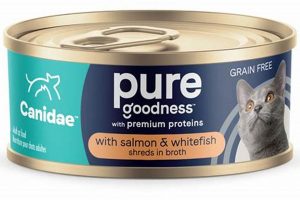
Tip 5: Hydration Support: Supplement dry kibble diets with wet food options to increase water intake. Adequate hydration is essential for maintaining skin elasticity and preventing dryness.
Tip 6: Transition Protocol: Introduce new food gradually over a period of 7-10 days to minimize digestive upset. Abrupt dietary changes can lead to gastrointestinal issues and hinder nutrient absorption.
Tip 7: Veterinary Consultation: Consult with a veterinarian before making significant dietary changes, particularly if the cat has pre-existing skin conditions or health concerns. A veterinarian can provide personalized recommendations based on the cat’s individual needs.
Adhering to these guidelines can significantly improve the likelihood of selecting a diet that effectively supports feline skin and coat health, resulting in a healthier, more comfortable animal.
The following sections will delve into specific ingredients, potential drawbacks, and long-term maintenance strategies for optimal feline dermatological health through diet.
1. Protein Sources
Protein sources represent a foundational component within diets designed to promote feline skin and coat health. The availability of essential amino acids, derived from ingested proteins, directly influences keratin production, the primary structural protein comprising hair and skin cells. Insufficient protein intake can manifest as a dull, brittle coat and increased susceptibility to dermatological issues. For instance, a diet deficient in methionine and cysteine, key amino acids for keratin synthesis, may result in hair loss and impaired skin barrier function.
The quality and digestibility of protein sources also hold significant implications. Highly digestible proteins, such as those derived from named animal sources like chicken, turkey, or fish, are more efficiently utilized by the feline body, leading to enhanced amino acid availability. Conversely, diets relying heavily on plant-based proteins may lack the complete amino acid profile required for optimal skin and coat health. An example includes vegetarian or vegan cat foods, which, unless meticulously formulated and supplemented, may fall short in providing adequate taurine, an essential amino acid crucial for various physiological functions, including maintaining healthy skin.
Therefore, careful consideration of protein source quantity, quality, and digestibility is paramount when selecting a feline diet intended to support skin and coat health. While the term “protein” appears ubiquitously on pet food labels, a discerning assessment of the specific ingredients list is essential to ensure the provision of bioavailable amino acids necessary for maintaining a healthy epidermis and lustrous coat covering.
2. Omega Fatty Acids

Omega fatty acids represent a critical nutritional component within feline diets formulated to support epidermal and coat health. Their role extends beyond general nutrition, influencing inflammatory responses, skin barrier function, and coat luster.
- Omega-3 Fatty Acids: Modulation of Inflammation
Omega-3 fatty acids, specifically EPA (eicosapentaenoic acid) and DHA (docosahexaenoic acid), possess anti-inflammatory properties. These fatty acids can mitigate inflammatory responses within the skin, reducing pruritus (itching) and alleviating symptoms associated with allergic dermatitis. Dietary supplementation with fish oil, a common source of EPA and DHA, has demonstrated efficacy in managing feline skin conditions. For example, cats diagnosed with atopic dermatitis often exhibit reduced inflammation and decreased self-trauma behaviors following dietary inclusion of omega-3 fatty acids.
- Omega-6 Fatty Acids: Skin Barrier Integrity
Omega-6 fatty acids, particularly linoleic acid, play a vital role in maintaining the skin’s barrier function. Linoleic acid is a precursor to ceramides, essential lipids that contribute to the stratum corneum’s structural integrity. A compromised skin barrier increases transepidermal water loss, leading to dry skin and increased susceptibility to allergens and irritants. Safflower oil and sunflower oil are common sources of linoleic acid used in feline diets. Deficiencies in omega-6 fatty acids can result in a dry, scaly coat and increased vulnerability to skin infections.
- Ratio of Omega-6 to Omega-3 Fatty Acids: Optimal Balance
The ratio of omega-6 to omega-3 fatty acids is a significant factor in influencing inflammatory balance. An excessive intake of omega-6 fatty acids, without sufficient omega-3 fatty acids, can promote inflammation. A balanced ratio, typically ranging from 5:1 to 10:1 (omega-6 to omega-3), is generally recommended to maintain a healthy inflammatory response. Pet food manufacturers often formulate diets with specific ratios to achieve optimal dermatological benefits. For instance, some formulations include both fish oil (omega-3) and vegetable oils (omega-6) to achieve the desired ratio.
- Dietary Source and Bioavailability
The dietary source of omega fatty acids impacts their bioavailability and efficacy. Marine-derived omega-3 fatty acids (EPA and DHA) are generally considered more bioavailable than plant-derived ALA (alpha-linolenic acid), as cats have limited capacity to convert ALA into EPA and DHA. Therefore, fish oil is a preferred source of omega-3 fatty acids in feline diets designed to support skin and coat health. Additionally, the stability of omega fatty acids during food processing and storage is crucial. Oxidation of these fatty acids can reduce their efficacy and potentially generate harmful byproducts. Manufacturers often incorporate antioxidants, such as vitamin E, to protect omega fatty acids from oxidation.
In summary, the strategic inclusion and appropriate balance of omega-3 and omega-6 fatty acids are paramount in feline diets aimed at promoting healthy skin and a lustrous coat. The dietary source, ratio, and stability of these fatty acids should be carefully considered to ensure optimal bioavailability and efficacy in addressing dermatological concerns and maintaining overall feline well-being.
3. Vitamin Enrichment

Vitamin enrichment in feline diets plays a crucial role in maintaining optimal skin and coat health. Specific vitamins act as essential cofactors in various metabolic processes directly impacting epidermal integrity, sebum production, and hair follicle function. Deficiencies in these vitamins can manifest as dermatological abnormalities, including dry skin, hair loss, and increased susceptibility to infections. Therefore, the inclusion of appropriate vitamin levels is a cornerstone of feline diets formulated to support a healthy coat and underlying skin structure.
Vitamin A, for instance, is vital for the differentiation and maturation of epithelial cells, including those of the skin. Insufficient vitamin A can lead to a thickened, scaly epidermis and impaired wound healing. Similarly, vitamin E, a potent antioxidant, protects cell membranes from oxidative damage caused by free radicals, thereby preserving skin cell health and reducing inflammation. Vitamin B complex vitamins, such as biotin and niacin, are essential for keratin synthesis and maintaining a healthy coat luster. A practical example involves cats with seborrhea, a condition characterized by excessive sebum production and scaling, which can often be managed through dietary supplementation with biotin and omega fatty acids. Furthermore, vitamin D plays a role in immune regulation within the skin, influencing the felines ability to combat dermatological infections.
In conclusion, vitamin enrichment represents a fundamental aspect of “cat food for skin and coat.” While commercial feline diets are typically formulated to meet or exceed established nutrient requirements, individual variations in absorption, metabolism, and environmental stressors may necessitate adjustments. Consulting with a veterinarian or a qualified veterinary nutritionist is essential to determine the appropriate level of vitamin supplementation for each cat, ensuring optimal skin and coat health while avoiding potential adverse effects associated with vitamin toxicities. The effective utilization of vitamin enrichment strategies, integrated with other nutritional interventions, significantly enhances the overall well-being and appearance of the feline patient.
4. Ingredient Quality

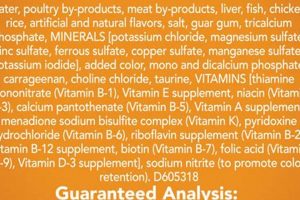
Ingredient quality exerts a direct and substantial influence on the effectiveness of feline diets designed to promote skin and coat health. Lower-quality ingredients, characterized by poor digestibility, incomplete nutrient profiles, or the presence of contaminants, can undermine the intended benefits, potentially exacerbating dermatological issues. For example, a diet containing rendered animal by-products of questionable origin may lack essential amino acids necessary for keratin synthesis, resulting in a dull, brittle coat. Similarly, the presence of artificial additives, fillers, or common allergens such as corn, wheat, or soy can trigger adverse reactions, manifesting as pruritus, erythema, and secondary skin infections. Therefore, the careful selection of high-quality ingredients is paramount to realizing the anticipated dermatological benefits of specialized feline diets.
The connection between ingredient quality and skin and coat health extends to the sourcing and processing of components. High-quality protein sources, such as named meats like chicken, salmon, or lamb, provide bioavailable amino acids necessary for skin cell regeneration and hair growth. Similarly, the quality of fats, particularly omega-3 and omega-6 fatty acids, influences their efficacy in modulating inflammation and maintaining skin barrier function. Cold-pressed oils and minimally processed ingredients retain a greater proportion of their natural nutrients, enhancing their beneficial effects. Real-world examples include cats exhibiting significant improvements in coat shine and reduced skin irritation following a transition to diets formulated with high-quality, human-grade ingredients and minimal processing.
In summary, ingredient quality stands as a crucial determinant of the efficacy of diets targeting feline skin and coat health. While marketing claims may emphasize specific nutrient profiles, a thorough evaluation of the ingredient list is essential to discern the true quality and digestibility of the components. Prioritizing diets formulated with identifiable, minimally processed ingredients, sourced from reputable suppliers, optimizes the likelihood of achieving the desired dermatological outcomes. However, even high-quality diets may not fully address underlying medical conditions. Therefore, a veterinary consultation remains indispensable in diagnosing and managing complex dermatological issues in felines, ensuring a comprehensive approach to skin and coat health.
5. Hydration Levels

Feline skin, like that of other mammals, relies on adequate hydration to maintain elasticity, barrier function, and overall health. Insufficient water intake can directly impact epidermal integrity, leading to dryness, scaling, and increased susceptibility to irritation and infection. Dry cat food, while convenient, inherently provides minimal moisture content. Therefore, the connection between water consumption and diets designed to promote skin and coat health is significant: optimal hydration is a prerequisite for nutrient absorption and utilization, even when a diet is specifically formulated with beneficial ingredients. Without adequate water, the cat’s body cannot efficiently process and deliver the skin-supporting nutrients contained within the food.
A primary cause of dehydration in cats is their naturally low thirst drive, coupled with a reliance on dry food as the sole dietary source. Consequently, the epidermis may become compromised, resulting in a dull, brittle coat and increased shedding. Real-life examples include cats transitioned from a solely dry food diet to a combination of wet and dry food, exhibiting noticeable improvements in coat shine and skin suppleness within weeks. Furthermore, increased water intake supports kidney function, aiding in the excretion of metabolic waste products that could otherwise contribute to inflammatory skin conditions. Thus, the selection of specialized cat food for skin and coat must be complemented by strategies to encourage and ensure adequate hydration.
Maintaining adequate hydration levels represents a critical, yet often overlooked, component of feline dermatological health. The challenge lies in encouraging sufficient water consumption, particularly among cats reluctant to drink from traditional bowls. Employing strategies such as providing fresh water in multiple locations, utilizing circulating water fountains, or supplementing dry food with wet food options directly addresses this challenge. Recognizing the link between water intake and nutrient utilization is crucial for maximizing the benefits of skin and coat-specific feline diets. These diets must, therefore, be paired with proactive measures to ensure optimal hydration, resulting in a comprehensive approach to feline dermatological well-being.
Frequently Asked Questions
This section addresses common inquiries regarding the selection and utilization of feline diets formulated to support skin and coat health.
Question 1: What distinguishes specialized “cat food for skin and coat” from regular feline diets?
Diets specifically designed to promote feline epidermal and hair health typically feature elevated levels of omega-3 and omega-6 fatty acids, higher-quality protein sources, and enriched vitamin and mineral profiles compared to standard maintenance diets. These formulations aim to address specific nutritional needs associated with maintaining a healthy skin barrier and a lustrous coat.
Question 2: How quickly should one expect to see visible improvements in a cat’s skin and coat after switching to a specialized diet?
Observable improvements in skin and coat condition generally require several weeks to months of consistent dietary management. Factors such as the severity of pre-existing dermatological conditions, individual metabolic rates, and adherence to feeding guidelines influence the timeline. Patience and consistent monitoring are essential during the transition period.
Question 3: Are there potential risks associated with feeding a cat a diet solely focused on skin and coat health?
While specialized diets can offer benefits, it is crucial to ensure that they provide complete and balanced nutrition for the cat’s overall health. Diets excessively focused on specific nutrients may inadvertently create imbalances in other areas. Consulting with a veterinarian is recommended to confirm that the selected diet meets the cat’s comprehensive nutritional needs.
Question 4: Can dietary changes alone resolve all feline skin and coat problems?
Dietary modifications can significantly improve many feline skin and coat conditions. However, they may not always constitute a complete solution. Underlying medical conditions, parasitic infestations, allergies, or behavioral factors can also contribute to dermatological issues. A comprehensive diagnostic approach, often involving veterinary examination and testing, is frequently necessary.
Question 5: Is “grain-free” always a superior choice for feline skin and coat health?
The term “grain-free” does not inherently guarantee improved skin and coat health. While some cats may benefit from grain-free diets due to sensitivities or allergies, grains themselves are not inherently detrimental to all felines. The overall quality and digestibility of the ingredients, including protein and fat sources, are more significant determinants of dermatological health than the presence or absence of grains.
Question 6: How does one determine if a cat has a food allergy contributing to skin problems?
Diagnosing food allergies in cats typically involves a process of elimination using a hypoallergenic diet. This requires feeding a diet with novel or hydrolyzed protein sources for a minimum of 8-12 weeks, followed by a controlled reintroduction of suspected allergens. Veterinary guidance is essential for accurate diagnosis and management of food allergies.
The selection of a “cat food for skin and coat” requires careful consideration of individual needs, potential risks, and the underlying causes of dermatological issues. A collaborative approach involving a veterinarian and informed dietary management is crucial for achieving optimal results.
The subsequent sections will delve into specific ingredients to avoid and long-term maintenance strategies to help owners choose what’s best for the cats they love.
Concluding Considerations on Feline Dermatological Nutrition
This discourse has illuminated the intricate relationship between feline diet and epidermal health, emphasizing the importance of judiciously selected nutrition in promoting optimal skin integrity and coat quality. The efficacy of “cat food for skin and coat” hinges on a constellation of factors, including protein source quality, omega fatty acid balance, vitamin enrichment, ingredient digestibility, and maintenance of adequate hydration levels. A comprehensive understanding of these elements empowers informed consumer choices.
The pursuit of feline dermatological well-being necessitates a sustained commitment to proactive nutritional management and diligent observation. While specialized diets can offer demonstrable benefits, they represent only one facet of a holistic approach. Continued veterinary consultation, coupled with vigilant monitoring of individual feline responses, remains paramount. The responsible selection and implementation of appropriate nutritional strategies directly contribute to the long-term health and vitality of the feline companion.
![Easy Homemade Gravy Cat Food Recipe [DIY] | World’s Most Delicious Foods: Must-Try Dishes from Every Country](https://lisasfoods.com/wp-content/uploads/2026/04/th-168-300x200.jpg "Easy Homemade Gravy Cat Food Recipe [DIY] World’s Most Delicious Foods: Must-Try Dishes from Every Country")