



A detailed listing on a package of feline kibble reveals the nutritional composition and ingredient sourcing of the product. This information is presented in a standardized format, as mandated by regulatory bodies, and provides details such as protein content, fat percentage, fiber levels, vitamin inclusion, and mineral composition. An example would be a Purina product’s nutritional guide that outlines the percentage of crude protein, crude fat, crude fiber, and moisture, alongside a list of ingredients in descending order by weight.
Understanding this detailed product information is crucial for pet owners seeking to make informed decisions about their animal’s diet. It enables a comparison of different food options and allows for assessment of suitability based on an animal’s specific dietary needs, age, and health conditions. Historical context reveals that mandatory ingredient listings and nutritional analysis have evolved to promote transparency and enhance consumer awareness regarding pet food composition.
The subsequent analysis will delve into the key components typically found within these product guides, elucidating the significance of each element for feline health and well-being. This exploration will cover aspects such as macronutrient ratios, the role of added vitamins and minerals, and the implications of specific ingredients for dietary considerations.
Interpreting Feline Kibble Composition
A comprehensive understanding of dry feline food composition is essential for responsible pet ownership. The following guidelines provide insight into evaluating product details and selecting appropriate nutrition for feline companions.
Tip 1: Evaluate Protein Content: The protein percentage, as indicated, is a primary factor in assessing food quality. Felines are obligate carnivores, necessitating a diet rich in animal-based protein sources. Ensure the product’s protein content aligns with a cat’s life stage and activity level.
Tip 2: Analyze Fat Composition: Dietary fat is a crucial energy source and contributes to palatability. Examine the fat percentage and the source of fats listed. Opt for foods containing named animal fats, such as chicken fat, rather than generic “animal fat”.
Tip 3: Scrutinize Ingredient Order: Ingredients are listed in descending order by weight. The initial ingredients represent the largest proportion of the food. Prioritize foods where meat, poultry, or fish are listed as the primary ingredients.
Tip 4: Assess Fiber Content: Fiber plays a role in digestive health. Evaluate the fiber percentage and consider the source of fiber. Moderate fiber content is generally beneficial, but excessive fiber may hinder nutrient absorption.
Tip 5: Review Vitamin and Mineral Inclusion: Ensure the product includes essential vitamins and minerals, such as taurine, vitamin A, and vitamin D. These nutrients are vital for feline health and may not be adequately synthesized by the cat’s body.
Tip 6: Consider Life Stage Formulations: Recognize that kittens, adult cats, and senior cats have different nutritional requirements. Select food specifically formulated for the cat’s current life stage to ensure optimal health.
Tip 7: Be Wary of Fillers and Additives: Be cautious of excessive fillers, such as corn, wheat, and soy, which offer limited nutritional value. Artificial colors, flavors, and preservatives should also be minimized.
By carefully examining product specifications, owners can make informed choices to provide their feline companions with a balanced and nutritious diet. Prioritizing ingredient quality and aligning nutrition with individual needs contributes to improved health outcomes.
The subsequent sections will further elaborate on specific nutritional considerations and address common dietary concerns related to feline health.
1. Caloric Content
Caloric content, when featured on product packaging, serves as a critical indicator of energy density within a specific food formulation. Its presence on a product guides a consumer’s understanding of appropriate portion sizes to manage an animal’s weight effectively.
- Kilocalories per Kilogram (kcal/kg)
This metric represents the energy concentration per unit mass of the food. A higher kcal/kg value indicates a more energy-dense product. For example, a dry feline food labeled with 4000 kcal/kg signifies a substantial energy content relative to another with 3500 kcal/kg. These values are essential for calculating daily food requirements based on an animal’s energy expenditure.
- Kilocalories per Cup (kcal/cup)
This practical measurement translates the energy density into a common serving unit. If a product states 450 kcal/cup, a single cup provides 450 kilocalories. This information is crucial for convenient portioning and is directly applicable in daily feeding practices. Variations in cup size, however, necessitate careful attention to serving measurements.
- Impact on Weight Management
Precise monitoring of caloric intake is fundamental to weight control in felines. Overconsumption, even of nutritionally balanced food, leads to weight gain. An understanding of caloric content facilitates the calculation of appropriate daily portions to maintain an ideal body condition score. The caloric content information enables owners to adjust rations in response to changes in a cat’s activity level or metabolic needs.
- Comparative Analysis
The caloric density enables a direct comparison of different feline food products. It allows owners to assess whether one product provides more energy per serving than another. Such comparisons are valuable when transitioning between food brands or formulations. Consideration of other factors, such as ingredient quality and nutritional composition, remains essential during the selection process.
The displayed kilocalorie information empowers owners to make informed decisions regarding feline nutrition and weight management. This data, in conjunction with other factors such as ingredient quality, nutritional balance, and individual animal characteristics, supports responsible pet ownership and promotes feline health.
2. Ingredient Breakdown

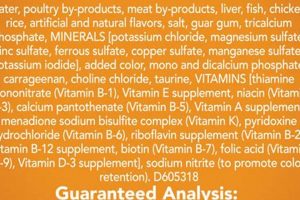
The ingredient breakdown on a products specifications provides a comprehensive list of components, ordered by weight, that constitute the product’s formulation. Within the context of the feline food products guide, the ingredient list offers essential insights into the nutritional sources and potential allergens present.
- Protein Source Identification
The first several ingredients typically indicate the primary protein sources within the food. Named animal proteins, such as chicken, turkey, or fish, are preferred due to their higher bioavailability and suitability for feline physiology. The presence of unnamed “meat by-products” or plant-based proteins as primary ingredients suggests a lower-quality protein profile. For instance, if corn gluten meal precedes chicken on the list, the food relies more heavily on plant-based protein than animal-based sources.
- Carbohydrate and Fiber Sources
Following the protein sources, the ingredient list usually details carbohydrate and fiber sources. These components contribute to energy and digestive health. Ingredients such as rice, barley, and oats offer more digestible carbohydrates, while beet pulp and cellulose provide fiber. Excessive quantities of grain-based fillers, such as corn or wheat, may be indicative of a lower-quality formulation and potential allergens for sensitive animals. An example would be a product listing corn as the third ingredient, suggesting it contributes significantly to the food’s bulk.
- Fat and Oil Composition
The inclusion and type of fats and oils impact palatability and provide essential fatty acids. Named animal fats, such as chicken fat, and fish oils are desirable sources. Vegetable oils, such as soybean oil, offer alternative fatty acid profiles. The absence of clearly identified fat sources or the presence of generic “animal fat” warrants careful consideration. For example, a product featuring fish oil among the first ingredients suggests a higher concentration of omega-3 fatty acids.
- Additives, Vitamins, and Minerals
The latter portion of the ingredient list comprises additives, vitamins, and minerals intended to enhance the nutritional value and shelf life of the food. Preservatives, such as tocopherols (vitamin E), and antioxidants contribute to product stability. Added vitamins and minerals, such as taurine, vitamin A, and zinc, address specific nutritional needs. Excessive artificial colors, flavors, or preservatives may raise concerns regarding potential sensitivities. The inclusion of taurine, for example, is crucial for feline health as it is an essential amino acid that cats cannot synthesize on their own.
Careful scrutiny of the ingredient breakdown on the specifications helps in making informed decisions about feline nutrition. By evaluating the sources of protein, carbohydrates, fats, and additives, owners can assess the quality and suitability of a product for their animal’s dietary needs and health requirements.
3. Guaranteed Analysis

The Guaranteed Analysis, a mandatory component on “temptations dry cat food nutrition label”, provides a quantified overview of the food’s nutrient composition. It offers minimum or maximum percentages of key nutrients, aiding consumers in assessing the product’s nutritional adequacy.
- Crude Protein Minimum
The “Crude Protein” percentage represents the minimum amount of protein present in the food. For felines, an obligate carnivore, a higher protein percentage is often desirable. A “temptations dry cat food nutrition label” stating a minimum of 30% crude protein indicates that at least 30% of the food’s composition, by weight, is protein. This information enables consumers to compare protein levels across different brands and formulations, assessing their suitability for an animal’s specific dietary needs.
- Crude Fat Minimum
The “Crude Fat” percentage signifies the minimum amount of fat in the food, contributing to energy provision and the absorption of fat-soluble vitamins. A “temptations dry cat food nutrition label” indicating a minimum of 10% crude fat reveals that the product provides at least 10% fat content. This value assists in determining the energy density of the food and its suitability for animals with varying energy requirements. Excessive fat levels may be detrimental to animals prone to obesity.
- Crude Fiber Maximum
The “Crude Fiber” percentage represents the maximum amount of fiber present, influencing digestive health. A “temptations dry cat food nutrition label” specifying a maximum of 4% crude fiber suggests that the fiber content does not exceed 4% of the food’s composition. This parameter is relevant for managing digestive issues such as constipation or diarrhea, as fiber can impact stool consistency and gastrointestinal motility. Products with excessively high fiber may hinder nutrient absorption.
- Moisture Maximum
The “Moisture” percentage indicates the maximum amount of water present in the food. A “temptations dry cat food nutrition label” showing a maximum of 12% moisture reveals that the product contains no more than 12% water. In dry foods, moisture content is typically low, contributing to a longer shelf life. Comparing moisture levels is less critical for dry foods than for wet foods, where higher moisture content can contribute to hydration.
The Guaranteed Analysis is a valuable tool in evaluating the overall nutritional profile of “temptations dry cat food nutrition label”. By examining the minimum and maximum percentages of key nutrients, consumers can make more informed decisions to provide balanced nutrition for their animal companions. It provides a concise summary of key nutrient levels, facilitating comparison and assessment of suitability for individual dietary needs.
4. Nutritional Adequacy

Nutritional adequacy, as indicated on a “temptations dry cat food nutrition label”, signifies whether the product meets established nutrient requirements for a specific life stage of felines, typically kittens, adults, or senior cats. This determination is often based on guidelines set forth by organizations such as the Association of American Feed Control Officials (AAFCO). The presence of an AAFCO statement on a “temptations dry cat food nutrition label” confirms that the product has either been formulated to meet the nutritional levels established by AAFCO nutrient profiles or has undergone feeding trials demonstrating its nutritional adequacy.
The absence of an AAFCO statement on a “temptations dry cat food nutrition label” raises concerns about whether the food provides complete and balanced nutrition. Without this assurance, the product may lack essential nutrients, leading to potential deficiencies or health problems over time. For example, a “temptations dry cat food nutrition label” lacking an AAFCO statement and containing insufficient taurine levels poses a risk of taurine deficiency in cats, which can lead to heart and vision problems. Conversely, a product bearing an AAFCO statement that explicitly mentions “complete and balanced nutrition for adult maintenance” indicates that the food is formulated to meet the nutritional needs of adult cats, mitigating such risks.
Understanding the concept of nutritional adequacy, as evidenced by AAFCO statements on a “temptations dry cat food nutrition label”, is critical for responsible pet ownership. This understanding allows consumers to make informed decisions, selecting foods that meet their animal’s specific life-stage requirements, thereby supporting optimal health and well-being. Challenges arise when interpreting ambiguous AAFCO statements or when relying on products lacking such assurances, underscoring the importance of scrutinizing product labels and seeking veterinary guidance when necessary.
5. Feeding Guidelines
Feeding guidelines, prominently displayed on “temptations dry cat food nutrition label”, provide recommended daily food allowances based on a feline’s weight, age, and activity level. These guidelines serve as a starting point for determining appropriate portion sizes and are intrinsically linked to the nutritional information provided elsewhere on the label.
- Weight-Based Recommendations
Feeding charts typically correlate a cat’s body weight with a suggested daily food quantity. For example, a “temptations dry cat food nutrition label” might recommend 1/2 cup per day for a 5-pound cat and 3/4 cup for a 10-pound cat. However, these recommendations are averages and necessitate adjustment based on individual metabolic rates and activity levels. Overlooking this variability can lead to overfeeding or underfeeding, impacting an animal’s overall health and body condition.
- Life Stage Considerations
Kittens, adults, and senior cats have distinct nutritional needs that influence feeding guidelines. A “temptations dry cat food nutrition label” may feature separate recommendations for each life stage. Kittens, requiring more energy for growth, typically receive larger portions relative to their weight compared to adult cats. Senior cats may have reduced caloric needs due to decreased activity levels. Failure to account for life stage can compromise growth, maintenance, and overall well-being.
- Activity Level Adjustments
A cat’s activity level significantly impacts its energy expenditure and, consequently, its food requirements. Highly active cats require more calories than sedentary cats. A “temptations dry cat food nutrition label” may provide general recommendations, such as “adjust feeding amount to maintain optimal body weight.” This instruction places the responsibility on the owner to observe the animal’s condition and modify the ration accordingly. Inadequate adjustment can lead to weight gain or loss, affecting health.
- Individual Metabolic Differences
Metabolic rates vary among individual felines, influencing their caloric needs even when weight, age, and activity levels are similar. A “temptations dry cat food nutrition label” cannot account for these individual differences. Owners must monitor their cat’s body condition, assessing rib palpability and fat covering, to fine-tune feeding amounts. Reliance solely on label guidelines without considering individual metabolic traits can lead to inaccurate portioning and suboptimal health outcomes.
The feeding guidelines on a “temptations dry cat food nutrition label” offer a starting point for portion control but require diligent observation and adjustment based on individual feline characteristics. Consideration of weight, life stage, activity level, and metabolic differences is essential for accurate portioning and maintaining optimal health. Veterinary consultation is advisable for customized feeding plans, particularly for animals with specific health concerns.
6. Additives Present

The enumeration of additives on a “temptations dry cat food nutrition label” is a critical component for assessing the overall quality and potential health implications of the product. These additives, which include preservatives, artificial colors, and flavor enhancers, can significantly impact the palatability, shelf life, and, potentially, the well-being of felines consuming the product.
- Preservatives: Maintaining Product Integrity
Preservatives, such as BHA, BHT, and ethoxyquin, are incorporated to inhibit spoilage and extend the shelf life of the product. While effective in preventing rancidity and bacterial growth, some preservatives have been linked to adverse health effects in animals. “Temptations dry cat food nutrition label” often lists mixed tocopherols (a form of vitamin E) as a natural alternative to synthetic preservatives. The presence of artificial preservatives necessitates careful consideration of potential risks versus benefits.
- Artificial Colors: Enhancing Visual Appeal
Artificial colors, including Red 40, Yellow 5, and Blue 2, are used to enhance the visual appeal of the kibble to pet owners. These additives offer no nutritional value and have been associated with hypersensitivity reactions in some animals. A “temptations dry cat food nutrition label” listing artificial colors indicates a focus on aesthetic appeal rather than nutritional merit. Consumers seeking to minimize potential sensitivities may prefer products devoid of artificial coloring agents.
- Flavor Enhancers: Palatability Considerations
Flavor enhancers, such as monosodium glutamate (MSG) and artificial flavorings, are added to increase the palatability of the food, encouraging consumption. While these additives may improve acceptance, they can mask the quality of the underlying ingredients and potentially lead to overconsumption. A “temptations dry cat food nutrition label” featuring flavor enhancers suggests a reliance on artificial means to stimulate appetite rather than inherent ingredient quality. Some flavor enhancers may also trigger allergic reactions in sensitive animals.
- Nutritional Additives: Essential Vitamin and Mineral Supplementation
Beyond preservatives and artificial enhancements, “temptations dry cat food nutrition label” also includes nutritional additives such as vitamins (A, D, E, B-complex) and minerals (taurine, zinc, iron). These are essential to meet the nutritional requirements of felines, which may not be adequately met by the base ingredients alone. These additives support various physiological functions, including vision, immune response, and metabolism. The specific forms and levels of these additives are important considerations for ensuring optimal feline health.
The additives detailed on a “temptations dry cat food nutrition label” offer critical insights into the product’s formulation philosophy and potential health implications. A careful evaluation of these components, considering both the benefits and risks associated with each additive, allows consumers to make informed decisions aligned with their animal’s specific needs and sensitivities. Prioritizing products with natural preservatives, minimal artificial colors, and balanced nutritional supplementation is crucial for promoting feline well-being.
7. Manufacturer Details

The “Manufacturer Details” section on a “temptations dry cat food nutrition label” provides essential information about the entity responsible for producing and distributing the product. This information is critical for verifying product authenticity, addressing concerns, and understanding quality control measures.
- Company Identification
The name and address of the manufacturing company are typically featured. This allows consumers to verify the legitimacy of the brand and research its reputation. For example, a “temptations dry cat food nutrition label” would identify Mars, Incorporated, as the manufacturer. This information enables tracing the product’s origin and confirming its association with a reputable company. Should issues arise, the manufacturer’s contact information facilitates direct communication for inquiries or complaints.
- Contact Information
Phone numbers, email addresses, or website URLs are often provided to facilitate consumer contact. These details enable consumers to seek clarification about the “temptations dry cat food nutrition label”, report concerns about the product, or request additional information. For instance, a consumer might use the provided contact information to inquire about the sourcing of specific ingredients or to report a perceived inconsistency in the product’s nutritional content. The availability of multiple contact methods promotes accessibility and responsiveness from the manufacturer.
- Manufacturing Location
In some cases, the “temptations dry cat food nutrition label” may include the location of the manufacturing facility. This is especially relevant for products marketed as “made in” a specific country, as it supports transparency regarding the origin of production. Knowledge of the manufacturing location enables consumers to research potential regional regulations and standards applicable to the production process. This detail is particularly important for consumers concerned about food safety and quality control measures.
- Quality Assurance Statements
The manufacturer may include statements regarding quality control procedures or certifications on the “temptations dry cat food nutrition label”. These statements can provide insights into the company’s commitment to product safety and quality. For example, a claim that the product is manufactured in a facility adhering to Good Manufacturing Practices (GMP) suggests adherence to established quality standards. Such statements can reassure consumers about the manufacturer’s dedication to maintaining product integrity and safety.
The “Manufacturer Details” component of a “temptations dry cat food nutrition label” is integral to ensuring product accountability and transparency. By providing verifiable information about the manufacturing company, contact methods, and quality control measures, the manufacturer empowers consumers to make informed purchasing decisions and address any concerns related to the product’s quality, safety, or nutritional content. The information fosters trust and promotes responsible consumerism within the pet food market.
Frequently Asked Questions Regarding Product Specifications
The following addresses common inquiries concerning the details outlined on “temptations dry cat food nutrition label”. This information is intended to clarify misconceptions and provide a deeper understanding of the information presented on this detailed packaging.
Question 1: What is the significance of the ingredient list order?
Ingredients are listed in descending order by weight, pre-cooking. The initial ingredients represent the largest proportion of the product. Prioritizing foods where meat, poultry, or fish are listed as the primary ingredients is advisable to ensure adequate animal-based protein content.
Question 2: How is the “Guaranteed Analysis” useful in evaluating product quality?
The “Guaranteed Analysis” provides minimum or maximum percentages of key nutrients, such as crude protein, crude fat, crude fiber, and moisture. It enables a comparison of nutrient levels across different products, aiding in the selection of a food that meets an animal’s specific nutritional requirements. It offers a quantifiable overview of nutrient composition, however, it does not reflect ingredient quality.
Question 3: What does an AAFCO statement signify?
An AAFCO (Association of American Feed Control Officials) statement on the label indicates the food has been formulated to meet established nutrient profiles or has undergone feeding trials, demonstrating its nutritional adequacy for a specific life stage. The presence of an AAFCO statement provides assurance that the food provides complete and balanced nutrition.
Question 4: How should feeding guidelines be interpreted?
Feeding guidelines are recommendations based on weight, age, and activity level. These guidelines are a starting point, and adjustments may be needed based on individual metabolic rates and body condition. Over-reliance on these guidelines without considering individual characteristics can lead to inaccurate portioning.
Question 5: Why are additives included in dry feline food?
Additives, such as preservatives, artificial colors, and flavor enhancers, are included to extend shelf life, enhance visual appeal, or improve palatability. The presence of certain additives raises concerns about potential sensitivities or health risks. Consumers may prefer products with natural preservatives and minimal artificial additives.
Question 6: How can the manufacturer’s details be utilized?
The manufacturer’s details, including the company name, address, and contact information, enable consumers to verify product authenticity, report concerns, or seek additional information. Direct communication with the manufacturer can clarify inquiries regarding ingredient sourcing, quality control procedures, or product specifications.
Understanding these common inquiries provides pet owners with the necessary tools to critically assess feline food specifications. This informed decision-making process contributes to optimal health outcomes and promotes responsible pet ownership.
The subsequent section will explore specific considerations for selecting feline food based on individual health conditions and dietary sensitivities.
Conclusion
The preceding examination of “temptations dry cat food nutrition label” has elucidated its multifaceted components and their significance in informing responsible pet ownership. From caloric content and ingredient breakdowns to guaranteed analyses and manufacturer details, each element contributes to a comprehensive understanding of the product’s composition and suitability for feline consumption. Thorough scrutiny of these features empowers owners to make informed decisions aligned with their animal’s specific dietary needs and health considerations.
Given the profound impact of nutrition on feline well-being, diligent assessment of product specifications is paramount. Continued vigilance and a proactive approach to dietary management will contribute significantly to improved health outcomes and an enhanced quality of life for feline companions. Owners are encouraged to utilize the information provided to critically evaluate dietary options and consult with veterinary professionals to tailor nutrition plans to individual animal requirements.
![Easy Homemade Gravy Cat Food Recipe [DIY] | World’s Most Delicious Foods: Must-Try Dishes from Every Country](https://lisasfoods.com/wp-content/uploads/2026/04/th-168-300x200.jpg "Easy Homemade Gravy Cat Food Recipe [DIY] World’s Most Delicious Foods: Must-Try Dishes from Every Country")