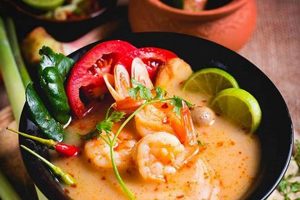
The culinary preparations featuring unripe mangoes within Thai cuisine offer a distinct flavor profile, characterized by tartness and crispness. A common example includes salads where the sour fruit is julienned and combined with ingredients such as peanuts, chilies, fish sauce, and lime juice, creating a balanced harmony of sweet, sour, spicy, and savory elements. This combination represents a cornerstone of Thai culinary tradition.
The utilization of the firm, sour mango in these dishes provides textural contrast and a refreshing counterpoint to richer, heavier flavors often found in Thai cooking. Historically, it likely stemmed from resourcefulness, making use of available seasonal ingredients and contributing to a balanced diet. Its presence adds complexity and vibrancy, enhancing the overall sensory experience.
Subsequent sections will delve into specific recipes showcasing the versatility of this ingredient, explore regional variations in its application, and discuss the nutritional aspects contributing to its enduring popularity within Thailand and increasingly, on a global scale.
Preparation Strategies for Unripe Mango-Based Thai Cuisine
Maximizing the flavor and texture of dishes relying on tart mangoes requires careful consideration of ingredient selection, preparation techniques, and complementary flavor pairings. The following strategies enhance the culinary experience.
Tip 1: Select Firm, Underripe Fruit: The mangoes should be firm to the touch and exhibit minimal give. Avoid fruit that is soft or overly fragrant, as this indicates ripeness and a reduction in tartness.
Tip 2: Utilize a Sharp Julienne Peeler: A specialized peeler facilitates the creation of uniform, thin strips, crucial for optimal texture and flavor distribution within salads.
Tip 3: Soak Julienned Mango in Ice Water: This step helps to maintain crispness and prevent discoloration, preserving the visual appeal of the dish.
Tip 4: Balance Acidity with Sweetness: Incorporate a source of sweetness, such as palm sugar or honey, to counterbalance the tartness of the fruit. The proportion should be adjusted to individual preferences.
Tip 5: Employ Toasted Nuts for Texture: Toasted peanuts, cashews, or sesame seeds provide a contrasting crunch and nutty flavor that complements the mangos tartness.
Tip 6: Incorporate Fresh Herbs: Fresh herbs such as cilantro, mint, or Thai basil contribute aromatic complexity and a refreshing counterpoint to the other ingredients.
Tip 7: Freshly Prepare Dressing: A freshly prepared dressing, combining elements like fish sauce, lime juice, chili, and sugar, ensures optimal flavor intensity and allows for precise adjustment of the sweet, sour, salty, and spicy balance.
Tip 8: Serve Immediately: To preserve the mango’s crispness and the dressing’s vibrancy, the dish should be served immediately after preparation.
Adherence to these guidelines will result in a more satisfying culinary outcome, highlighting the inherent qualities of the unripe fruit and enhancing the overall balance of the dish.
The subsequent sections will explore specific regional variations and further refine techniques for preparing exceptional dishes.
1. Tartness

The defining characteristic of culinary preparations featuring unripe mangoes within Thai cuisine is the prominent tartness. This acidity, stemming from higher concentrations of organic acids in the fruit’s immature state, provides a sensory contrast to the sweetness and richness often present in Thai meals. The degree of tartness directly impacts the flavor profile of the dish. For instance, in Som Tum, a green papaya salad that sometimes incorporates unripe mango, the fruit’s sourness interacts with the sweetness of palm sugar and the heat of chilies to create a complex and balanced flavor. Without adequate tartness, the dish would lack its signature refreshing quality.
The specific variety of unripe mango used also influences the intensity of tartness. Some varieties are inherently more acidic than others, requiring adjustments in the balance of other ingredients. Furthermore, the preparation method affects the perception of tartness. Thinly sliced or julienned mango, as commonly found in Thai salads, maximizes surface area, allowing for greater interaction with the dressing and consequently, a more pronounced sour flavor. The skillful manipulation of tartness, therefore, is a critical element in crafting authentic and appealing dishes.
In summary, tartness is not merely a characteristic but a foundational element defining dishes incorporating unripe mangoes in Thai cuisine. It dictates the flavor balance, informs ingredient choices, and influences preparation techniques. A thorough understanding of this relationship is essential for both culinary professionals and home cooks seeking to replicate these dishes accurately and appreciate their nuances.
2. Crisp Texture

Crisp texture is an essential component in defining the sensory experience of dishes featuring unripe mangoes in Thai cuisine. It serves as a counterpoint to other textural elements and contributes significantly to the overall appeal. The following examines key facets of this textural aspect.
- Cellular Integrity and Turgor Pressure
The crispness of the unripe mango originates from the high turgor pressure within its cells, maintained by the water content and strong cell walls. This inherent firmness is maximized when the fruit is fresh and properly stored. Bruising or prolonged storage diminishes the cellular integrity, resulting in a loss of crispness.
- Preparation Techniques Impacting Texture
Techniques such as chilling the mango before preparation and using a sharp knife or mandoline to create clean cuts are crucial in preserving the desired texture. Dull blades can crush the cells, leading to a less desirable, mushy consistency. Soaking the julienned mango in ice water can further enhance and maintain crispness by preventing water loss and retaining cellular rigidity.
- Contrast and Complementarity in Dish Composition
The crispness provides a valuable contrast to the softer or chewier textures of other ingredients commonly found in dishes such as salads. For example, the juxtaposition of crisp mango with the crunch of roasted peanuts or the yielding texture of cooked shrimp creates a more complex and satisfying mouthfeel. This textural diversity elevates the overall sensory experience.
- Perception and Palatability
The perception of crispness contributes to the perceived freshness and quality of the dish. A crisp texture signals a recently prepared product, enhancing the diner’s appreciation. The combination of tartness and crispness is often perceived as refreshing, making these dishes particularly appealing in warmer climates.
The manipulation and preservation of crisp texture in dishes with unripe mangoes are integral to the authentic Thai culinary experience. Attention to these details ensures a more appealing and satisfying final product, reinforcing the importance of textural considerations in Thai cuisine.
3. Flavor Balance

The equilibrium of sweet, sour, salty, spicy, and umami elements is paramount in Thai cuisine, and dishes incorporating unripe mangoes exemplify this principle. The inherent tartness of the fruit necessitates a deliberate orchestration of other flavors to achieve a harmonious and satisfying profile.
- Counteracting Acidity with Sweetness
The sourness of the unripe mango is often mitigated by the addition of a sweet component, typically palm sugar. This ingredient imparts a caramel-like richness that balances the tartness without overwhelming it. The proportion of palm sugar is adjusted according to the specific variety of mango and the desired intensity of sourness. Insufficient sweetness results in an unpleasantly acidic flavor, while excessive sweetness masks the mango’s inherent character.
- Salty and Umami Contributions
Fish sauce, a staple in Thai cooking, provides both saltiness and umami depth. Its pungent aroma and complex flavor profile enhance the overall savoriness of the dish, complementing the other elements. The quality of the fish sauce is crucial, as inferior products can impart an undesirable bitterness. Shrimp paste is also sometimes incorporated to add additional umami notes.
- The Role of Chilies in Achieving Balance
Chilies introduce the element of spiciness, which serves to elevate the other flavors and create a more dynamic sensory experience. The type and quantity of chilies used vary depending on regional preferences and the desired level of heat. A skillful application of chilies not only adds spiciness but also enhances the perception of both sweetness and sourness.
- Herbal and Aromatic Nuances
Fresh herbs, such as cilantro, mint, and Thai basil, contribute aromatic complexity and refreshing notes. These herbs provide a counterpoint to the heavier flavors of the fish sauce and chilies, adding brightness and complexity. The specific herbs used can vary depending on the dish and regional preferences, contributing to the unique character of each preparation.
The successful integration of unripe mangoes into Thai cuisine hinges on a precise understanding and execution of flavor balancing principles. Each elementsweet, sour, salty, spicy, and herbalplays a critical role in creating a cohesive and harmonious flavor profile, showcasing the fruit’s unique character while maintaining the integrity of Thai culinary traditions. Adjustments must be made based on mango ripeness, cultural variation, and taste. Flavor balance makes green mango thai food, well, balanced.
4. Nutritional Profile

The inclusion of unripe mangoes in Thai culinary preparations contributes specific nutritional benefits to the overall dish. These benefits stem from the unique composition of the fruit in its unripened state compared to its mature counterpart. Unripe mangoes are notably lower in sugar content and higher in certain vitamins and antioxidants, thus influencing the health profile of dishes in which they are featured. The inherent fiber content promotes digestive health, while the vitamin C contributes to immune function and collagen synthesis. This composition is particularly important when considering the overall carbohydrate load of a typical Thai meal which often contains rice or noodles.
Compared to ripe mangoes, which are primarily a source of carbohydrates due to their high sugar content, the unripe fruit offers a more balanced macronutrient profile in savory applications. Dishes incorporating the raw mangoes as key ingredients often exhibit a lower glycemic index. This index is pivotal in managing blood sugar levels, particularly in individuals with glucose management concerns. The use of the fruit enhances the fiber content of the food and acts as a source of manganese which enhances blood flow in the body. For example, a green mango salad, when prepared with lean protein sources and a balanced dressing, presents a nutritionally sound option compared to starch-heavy counterparts like Pad Thai. This is important to note as western dietary trends place emphasis on low-carb options, and highlights the positive attributes of Thai cuisine.
In conclusion, the nutritional advantages of green mango-based dishes in Thai cuisine extend beyond mere flavor enhancement. The fruit’s unique biochemical composition, characterized by low sugar content, high fiber, and an array of vitamins and antioxidants, offers tangible health benefits. Incorporating green mango into the dietary structure promotes balanced nutrition. Despite these benefits, portion control and careful ingredient selection remain paramount to optimize the overall nutritional value and mitigate any potential adverse effects such as excessive sodium intake from some sauces.
5. Regional Variations
Dishes featuring unripe mangoes in Thai cuisine exhibit significant regional variations, reflecting diverse culinary traditions, ingredient availability, and local preferences. These variations are not merely superficial modifications; they fundamentally alter the flavor profiles, textures, and overall character of the dishes. The cause of these regional differences lies in the interplay of geography, history, and cultural adaptation, each contributing to distinct culinary identities across Thailand.
In Northeastern Thailand (Isan), for example, the influence of neighboring Laos is evident in the use of pla ra, a fermented fish sauce, which imparts a pungent and umami-rich flavor. A green mango salad in this region might incorporate pla ra, along with roasted rice powder for added texture and aroma. Central Thailand, on the other hand, often favors a more balanced approach, emphasizing the interplay of sweetness, sourness, and spiciness without a dominant fermented flavor. Dishes in this region are also frequently made with dried shrimp. Southern Thailand, known for its spicier cuisine, might incorporate a greater quantity of chilies, alongside ingredients like turmeric and galangal, reflecting the region’s proximity to Malaysia and its distinct spice trade history. Coastal provinces may also incorporate seafood more prominently, pairing the mango with grilled prawns or calamari.
The practical significance of understanding these regional variations lies in appreciating the complexity and nuance within Thai cuisine. It extends beyond simply recognizing differences in ingredients; it involves understanding the historical and cultural forces that shape these culinary identities. Recognizing these nuances allows for a more informed and respectful engagement with Thai food, whether as a chef seeking to authentically replicate regional dishes or as a diner seeking to expand one’s culinary horizons. Overcoming these variations is the key to fully understanding and appreciating Thai culinary heritage.
6. Culinary Versatility

The utilization of unripe mangoes within Thai cuisine exemplifies significant culinary versatility, stemming from the fruit’s adaptable flavor profile and textural attributes. Its tartness functions as a foundational element, permitting integration into a wide array of dishes, from salads and relishes to dipping sauces and refreshing beverages. This adaptability stems from the fruit’s ability to balance contrasting flavors and provide textural complexity. A prime example is Som Tum, where it provides sourness and crispness alongside the sweetness of palm sugar and the spiciness of chilies. The mango also is used in Nam Pla Wan, a sweet-salty-spicy dipping sauce often served with other tart fruits, and its presence provides sour notes that are key to balancing the diverse flavors. Other examples showcase versatility.
The importance of culinary versatility, as demonstrated by the use of unripe mangoes, lies in its contribution to the dynamism and adaptability of Thai cuisine. The fruits capacity to act as a counterpoint to rich or heavy flavors elevates the sensory experience of diverse preparations. Moreover, it allows for resourcefulness in recipe adaptation, enabling chefs and home cooks alike to create variations based on ingredient availability and personal preferences. Practically, this understanding informs the development of new dishes and facilitates a deeper appreciation of traditional Thai cooking methods. Its presence in both salads, main dishes, or even beverages also shows its use throughout the entire meal, which highlights a value proposition that increases popularity.
In conclusion, the culinary versatility of unripe mangoes is a defining characteristic of their role in Thai cuisine. The combination of adaptable flavor and textural attributes allows for their application across a spectrum of dishes, reflecting both ingenuity and resourcefulness. This understanding underscores the importance of culinary versatility as a key element contributing to the richness and adaptability of the Thai culinary landscape. It is paramount to note, however, that careful attention must be paid to maintaining flavor balance to fully explore its versatility.
Frequently Asked Questions
This section addresses common inquiries and clarifies misconceptions surrounding the utilization of unripe mangoes in Thai culinary applications, providing informative answers based on established culinary practices and nutritional considerations.
Question 1: What distinguishes dishes featuring unripe mangoes from those using ripe mangoes in Thai cuisine?
Dishes incorporating unripe mangoes exhibit a pronounced tartness, while those utilizing ripe mangoes are characterized by sweetness. This fundamental flavor difference dictates the other ingredients and preparation methods employed, resulting in distinct culinary profiles.
Question 2: Can any variety of mango be used in these culinary preparations?
While various mango varieties may be suitable, specific cultivars prized for their firm texture and balanced acidity are preferred. Certain varieties may possess excessive sourness or insufficient firmness, rendering them less desirable for these applications.
Question 3: Are there any health considerations associated with consuming unripe mangoes?
While generally safe for consumption, individuals with sensitivities to acidic foods may experience digestive discomfort. Moderation is advised, particularly for those with pre-existing gastrointestinal conditions. Nutritional benefits include vitamin and antioxidant intake, but dietary needs should be considered.
Question 4: How does the preparation of unripe mangoes impact the final dish?
Techniques such as julienning and soaking in ice water enhance the fruit’s crispness and prevent discoloration. Improper preparation can result in a mushy texture and compromised visual appeal, diminishing the overall quality of the dish.
Question 5: What are the key flavor pairings commonly used with unripe mangoes in Thai cuisine?
Common pairings include palm sugar (for sweetness), fish sauce (for saltiness and umami), chilies (for spiciness), and fresh herbs (for aromatic complexity). Achieving a balanced interplay of these flavors is essential for a harmonious culinary outcome.
Question 6: How can regional variations in dishes incorporating unripe mangoes be identified?
Regional variations are often indicated by the inclusion of specific ingredients, such as fermented fish sauce in Northeastern Thailand or the prominence of spices in Southern Thailand. Understanding these regional nuances enriches the culinary experience.
In summary, appreciating the nuances of “green mango thai food” requires attention to ingredient selection, preparation techniques, flavor balance, nutritional considerations, and regional variations. These factors collectively contribute to the unique character and culinary value of these preparations.
The subsequent section will explore adaptations of these dishes outside of Thailand and the influence of globalization on their evolution.
Green Mango Thai Food
This exploration of green mango Thai food has underscored its defining characteristics: the tartness and crisp texture, the flavor balance achieved through a skillful combination of sweet, sour, salty, spicy, and umami notes, and the nutritional contributions stemming from the unripe fruit’s unique biochemical composition. Regional variations further illuminate the adaptable nature of these dishes, reflecting diverse culinary traditions across Thailand. Their appeal is also amplified by the many nutrients this type of dish offers.
The enduring presence of green mango Thai food within both traditional and contemporary culinary landscapes suggests its continued significance. Further investigation into the evolving adaptations of these dishes in a globalized world is warranted, ensuring the preservation and appreciation of their authentic flavors and cultural heritage. It serves to encourage a more in-depth engagement with this unique culinary tradition, promoting a greater understanding of the many complexities within Thai cuisine.