Early-stage fish nourishment is crucial for survival and optimal growth. This nourishment typically consists of finely sized particles, often a combination of live food and specially formulated commercial diets, designed to meet the unique nutritional requirements of newly hatched or very young fish.
Providing appropriate nutrition during these early stages significantly impacts the overall health, disease resistance, and eventual size and reproductive capacity of the fish. Historically, aquaculturists relied heavily on live cultures. Contemporary practices increasingly incorporate prepared diets to ensure consistent nutrient delivery and reduce the risk of disease transmission inherent in live food sources.
The subsequent sections will elaborate on the specific types of nourishment, methods of delivery, and key considerations for achieving optimal development in juvenile fish across various aquaculture settings.
Guidance for Early-Stage Fish Nutrition
Optimizing nutritional strategies is essential for maximizing fry survival and promoting robust growth. Adherence to the following guidelines will contribute to superior outcomes.
Tip 1: Commence Feeding Promptly: Initiate feeding within the first 24-48 hours post-hatch. Depleted yolk sacs render fry entirely dependent on exogenous food sources, and delayed feeding can lead to irreversible developmental deficits.
Tip 2: Size Matters: Provide feed particles that are commensurate with the fry’s mouth size. Excessively large particles cannot be ingested, while overly small particles may lack sufficient nutritional density.
Tip 3: Frequency of Feeding is Key: Implement frequent feeding schedules, typically 4-6 times per day. The small stomach capacity of fry necessitates regular replenishment of nutrients to sustain metabolic demands.
Tip 4: Nutritional Composition: Prioritize diets that are rich in essential amino acids, highly unsaturated fatty acids (HUFAs), and vitamins. These nutrients are critical for organ development and immune system maturation.
Tip 5: Monitor Water Quality: Uneaten feed can rapidly degrade water quality, leading to ammonia spikes and subsequent fry mortality. Implement regular water changes and employ filtration systems to maintain optimal environmental conditions.
Tip 6: Observe Feeding Behavior: Closely observe fry feeding behavior to assess feed palatability and adjust feeding rates accordingly. Uneaten feed accumulation is indicative of overfeeding, while lethargic behavior may suggest underfeeding or poor diet acceptance.
Tip 7: Gradual Transition: When transitioning fry to larger feed sizes or different diet formulations, implement a gradual process to minimize stress and ensure consistent nutrient intake.
Implementing these guidelines translates to enhanced survival rates, accelerated growth, and improved overall health outcomes in fry populations. Consistent application of these nutritional best practices is essential for successful aquaculture endeavors.
The next phase will focus on advanced rearing techniques and disease management strategies to further enhance fry production efficiency.
1. Size appropriateness

The correlation between particle size and successful nutrition during the fry stage is demonstrably significant. Fry possess limited mouth gape, directly impacting their ability to ingest offered nourishment. If food particles exceed this physiological constraint, the fry cannot consume them, irrespective of the nutritional quality of the feed. This inability to feed results in starvation, compromised development, and increased mortality rates. For example, newly hatched brine shrimp nauplii, at approximately 400-500 micrometers, may be suitable for larger fry species but inappropriate for smaller species, necessitating the use of smaller rotifers or specialized microdiets.
Conversely, providing food particles that are significantly smaller than necessary can also present challenges. While ingestion may be possible, the energy expenditure required to locate and consume a sufficient quantity of excessively small particles can outweigh the nutritional benefit. This leads to inefficient energy utilization and suboptimal growth. Moreover, extremely fine particles are more susceptible to leaching nutrients into the water column, further reducing their nutritional value for the fry. Commercial microdiets are therefore formulated within specific size ranges, tailored to the developmental stage and species-specific requirements of the target fry.
In conclusion, appropriate particle size is a critical determinant of nutritional efficacy for fry. Supplying adequately sized nourishment ensures effective ingestion, efficient energy utilization, and optimal growth. Failure to address this factor directly undermines efforts to provide nutritionally complete diets, ultimately hindering fry survival and overall aquaculture productivity. The consideration of species-specific mouth gape and developmental stage remains paramount in feed selection and management strategies.
2. Nutritional content

Nutritional content is a foundational element in the formulation of adequate sustenance for young fish. The specific needs of fry diverge considerably from those of mature specimens. Imprecise formulations lead directly to compromised survival rates and diminished growth performance.
- Essential Amino Acid Profile
The amino acid profile represents the cornerstone of protein synthesis and tissue development. Fry require a balanced complement of essential amino acids, those that cannot be synthesized de novo and must be obtained through dietary sources. Deficiencies in key amino acids, such as lysine or methionine, result in stunted growth, skeletal deformities, and compromised immune function. Commercial fry feeds are frequently supplemented with crystalline amino acids to optimize the profile and meet the elevated requirements of rapidly growing tissue.
- Highly Unsaturated Fatty Acids (HUFAs)
HUFAs, particularly docosahexaenoic acid (DHA) and eicosapentaenoic acid (EPA), exert critical roles in neural development, visual acuity, and stress tolerance. Fry possess limited capacity for de novo synthesis of HUFAs, necessitating their inclusion in the diet. Deficiency can lead to impaired cognitive function, reduced swimming performance, and increased susceptibility to environmental stressors. Marine-derived oils, such as fish oil or algal oil, are common sources of HUFAs in fry diets.
- Vitamin and Mineral Balance
Vitamins and minerals act as cofactors in numerous metabolic processes, influencing growth, immune function, and overall health. Fry exhibit specific requirements for vitamins A, C, D, and E, as well as essential minerals like calcium, phosphorus, and zinc. Deficiencies result in a range of pathologies, including skeletal deformities, impaired immune response, and reduced disease resistance. Fry diets are typically fortified with a vitamin and mineral premix to ensure adequate intake and prevent deficiency-related disorders.
- Digestibility and Bioavailability
The nutritional value of a feed is not solely determined by its compositional analysis but also by the digestibility and bioavailability of its components. Fry possess immature digestive systems, rendering them less efficient at processing complex carbohydrates and proteins. Therefore, fry diets often incorporate pre-digested proteins or readily digestible carbohydrate sources to enhance nutrient absorption. Furthermore, the bioavailability of certain minerals can be influenced by the presence of anti-nutritional factors or the chemical form in which they are presented. Careful ingredient selection and processing techniques are essential to maximize nutrient utilization.
These nutritional considerations are pivotal in optimizing sustenance for young fish. Addressing these aspects within feed formulation is not merely beneficial, but essential for the overall well-being and viability of fry in aquaculture systems.
3. Feeding frequency

Feeding frequency is a crucial parameter directly influencing the efficacy of nourishment strategies for fry. These early life stages are characterized by rapid growth and high metabolic demands. Therefore, the regularity with which nourishment is supplied significantly impacts survival and overall health.
- Gastric Capacity and Digestion Rate
Fry possess limited gastric capacity and accelerated digestion rates compared to adult fish. Their small stomachs cannot accommodate large boluses of nourishment, necessitating frequent, smaller meals to ensure continuous nutrient availability. Infrequent feeding results in periods of starvation, hindering growth and potentially increasing susceptibility to disease. Studies demonstrate that increasing feeding frequency correlates positively with growth rates in various fry species, provided that water quality parameters are maintained within acceptable limits.
- Nutrient Absorption Efficiency
Frequent nourishment allows for optimal nutrient absorption and utilization. Fry digestive systems are still developing, and continuous exposure to easily digestible food sources promotes efficient nutrient uptake. Infrequent feeding can lead to digestive inefficiencies, where the digestive system struggles to process large quantities of nourishment intermittently. This can result in nutrient wastage and reduced growth performance. Regular intervals between feedings enable the digestive enzymes to function optimally, maximizing nutrient extraction.
- Competition and Social Hierarchy
In a communal rearing environment, feeding frequency can influence competition among fry for nourishment. Infrequent feeding may exacerbate aggressive behaviors, as fry compete more intensely for limited resources. This can lead to unequal nourishment distribution, with some fry receiving inadequate sustenance while others consume excessive amounts. Frequent feeding, on the other hand, reduces competition by ensuring that nourishment is consistently available to all individuals, promoting more uniform growth and reducing stress levels.
- Water Quality Impact
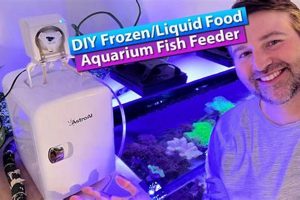
While frequent feeding is generally beneficial, it is crucial to consider the potential impact on water quality. Overfeeding, regardless of frequency, can lead to the accumulation of uneaten nourishment, resulting in the degradation of water quality through increased ammonia and nitrite levels. Therefore, careful monitoring of feeding rates and implementation of appropriate water management strategies are essential to mitigate this risk. Automated feeders, delivering small portions of nourishment at pre-determined intervals, can help optimize feeding frequency while minimizing the potential for water quality deterioration.
These facets highlight the intricate connection between feeding frequency and successful fry nourishment. Optimizing feeding frequency, in conjunction with appropriate nourishment composition and water quality management, is essential for maximizing fry survival, promoting robust growth, and ensuring the overall productivity of aquaculture operations.
4. Water quality
The provision of sustenance to fry introduces an immediate and consequential impact on the aquatic environment. Undigested feed and metabolic waste products released by the fry contribute directly to the accumulation of ammonia, nitrite, and nitrate. These nitrogenous compounds, if unchecked, induce toxicity, impairing respiratory function, suppressing immune responses, and ultimately leading to elevated mortality rates within the fry population. For example, in recirculating aquaculture systems (RAS), the buildup of ammonia can occur rapidly if biofiltration is inadequate, negating the benefits of even the most nutritionally complete diets. Regular monitoring of ammonia, nitrite, and nitrate levels, coupled with appropriate water exchange or biofiltration strategies, is therefore essential to mitigate these risks.
The introduction of particulate organic matter (POM) from uneaten feed also promotes bacterial proliferation, potentially depleting dissolved oxygen levels. Fry, with their high metabolic demands and limited tolerance for hypoxia, are particularly vulnerable to oxygen depletion. This situation is exacerbated in densely stocked rearing tanks where the cumulative oxygen consumption further stresses the system. Supplementation with aeration devices or oxygen injection systems becomes crucial in such scenarios to maintain oxygen saturation within optimal ranges. Furthermore, the type of feed used significantly influences the rate of water quality degradation. Highly digestible feeds, characterized by reduced levels of indigestible components, minimize the production of waste and thus lessen the burden on water treatment systems. Live feeds, while often nutritionally beneficial, can introduce additional organic matter and potential pathogens into the water, necessitating vigilant monitoring and management.
In conclusion, water quality is inextricably linked to the selection, administration, and management of fry sustenance. Inadequate water quality management can negate the benefits of nutritionally superior diets, leading to compromised growth, increased disease susceptibility, and elevated mortality rates. Prioritizing water quality monitoring, implementing appropriate water treatment strategies, and selecting feeds with high digestibility are crucial steps in ensuring the success of fry rearing operations. The integration of these factors forms the cornerstone of sustainable and productive aquaculture practices, contributing to the overall health and viability of juvenile fish populations.
5. Live vs. Prepared
The selection between live and prepared diets represents a pivotal decision in the management of sustenance for juvenile fish. This choice profoundly impacts nutritional delivery, biosecurity, and operational efficiency within aquaculture systems.
- Nutritional Completeness and Customization
Live feeds, such as rotifers, Artemia, and copepods, offer variable nutritional profiles depending on their own diets and rearing conditions. Enrichment techniques can enhance their nutritional value, particularly in terms of essential fatty acids, but consistency remains a challenge. Prepared diets, conversely, allow for precise control over nutrient composition, enabling the formulation of diets tailored to the specific requirements of different fry species and developmental stages. Manufacturers can incorporate specific amino acids, vitamins, and minerals in defined quantities, ensuring a more consistent and predictable nutritional input. This is especially critical for species with highly specialized dietary needs or during sensitive developmental periods. However, prepared diets may lack certain bioactive compounds or enzymes present in live feeds that could potentially enhance digestion or immune function in fry.
- Digestibility and Bioavailability
Live feeds often contain endogenous enzymes that aid in their own digestion, potentially improving nutrient bioavailability for fry. Prepared diets rely on the fry’s own digestive enzymes, which may be less developed in early life stages. However, advances in feed processing techniques, such as extrusion and microencapsulation, have improved the digestibility of prepared diets. These techniques can create smaller particle sizes and protect nutrients from degradation, enhancing their absorption by the fry. The physical form of the feed, whether it is a sinking or floating particle, also impacts its availability to the fry, particularly in systems with strong water currents.
- Biosecurity Considerations
Live feeds can serve as vectors for pathogens, introducing diseases into the culture system. Rigorous disinfection and quarantine procedures are necessary to minimize this risk. Prepared diets, produced under controlled manufacturing conditions, generally present a lower risk of pathogen introduction. However, the raw materials used in prepared diets can also be sources of contamination, necessitating strict quality control measures. The decision to use live feeds often involves a trade-off between nutritional benefits and biosecurity risks, requiring careful assessment of the specific circumstances and risk tolerance of the aquaculture operation. Sterilization techniques such as UV radiation can mitigate pathogen risk in live feeds but may affect the nutritional content.
- Operational Efficiency and Cost-Effectiveness
Rearing live feeds requires dedicated infrastructure, labor, and resources, adding to the operational complexity and cost of fry production. Prepared diets offer greater convenience and reduce the need for specialized culturing facilities. However, the cost of high-quality prepared diets can be substantial, particularly for species with demanding nutritional requirements. The economic viability of using live versus prepared diets depends on factors such as the scale of production, the availability of resources, and the market value of the fry. Automated feeding systems can improve the efficiency of prepared diet delivery, reducing labor costs and minimizing feed wastage.
These distinctions reveal that both live and prepared sustenance options present unique advantages and disadvantages. The judicious selection between these approaches necessitates a comprehensive evaluation of nutritional requirements, biosecurity protocols, operational constraints, and economic realities inherent in specific aquaculture environments. No single approach is universally optimal; rather, the ideal choice reflects a nuanced assessment tailored to the unique circumstances of each fry rearing scenario.
6. Palatability

Palatability, the degree to which a food is pleasing or acceptable to the taste or sensory perception of an animal, is a critical factor influencing the success of early-stage fish nourishment. Even nutritionally complete sustenance is rendered ineffective if fry reject it due to unappealing characteristics.
- Sensory Attractants
Fry possess sensory capabilities that guide their feeding behavior. Chemical attractants, such as amino acids and nucleotides, can stimulate feeding responses, encouraging fry to ingest novel or unfamiliar nourishment. The presence and concentration of these attractants significantly impact the initial acceptance rate of a feed. For instance, the inclusion of specific amino acid blends in prepared diets can enhance palatability and stimulate feeding in species that are otherwise reluctant to consume artificial feeds. Naturally occurring attractants in live feeds often contribute to their high palatability.
- Physical Characteristics
The physical characteristics of a sustenance source, including texture, color, and shape, influence its palatability. Fry exhibit preferences for certain textures and particle shapes, potentially reflecting adaptations to their natural feeding habits. For example, some species may prefer soft, easily ingested particles, while others may favor more structured forms. Similarly, the color of the sustenance can affect its visibility and attractiveness. Prepared diets are often formulated with specific colors to enhance their appeal. The physical presentation of sustenance must align with the fry’s sensory perception to maximize acceptance.
- Taste and Olfactory Cues
Taste and olfactory cues mediate the fry’s ability to detect and evaluate sustenance quality. Fry possess taste receptors that respond to various compounds, including sugars, amino acids, and salts. These receptors provide information about the nutritional value and potential toxicity of a sustenance source. Olfactory cues, detected through olfactory receptors, enable fry to locate sustenance from a distance. The interaction between taste and olfactory stimuli plays a crucial role in determining the overall palatability of nourishment. Some prepared diets incorporate flavor enhancers or aromatic compounds to stimulate feeding behavior through these sensory pathways.
- Acclimation and Imprinting
Early feeding experiences can influence the fry’s long-term preferences for specific sustenance types. Fry that are initially exposed to a particular sustenance source may develop a preference for that nourishment, a phenomenon known as imprinting. This underscores the importance of providing palatable sustenance during the initial feeding stages to establish positive feeding habits. Gradual acclimation to novel sustenance can also improve palatability over time. Introducing new sustenance gradually, in combination with familiar options, allows fry to adapt to the taste and texture, increasing acceptance rates.
These multifaceted elements demonstrate that palatability is a fundamental consideration in the provision of adequate nourishment. Neglecting palatability results in reduced feed intake, compromised growth, and increased susceptibility to disease. Prioritizing palatable sustenance, whether through the selection of appropriate ingredients, the optimization of physical characteristics, or the implementation of acclimation strategies, is essential for maximizing the health and productivity of juvenile fish populations.
Frequently Asked Questions
The following section addresses common inquiries regarding appropriate sustenance strategies for juvenile fish. Information provided is intended to enhance understanding of key factors influencing fry survival and development.
Question 1: What constitutes appropriate initial nourishment for newly hatched fish?
Newly hatched fish necessitate sustenance comprised of diminutive particles suitable for their limited mouth gape. Microalgae, rotifers, and finely pulverized prepared diets are commonly employed. Specific selection hinges upon the species in question and its inherent dietary predispositions.
Question 2: How frequently should sustenance be provided to developing fry?
Frequent sustenance administration is essential, generally four to six times daily. Fry possess restricted gastric capacity and high metabolic rates, demanding continuous replenishment of nutrients. Sustained nutrient access promotes optimal growth trajectories.
Question 3: What are the critical nutritional constituents in sustenance for fry?
Essential amino acids, highly unsaturated fatty acids (HUFAs), and micronutrients represent pivotal nutritional components. These constituents underpin tissue development, neural maturation, and immunological competence within the developing fry.
Question 4: How does water quality impact the efficacy of nourishment strategies?
Deteriorating water quality, arising from uneaten sustenance and metabolic byproducts, undermines nutritional efficacy. Ammonia and nitrite accumulation induce toxicity, compromising respiratory function and suppressing immune responses. Rigorous water management is therefore paramount.
Question 5: What are the relative merits of employing live versus prepared sustenance?
Live sustenance offers inherent enzymatic activity and sensory attractants, but introduces biosecurity risks. Prepared sustenance provides consistent nutrient profiles and diminished pathogen transmission potential. Selection mandates consideration of species requirements and operational constraints.
Question 6: What are indicators of inadequate nourishment in fry populations?
Stunted growth, erratic swimming patterns, skeletal deformities, and heightened susceptibility to disease serve as indicators of inadequate nourishment. Prompt assessment of dietary regimes and environmental conditions is imperative to rectify deficiencies.
Optimal fry development hinges upon a holistic approach encompassing appropriate sustenance provision, vigilant water quality management, and meticulous observation of fry behavior. Deviations from established best practices invariably compromise fry survival and performance.
Subsequent sections will delve into advanced topics pertaining to disease prevention and genetic selection, building upon the foundational principles elucidated herein.
Food for Fry Fish
This discourse has illuminated the multifaceted considerations critical to effective nourishment during the fry stage. From the fundamental importance of particle size and nutritional composition to the strategic choices between live and prepared sustenance, each decision point significantly impacts survival and growth. The imperative to maintain optimal water quality and ensure palatability further underscores the complexity inherent in successful fry rearing.
The aquaculture sector’s commitment to innovation and sustainable practices necessitates continuous refinement of nourishment strategies. Further research into species-specific nutritional needs, advancements in feed formulation technologies, and the development of robust biosecurity protocols are essential for optimizing fry production. Only through diligent application of these principles can the industry ensure the long-term health and viability of farmed fish populations.