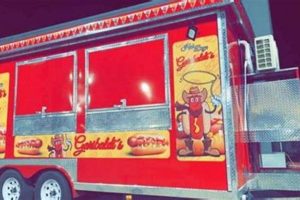
A critical component in any mobile food preparation unit is the exhaust system, specifically the apparatus designed to capture and expel grease, smoke, heat, and other airborne contaminants produced during cooking. This ventilation mechanism is essential for maintaining a safe and compliant environment within the confined space of a food truck. For example, a properly installed and maintained system will effectively remove the byproducts of frying, grilling, and other high-heat cooking processes.
The implementation of this system is paramount for several reasons. It directly contributes to the reduction of fire hazards by preventing the accumulation of grease, a highly flammable substance. Furthermore, it enhances the air quality inside the vehicle, safeguarding the health and well-being of the employees. Historical context reveals that early mobile food vendors often lacked adequate ventilation, leading to increased risks of fire and respiratory issues. Modern regulations mandate these systems to mitigate these inherent dangers.
This article will delve into the various types, components, maintenance procedures, and regulatory requirements associated with these critical ventilation systems. Furthermore, the nuances of selection, installation, and inspection processes will be thoroughly examined to provide a comprehensive understanding of ensuring optimal performance and safety within a mobile food preparation setting.
Essential Guidance for Exhaust Systems in Mobile Food Units
The following guidelines offer crucial considerations for the effective and safe operation of the primary ventilation mechanism within a mobile food preparation vehicle.
Tip 1: Ensure Code Compliance: Adherence to local and national fire codes is mandatory. Verify that the installed equipment meets the specific regulations concerning type, size, and placement within the food truck.
Tip 2: Regular Cleaning is Imperative: Scheduled cleaning of the entire ventilation system, including filters, ducts, and the fan, is critical to prevent grease buildup. Frequency should be dictated by the volume and type of cooking performed.
Tip 3: Professional Inspection and Maintenance: Engage qualified technicians for periodic inspections. These professionals can identify and address potential issues, such as worn-out belts or damaged components, before they lead to system failure.
Tip 4: Verify Fire Suppression System Integration: The ventilation system should be integrated with a fire suppression system. Confirm that the extinguishing agent nozzles are correctly positioned to cover all cooking surfaces and that the system is regularly inspected and certified.
Tip 5: Monitor Airflow: Regularly check the airflow to ensure the system is operating at its designed capacity. Reduced airflow can indicate clogged filters, duct obstructions, or fan malfunction. Use an anemometer to measure airflow velocity.
Tip 6: Use Appropriate Filters: Employ filters specifically designed for grease removal. These filters are more effective than standard air filters and are less prone to clogging.
Tip 7: Maintain Detailed Records: Keep meticulous records of all cleaning, inspections, and maintenance performed on the system. These records are essential for demonstrating compliance during inspections and can aid in troubleshooting issues.
Proper implementation of these tips will contribute to the safety and efficiency of mobile food operations, minimizing fire risk and ensuring a healthier working environment.
The subsequent sections of this article will address specific components and advanced troubleshooting techniques related to these ventilation systems.
1. Grease Containment

Grease containment is a fundamental aspect of the operational safety and regulatory compliance of a food truck, directly dependent on the design and functionality of its exhaust system. The efficient management of grease produced during cooking processes is not merely a matter of cleanliness; it is a critical fire prevention measure.
- Filter Design and Efficiency
The design of the filters within the apparatus directly affects the system’s capacity for grease containment. High-efficiency baffle filters, for instance, are engineered to capture a significant amount of grease before it can enter the ductwork. The effectiveness of these filters depends on the cooking volume, type of food prepared, and the frequency of cleaning. Without proper filtration, grease accumulates rapidly, increasing the risk of a fire hazard.
- Ductwork Configuration
The configuration of the ductwork within the exhaust system is crucial for directing grease-laden vapors efficiently. Properly sloped ductwork facilitates the natural drainage of collected grease towards a designated collection point. Inadequate design can lead to grease pooling in the ducts, reducing airflow and augmenting fire risks. The material composition of the ductwork also plays a vital role, as certain materials are more resistant to grease adhesion and degradation.
- Grease Collection Mechanisms
Dedicated grease collection systems are essential for safely managing the accumulated grease. These systems typically consist of grease traps or receptacles positioned to collect drained grease. Proper maintenance of these mechanisms, including regular emptying and cleaning, prevents overflow and ensures the continued effectiveness of the system. Improperly maintained collection systems can become sources of odor and attract pests, leading to further sanitation issues.
- System Cleaning Protocols
Regular and thorough cleaning protocols are paramount for maintaining effective grease containment. This includes the scheduled cleaning of filters, ductwork, and the exhaust fan. The frequency of cleaning depends on the intensity of cooking operations. Failing to adhere to a strict cleaning schedule allows grease to accumulate, increasing the risk of fire and reducing the efficiency of the exhaust system. Professional cleaning services are often recommended to ensure comprehensive removal of grease buildup.
The interplay between filter design, ductwork configuration, grease collection mechanisms, and system cleaning protocols establishes the overall effectiveness of grease containment. Optimizing these elements within a food truck’s apparatus mitigates the risk of fire, ensures regulatory compliance, and fosters a safer working environment for food preparation personnel. Without consistent attention to these factors, the risk of catastrophic incidents increases significantly.
2. Fire suppression

The integration of fire suppression systems within a food truck’s exhaust apparatus represents a critical safety measure directly linked to the reduction of fire hazards inherent in mobile food preparation. The exhaust system, designed to remove grease, smoke, and heat, also serves as a conduit for potential fires originating from cooking equipment. Therefore, an effective fire suppression system is essential to quickly extinguish fires within the exhaust system and prevent their spread to other areas of the vehicle or surrounding environment. A typical example involves a deep fryer malfunction, leading to a grease fire that rapidly ascends into the exhaust system. Without a functioning fire suppression system, this could escalate into a major structural fire.
The primary components of a fire suppression system within this context include heat or flame detectors, an extinguishing agent storage tank, distribution nozzles strategically positioned within the hood and ductwork, and a manual activation mechanism. Upon detection of a fire, the system automatically releases the extinguishing agent, typically a wet chemical solution designed to rapidly cool and smother flames. These systems are often designed to simultaneously shut off the fuel or power supply to the cooking equipment to further inhibit the fire. The practical significance of this lies in the ability to contain and extinguish fires swiftly, minimizing damage, preventing injuries, and allowing for a faster return to operation. Routine inspection and certification of the fire suppression system, ensuring proper functionality and charge levels, are mandatory to comply with fire safety regulations and insurance requirements.
In summary, the fire suppression system is not merely an adjunct to a food trucks exhaust apparatus; it is an essential, integral component designed to mitigate a specific and significant risk. The efficacy of this system depends on proper design, regular maintenance, and adherence to relevant safety standards. Failure to prioritize this aspect of food truck operation can result in severe consequences, including property damage, personal injury, and potential business closure. The challenge lies in maintaining a proactive approach to fire safety, ensuring that all elements of the fire suppression system are functioning optimally and that personnel are trained in their proper use.
3. Airflow Velocity

Airflow velocity is a critical performance parameter directly influencing the effectiveness of an exhaust system in a mobile food unit. The rate at which air moves through the apparatus is paramount for capturing and removing contaminants generated during food preparation, thereby affecting both safety and regulatory compliance.
- Capture Efficiency
Airflow velocity dictates the system’s ability to capture grease, smoke, and other airborne particles at the source. Insufficient velocity allows contaminants to escape the hood, polluting the work environment and potentially triggering fire alarms. Conversely, excessive velocity can disrupt cooking processes and increase energy consumption. The design of the hood and the placement of cooking equipment must be carefully considered to optimize capture efficiency at the required airflow rate. For instance, a wok station typically requires a higher capture velocity compared to a standard griddle due to the intensity of cooking and the dispersion of airborne particles.
- Ductwork Performance
Maintaining adequate airflow velocity through the ductwork is essential for preventing grease buildup and ensuring proper exhaust of contaminants. Low velocity in the ductwork can lead to grease condensation and accumulation, increasing the risk of fire and reducing the system’s overall efficiency. High velocity, while beneficial for preventing grease buildup, can increase static pressure and potentially overwork the exhaust fan. The diameter, length, and configuration of the ductwork must be meticulously calculated to achieve the optimal balance between airflow velocity and static pressure, ensuring efficient and safe operation.
- Exhaust Fan Capacity
The exhaust fan is the engine that drives airflow through the system. The fan’s capacity, measured in cubic feet per minute (CFM), must be sufficient to maintain the required airflow velocity throughout the hood and ductwork. Selecting an undersized fan results in inadequate ventilation, while an oversized fan leads to unnecessary energy consumption and potential noise issues. Fan selection must account for the total static pressure of the system, including losses due to ductwork length, bends, and filters. Moreover, the fan’s design should be appropriate for the specific operating conditions, such as high grease loads or elevated temperatures.
- Filter Effectiveness
Airflow velocity also influences the performance of the filters. Optimal velocity ensures that air passes through the filters at a rate that allows for effective grease and particle capture. Excessive velocity can cause particles to bypass the filters, reducing their effectiveness. Insufficient velocity allows grease to drip from the filters back onto the cooking surfaces. Regular maintenance and cleaning of the filters are essential for maintaining the designed airflow velocity and ensuring optimal filtration performance. The type of filter used, such as baffle filters or mesh filters, also impacts the relationship between airflow velocity and filtration efficiency.
The interplay between capture efficiency, ductwork performance, exhaust fan capacity, and filter effectiveness underscores the importance of airflow velocity within a food truck’s exhaust system. Optimizing airflow velocity is essential for maintaining a safe, compliant, and efficient mobile food operation. Regular monitoring and adjustment of the system are necessary to account for changes in cooking volume, equipment configuration, and environmental conditions, ensuring that the ventilation system consistently performs at its peak.
4. Filter maintenance

Sustained operational efficiency and regulatory compliance of a mobile food units exhaust apparatus hinge significantly on consistent filter maintenance. The filters within the system are primary barriers against grease and particulate matter, necessitating a rigorous maintenance schedule to ensure optimal performance.
- Grease Accumulation Mitigation
Accumulation of grease within filters impedes airflow and elevates fire risk. Regular cleaning removes accumulated grease, maintaining designed airflow velocity and diminishing the potential for ignition. For example, neglecting filter cleaning can lead to grease saturation, creating a readily combustible fuel source directly above the cooking equipment. Compliance with local fire codes often stipulates specific cleaning frequencies based on cooking volume and type.
- Airflow Optimization
Clogged filters restrict airflow, forcing the exhaust fan to work harder and reducing the system’s overall ventilation effectiveness. Clean filters ensure unimpeded airflow, enabling the efficient removal of smoke, heat, and airborne contaminants. Insufficient airflow compromises indoor air quality and increases the risk of employee discomfort and potential health issues. An anemometer can measure airflow velocity to determine if filters require cleaning or replacement.
- Filter Integrity Preservation
Routine inspection during maintenance allows for the identification of damaged or deteriorated filters. Compromised filter integrity compromises the system’s ability to effectively capture grease and particulate matter. Damaged filters must be replaced promptly to prevent unfiltered contaminants from entering the ductwork, which can lead to grease buildup and reduced system lifespan. Proper handling and cleaning techniques extend filter lifespan and maintain their structural integrity.
- Code Compliance and Inspections
Maintaining documented records of filter cleaning and maintenance demonstrates compliance with health and safety regulations. Inspectors routinely examine filter cleanliness and condition during routine inspections. Failure to adhere to a consistent maintenance schedule can result in fines, operational delays, or even temporary closure of the mobile food unit. Detailed records provide evidence of proactive maintenance practices and ensure accountability.
These facets illustrate the critical role of diligent filter maintenance in upholding the performance and safety of a food truck’s exhaust apparatus. Overlooking this crucial aspect can lead to compromised air quality, increased fire hazards, and regulatory penalties, ultimately impacting the viability and sustainability of the mobile food operation.
5. Code Adherence

Compliance with relevant codes and regulations is paramount for the safe and legal operation of a mobile food unit’s exhaust system. Strict adherence to established standards minimizes risks, ensures public safety, and avoids potential penalties associated with non-compliance.
- NFPA 96 Compliance
National Fire Protection Association (NFPA) 96, “Standard for Ventilation Control and Fire Protection of Commercial Cooking Operations,” serves as a foundational guideline for exhaust systems. Compliance dictates specific requirements for design, installation, maintenance, and inspection of the hood, ductwork, filters, and fire suppression system. Failure to meet NFPA 96 standards increases fire risk and jeopardizes insurability. For example, a food truck utilizing undersized ductwork in violation of NFPA 96 may experience reduced airflow, leading to grease buildup and heightened fire potential.
- Local and Municipal Regulations
Beyond NFPA 96, local and municipal regulations often impose additional requirements specific to the jurisdiction. These regulations may pertain to permitting, inspection schedules, noise levels, and waste disposal. Adherence to local codes ensures that the exhaust apparatus meets the specific needs and concerns of the community. A food truck operating in a densely populated area, for example, may be subject to stricter noise limitations to minimize disturbances to nearby residents, influencing the selection of the exhaust fan.
- Health Department Standards
Health department standards focus on maintaining sanitary conditions and preventing foodborne illnesses. The exhaust apparatus plays a vital role in removing airborne contaminants, thereby contributing to a cleaner and healthier food preparation environment. Compliance with health department regulations necessitates proper cleaning and maintenance of the exhaust system, including filters and ductwork, to prevent the accumulation of grease and bacteria. Regular inspections by health officials ensure ongoing adherence to these standards. A failure to adequately clean the apparatus, resulting in visible grease accumulation, may lead to temporary suspension of the operating permit.
- Fire Marshal Inspections
Fire marshal inspections specifically assess the fire safety aspects of the exhaust system. Inspectors verify the proper installation and functionality of the fire suppression system, as well as adherence to NFPA 96 and local fire codes. These inspections are crucial for identifying potential fire hazards and ensuring that the apparatus is adequately protected. A fire marshal may conduct a test activation of the fire suppression system to confirm its responsiveness and effectiveness. Deficiencies identified during the inspection must be promptly rectified to maintain compliance and prevent potential fire incidents.
These elements highlight the comprehensive nature of code adherence related to a food truck’s exhaust system. Ongoing diligence in maintaining compliance with NFPA 96, local regulations, health department standards, and fire marshal directives is essential for ensuring the safety, legality, and long-term viability of the mobile food operation.
6. Inspection Frequency

Regular evaluation of the mobile food units exhaust system is critical for maintaining operational safety and regulatory compliance. The frequency with which this ventilation mechanism is inspected directly influences its effectiveness in mitigating fire hazards and ensuring a safe working environment.
- Regulatory Mandates and Compliance
Local and national fire codes mandate specific inspection intervals for commercial cooking exhaust systems. These mandates dictate the minimum frequency at which qualified technicians must assess the system’s functionality. For instance, many jurisdictions require inspections every six months for high-volume cooking operations. Adherence to these mandates is not merely a formality; it is a legal requirement that demonstrates a commitment to safety and risk mitigation. Failure to comply can result in fines, operational shutdowns, and potential liability in the event of a fire.
- Operational Intensity and Cooking Volume
The intensity and volume of cooking directly influence the rate at which grease and other contaminants accumulate within the apparatus. High-volume operations, such as those specializing in fried foods, require more frequent inspections compared to low-volume operations with limited grease production. More frequent inspections allow for the early detection of grease buildup, worn components, and other potential issues before they escalate into significant problems. A food truck operating 12 hours a day, seven days a week, preparing primarily fried foods, necessitates a significantly more rigorous inspection schedule than a truck operating part-time with a menu emphasizing grilled or baked items.
- System Performance and Maintenance History
The previous performance and maintenance history of the system also influence the appropriate inspection frequency. Systems with a history of frequent issues, such as grease leaks or component failures, require more frequent monitoring. A history of consistent maintenance and reliable performance may justify less frequent inspections, provided that the system continues to meet all relevant safety and performance standards. Detailed records of past inspections and maintenance activities provide valuable insights into the system’s long-term reliability and inform the development of an optimized inspection schedule.
- Component Lifespan and Wear
The components of the apparatus, such as the exhaust fan, filters, and fire suppression system, have a finite lifespan. Regular inspections allow for the assessment of component wear and tear, enabling timely replacement before failures occur. For example, the bearings in an exhaust fan may gradually wear out over time, leading to reduced airflow and increased noise. Early detection of this issue during an inspection allows for proactive replacement, preventing a complete fan failure that could disrupt operations. Likewise, the extinguishing agent in the fire suppression system requires periodic checks to ensure it remains effective.
Inspection frequency is not a static parameter but rather a dynamic variable that must be tailored to the specific operating conditions, regulatory requirements, and maintenance history of each individual mobile food unit. A well-defined and consistently implemented inspection schedule is crucial for ensuring the long-term safety, reliability, and compliance of the ventilation system.
7. Employee Safety
The operational environment within a mobile food unit presents inherent safety challenges, and the exhaust apparatus plays a critical role in mitigating these risks. This ventilation mechanism directly impacts the health and well-being of employees by removing harmful airborne contaminants generated during cooking processes.
- Air Quality Regulation
The primary function of this system is to maintain acceptable air quality within the confined space of a food truck. Cooking activities produce smoke, grease-laden vapors, and carbon monoxide, all of which pose significant health risks to employees. Inadequate ventilation can lead to respiratory problems, eye irritation, and long-term health issues. For instance, prolonged exposure to high levels of carbon monoxide can cause headaches, dizziness, and even loss of consciousness. A properly functioning system effectively removes these contaminants, creating a safer and more comfortable working environment.
- Temperature Control
The apparatus aids in regulating temperature within the food truck, mitigating the risk of heat stress for employees. Commercial cooking equipment generates substantial heat, particularly in enclosed spaces. Excessive heat can lead to dehydration, fatigue, and heatstroke, all of which impair employee performance and increase the risk of accidents. The system removes hot air from the cooking area, helping to maintain a more tolerable temperature. Without adequate ventilation, the internal temperature of a food truck can quickly rise to dangerous levels, especially during peak operating hours in warm weather.
- Fire Prevention
The exhaust apparatus contributes to fire prevention by removing grease-laden vapors, a primary fuel source for kitchen fires. Grease accumulation within the hood, ductwork, and filters significantly increases the risk of a fire. A well-maintained system effectively captures grease, preventing it from spreading throughout the food truck. In the event of a fire, the system also helps to contain the flames and smoke, giving employees valuable time to evacuate safely. Regular cleaning and inspection of the system are crucial for minimizing fire hazards and ensuring employee safety.
- Compliance with Regulations
Adherence to safety regulations regarding ventilation systems is essential for protecting employees. Regulatory bodies, such as OSHA, set specific standards for air quality, temperature, and fire safety in commercial kitchens. Compliance with these regulations ensures that food truck operators provide a safe working environment for their employees. Regular inspections by regulatory officials verify adherence to these standards. Failure to comply can result in fines, operational shutdowns, and potential legal liability in the event of employee injury or illness.
The exhaust apparatus is integral to ensuring employee safety within a mobile food unit. Effective ventilation, temperature control, fire prevention, and regulatory compliance collectively contribute to a safer and healthier working environment, ultimately benefiting both employees and the overall success of the food truck operation.
Frequently Asked Questions
The following questions address common inquiries regarding the function, maintenance, and regulatory aspects of exhaust systems in mobile food preparation vehicles.
Question 1: What constitutes an acceptable standard for the functionality of a food truck hood vent?
Acceptable functionality is defined by adherence to NFPA 96 standards, ensuring sufficient airflow to capture grease, smoke, and odors, and proper integration with a certified fire suppression system. Regular inspections and documented maintenance are essential to maintaining this standard.
Question 2: How often should a food truck hood vent be professionally inspected and cleaned?
Professional inspection and cleaning frequency depend on cooking volume and grease production. High-volume operations typically require inspections every six months, while low-volume operations may require annual inspections. Local fire codes dictate the specific requirements for inspection frequency.
Question 3: What are the potential consequences of neglecting proper food truck hood vent maintenance?
Neglecting proper maintenance can lead to grease accumulation, increased fire risk, reduced airflow, compromised air quality, and potential violations of health and safety regulations. Consequences may include fines, operational shutdowns, and increased insurance premiums.
Question 4: Are there specific filter types recommended for food truck hood vent systems?
Baffle filters are generally recommended due to their efficient grease capture and fire-resistant properties. Mesh filters may be suitable for low-volume operations, but require more frequent cleaning. Filter selection should align with the cooking style and grease production levels.
Question 5: What role does the exhaust fan play in the overall performance of the food truck hood vent?
The exhaust fan is critical for generating adequate airflow through the system, ensuring proper capture and removal of grease, smoke, and odors. The fan must be sized appropriately for the hood and ductwork to maintain sufficient velocity and overcome static pressure.
Question 6: How does a fire suppression system integrate with a food truck hood vent, and what are the key maintenance requirements?
The fire suppression system is integrated with the apparatus through strategically placed nozzles designed to discharge a fire-suppressing agent directly into the hood and ductwork in the event of a fire. Key maintenance requirements include regular inspections, hydrostatic testing of cylinders, and verification of nozzle placement and functionality.
The preceding questions provide essential insights into the proper operation and maintenance of mobile food unit exhaust systems. Maintaining a proactive approach to system care is essential for safety and compliance.
The subsequent section of this article will address advanced troubleshooting techniques and emerging technologies in ventilation systems.
Conclusion
The preceding analysis underscores the critical importance of the food truck hood vent system within a mobile food preparation unit. From mitigating fire hazards to ensuring regulatory compliance and safeguarding employee health, the effective operation of this system is non-negotiable. Key aspects, including grease containment, fire suppression, airflow velocity, filter maintenance, code adherence, inspection frequency, and employee safety, are interconnected and essential for a safe and sustainable business.
The operational integrity of the mobile food industry relies heavily on the proper implementation and maintenance of food truck hood vent systems. Therefore, thorough understanding and proactive management of these systems are paramount for all stakeholders. Continued vigilance, adherence to best practices, and a commitment to safety are essential for mitigating risks and ensuring the long-term success of mobile food operations.