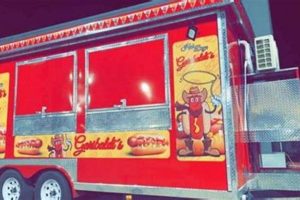
A pressurized container holding liquefied petroleum gas (LPG), crucial for supplying fuel to cooking appliances within a mobile food vending unit. These fuel sources power various equipment, enabling preparation and serving of meals remotely. Examples include horizontal cylinders commonly mounted on the A-frame of a trailer or vertically secured within a compartment of a truck.
The reliable energy source is integral to the operational viability of mobile culinary businesses. Its adoption facilitated the expansion of portable food services, offering flexibility in location and menu options. The contained nature of the fuel allows for safe and efficient operation, contributing to the sustained growth of the mobile food industry.
The following sections will delve into selection considerations, safety regulations, maintenance procedures, and optimal usage practices for these essential components. Further examination will address sizing calculations, refueling guidelines, and troubleshooting common operational issues to maximize efficiency and longevity.
Operational Guidance
The following guidelines are presented to ensure safe and efficient utilization. Proper adherence to these recommendations will maximize lifespan and minimize potential hazards.
Tip 1: Regular Inspection: Conduct thorough visual examinations of the cylinder, regulator, and connecting hoses before each use. Check for signs of damage, corrosion, or leaks. Apply a soap and water solution to fittings to identify any escaping gas.
Tip 2: Proper Ventilation: Ensure adequate airflow around the compartment housing the pressurized container. Lack of ventilation can lead to accumulation of gas, creating a significant safety risk. Install a properly functioning ventilation system if necessary.
Tip 3: Secure Mounting: Always ensure the tank is securely fastened to its designated mounting bracket or within its compartment. Prevent movement during transit to avoid damage to the container or connecting lines. Utilize straps and brackets designed for the specific cylinder size.
Tip 4: Qualified Refilling: Employ only certified and licensed professionals for refilling. Improper filling can lead to over-pressurization, resulting in a dangerous situation. Confirm the refilling station adheres to all applicable safety regulations.
Tip 5: Regulator Maintenance: Inspect the pressure regulator regularly for signs of wear or malfunction. A faulty regulator can cause inconsistent fuel delivery, affecting appliance performance and potentially creating a hazardous condition. Replace the regulator according to manufacturer’s recommendations.
Tip 6: Leak Detection: Invest in a quality gas leak detector and utilize it regularly. Early detection is paramount in preventing accidents. Familiarize yourself with the device’s operating instructions and calibration procedures.
Tip 7: Emergency Procedures: Develop and practice a written emergency action plan. Ensure all personnel are familiar with the location of shut-off valves and the procedure for evacuating the vehicle in the event of a leak or fire.
Adherence to these operational guidelines is critical for maintaining a safe and productive operating environment. Consistent application of these recommendations will minimize risk and ensure the reliable performance of this essential equipment.
The subsequent sections will address troubleshooting common issues and provide advanced guidance on optimizing fuel efficiency and extending equipment lifespan.
1. Capacity

The capacity of a container is a critical parameter directly influencing operational efficiency. Insufficient capacity necessitates frequent refills, leading to downtime and potential disruptions in service. Overly large capacity, while reducing refill frequency, introduces weight and space constraints, potentially impacting vehicle maneuverability and available workspace. Capacity must therefore be carefully matched to the typical usage patterns of the appliances it serves. For instance, a truck primarily using a griddle and fryer will demand significantly higher capacity than one solely operating a coffee machine.
Capacity calculations should consider factors such as the BTU ratings of all connected appliances, anticipated operating hours, and refill accessibility. Regulations often dictate maximum permissible sizes based on vehicle type and intended use. Exceeding these limits can result in non-compliance and potential safety hazards. A common example is a food truck operating at a multi-day event, where the operator must strategically balance capacity needs with the logistical challenges of obtaining refills.
Determining the appropriate capacity involves a trade-off between operational convenience, physical constraints, and regulatory compliance. Accurate assessment and adherence to guidelines are essential for ensuring a safe and efficient mobile food service operation. Incorrect sizing can lead to increased operational costs, safety risks, and regulatory penalties. Subsequent discussions will delve into methods for accurate capacity estimation and regulatory compliance.
2. Regulation

Regulation plays a crucial role in the operation of mobile food vending units utilizing liquefied petroleum gas (LPG) for cooking and other functions. These regulations are designed to ensure public safety, prevent accidents, and maintain operational standards within the mobile food industry.
- Tank Certification and Standards
Regulations mandate that the containers conform to specific standards set by organizations such as the Department of Transportation (DOT) or the American Society of Mechanical Engineers (ASME). These standards dictate material specifications, construction methods, and testing protocols. Tanks must undergo periodic recertification to verify their integrity and ability to withstand operating pressures. Failure to comply with these standards can result in fines and operational shutdowns.
- Installation and Mounting Requirements
Guidelines govern the proper installation and mounting. Requirements typically specify secure fastening methods to prevent movement during transit, clearance distances from heat sources, and protection from physical damage. For instance, many jurisdictions require that tanks be mounted in a well-ventilated compartment with a dedicated shut-off valve easily accessible in case of emergency. Non-compliance with these regulations can lead to structural failures and potential hazards.
- Operational Safety Procedures
Regulations dictate operational procedures, including leak testing protocols, emergency response plans, and training requirements for personnel handling LPG. Operators are often required to maintain records of inspections, maintenance, and refilling activities. These procedures aim to minimize the risk of accidents and ensure that personnel are adequately prepared to respond to incidents. An example is the requirement for regular leak testing using a non-corrosive solution and proper ventilation during operation.
- Transportation and Refilling Guidelines
Specific guidelines govern transportation and refilling practices. These guidelines address permissible fill levels, transportation methods, and the qualifications of refilling personnel. They aim to prevent overfilling, leaks during transport, and improper handling during refilling operations. Examples include restrictions on transporting unsecured cylinders and the requirement for certified technicians to perform refilling procedures.
Compliance with these regulations is not merely a legal obligation but a fundamental aspect of responsible operation. Adherence to these guidelines minimizes risks, protects public safety, and contributes to the long-term sustainability of mobile food vending businesses. The regulatory framework continuously evolves to address emerging safety concerns and technological advancements, requiring ongoing awareness and adaptation by operators.
3. Safety

The safe operation of a mobile food vending unit hinges critically on the proper handling of pressurized liquefied petroleum gas. Compromised safety protocols involving these fuel sources directly correlate with increased risks of leaks, fires, and explosions. For instance, inadequate ventilation around a cylinder can lead to gas accumulation, creating an explosive atmosphere. Damaged or improperly connected lines present ignition sources, significantly elevating the probability of fire. The integrity of the tank and associated components is paramount, and regular inspections are not merely recommended but essential.
Understanding the potential hazards associated with propane requires a comprehensive knowledge of its physical properties and appropriate handling procedures. For example, awareness of the “Lower Explosive Limit” (LEL) of this fuel is crucial for preventing hazardous accumulations. Implementing routine leak testing with approved solutions, coupled with the installation of gas detection systems, forms a proactive defense against potential incidents. Training personnel in emergency shutdown procedures and evacuation protocols is equally vital. Real-world examples underscore the significance: instances of structural fires originating from gas leaks in food trucks have resulted in significant property damage and, in some cases, injuries. These incidents highlight the imperative of stringent adherence to safety standards.
In conclusion, safety is not an ancillary concern but an integral component of this system. The implementation of robust safety measures, encompassing regular inspections, proper ventilation, and comprehensive training, directly mitigates the inherent risks associated with utilizing pressurized fuel sources in a confined mobile environment. Overlooking these precautions can have severe consequences, jeopardizing the well-being of personnel and the public. Continued emphasis on education, adherence to regulatory standards, and investment in safety equipment are essential for fostering a secure operational environment.
4. Connections
The term “Connections,” in the context of a food truck using liquefied petroleum gas (LPG), pertains to the physical interfaces between the fuel source, the pressure regulator, and the appliances consuming the fuel. These interfaces, typically consisting of hoses, fittings, and valves, are critical for maintaining a safe and functional fuel delivery system. Compromised connections, stemming from factors such as material degradation, improper installation, or physical damage, can lead to gas leaks. These leaks pose an immediate safety hazard due to the risk of fire or explosion. The pressure and volume of gas involved necessitate rigorous inspection and maintenance of all connected components. Real-world examples include instances where corroded fittings have failed, resulting in gas release and subsequent ignition from nearby heat sources, causing significant damage to the food truck and potential injury to personnel.
The integrity of these connections is further complicated by the mobile nature of the operation. Constant vibration and movement place additional stress on fittings and hoses, accelerating wear and increasing the likelihood of leaks. Specialized hoses designed to withstand the rigors of mobile applications are essential. Furthermore, proper tightening torque during installation is critical; over-tightening can damage fittings, while under-tightening can result in leaks. Regular inspection, employing leak detection solutions, is imperative for identifying compromised connections before they escalate into hazardous situations. Some jurisdictions mandate periodic pressure testing of the entire fuel system to ensure the integrity of all connections.
In summation, “Connections” represents a vulnerability point within the fuel system. Maintaining the integrity of these interfaces through careful installation, regular inspection, and the use of appropriate materials is not merely a best practice but a fundamental safety requirement. The challenges presented by the mobile environment necessitate heightened vigilance and proactive maintenance to mitigate the risks associated with compromised fuel connections. Addressing these challenges proactively ensures the safe and reliable operation of the food truck.
5. Mounting

The manner in which a fuel container is secured within a mobile food vending unit is of critical importance. Proper “Mounting” directly impacts the safety and stability of the entire fuel system, influencing operational reliability and regulatory compliance. Inadequate mounting can lead to a cascade of problems, ranging from minor leaks to catastrophic failures.
- Secure Fastening
Secure fastening of the tank prevents movement during transit, minimizing the risk of damage to the container, valves, and connecting lines. Restraining devices, such as straps or brackets, must be rated to withstand forces generated during sudden stops or collisions. Examples include heavy-duty steel straps with quick-release buckles or custom-fabricated brackets that conform to the tank’s specific dimensions. Failure to adequately secure the fuel container has resulted in breaches and subsequent gas leaks during routine operation.
- Compartment Integrity
The compartment housing the fuel tank should provide structural protection and ventilation. Compartment materials must be fire-resistant and designed to withstand impact forces. Ventilation is crucial for dissipating any gas accumulation, mitigating explosion risks. An example is an aluminum enclosure with strategically placed vents near the floor, allowing heavier-than-air gas to escape. Improper compartment design can trap gas, creating a hazardous environment.
- Accessibility and Clearance
Mounting location should allow easy access for inspection, maintenance, and refilling. Adequate clearance around the tank and its components is essential for performing these tasks safely. Obstructed access can hinder emergency response efforts in the event of a leak or fire. For instance, a tank mounted too close to the chassis may impede access to the shut-off valve, delaying critical safety interventions.
- Regulatory Compliance
Mounting practices must adhere to applicable local, state, and federal regulations. These regulations often specify minimum mounting heights, securement methods, and ventilation requirements. Non-compliance can result in fines, operational shutdowns, and increased liability in the event of an incident. Examples include regulations requiring tanks to be mounted at least a certain distance from ignition sources and protected from road debris.
The facets of secure fastening, compartment integrity, accessibility, and regulatory compliance are inextricably linked to the safe utilization of a pressurized fuel container within a mobile food vending unit. Effective “Mounting” is not merely an installation detail but a critical safety measure that protects both the operator and the public. A holistic approach, integrating these factors, ensures operational reliability and minimizes the potential for hazardous incidents.
6. Ventilation
Proper ventilation is a paramount safety consideration in mobile food vending units that utilize liquefied petroleum gas (LPG) as a fuel source. The provision of adequate airflow around and within the tank compartment directly mitigates the risk of gas accumulation, a primary precursor to explosions and fires. The absence of effective ventilation creates a hazardous environment, jeopardizing both the operator and the surrounding public.
- Gas Dispersion
LPG is heavier than air; therefore, any leak will result in the gas settling at the lowest point. Ventilation systems must be designed to effectively remove this accumulated gas. This typically involves vents located near the floor of the tank compartment. Natural convection, where rising warm air draws in cooler air from below, is often employed, but forced-air systems provide a more reliable and controllable means of dispersion. An example is a system incorporating a low-mounted vent coupled with a fan activated by a gas detection sensor.
- Compartment Design
The physical design of the compartment housing the tank influences ventilation effectiveness. Sealed compartments, lacking any airflow, represent the most dangerous configuration. Compartments should be constructed of non-combustible materials and incorporate strategically placed openings to facilitate air circulation. Baffles or deflectors may be used to direct airflow across the tank surface and prevent stagnant areas. A real-world example would be a compartment constructed of perforated aluminum with a sloped floor to promote drainage of any leaked gas.
- Sensor Integration
Gas detection sensors can be integrated with ventilation systems to automatically activate forced-air ventilation upon detection of a leak. These sensors provide an early warning system, enabling prompt corrective action and preventing dangerous gas buildup. The sensor should be placed near the floor of the compartment, where gas is most likely to accumulate. An example would be a system that triggers an exhaust fan and shuts off the fuel supply upon detecting gas concentrations exceeding a predetermined threshold.
- Regulatory Compliance
Ventilation requirements are often dictated by local, state, and federal regulations. These regulations specify minimum vent sizes, placement requirements, and may mandate the use of forced-air ventilation systems in certain situations. Compliance with these regulations is not merely a legal obligation but a fundamental aspect of responsible operation. Many jurisdictions require annual inspections of ventilation systems to ensure proper functioning and compliance with applicable codes.
The various facets of ventilation gas dispersion, compartment design, sensor integration, and regulatory compliance are all interconnected and essential for ensuring safe operation. A holistic approach to ventilation design, integrating these considerations, significantly reduces the risk of accidents involving liquefied petroleum gas within a mobile food vending unit. Neglecting any of these facets compromises the effectiveness of the entire system and increases the potential for hazardous incidents.
Frequently Asked Questions
The following addresses common inquiries and concerns regarding pressurized fuel containers utilized in mobile food vending applications.
Question 1: What factors dictate the appropriate tank size?
The selection of a tank size is primarily determined by the cumulative British Thermal Unit (BTU) ratings of all connected appliances, anticipated operating hours between refills, and any space or weight limitations imposed by the vehicle. Regulatory restrictions on maximum tank sizes must also be considered.
Question 2: What are the key indicators of a compromised connection?
Indicators of a compromised connection include the distinct odor of gas, hissing sounds emanating from fittings, visible damage or corrosion on hoses and fittings, and the presence of bubbles when a leak detection solution is applied.
Question 3: How often should a pressure regulator be inspected and/or replaced?
Pressure regulators should be visually inspected before each use for signs of damage or corrosion. Replacement frequency depends on usage and environmental conditions, but manufacturers typically recommend replacement every two to five years, or sooner if performance degradation is observed.
Question 4: What are the essential components of an effective ventilation system?
An effective ventilation system should include strategically placed vents near the floor of the compartment to facilitate gas dispersion, a compartment constructed of non-combustible materials, and, ideally, a forced-air exhaust fan activated by a gas detection sensor.
Question 5: What are the primary requirements for secure mounting?
Secure mounting requires the use of appropriately rated restraining devices (straps or brackets), a structurally sound compartment to protect the tank from physical damage, and compliance with all applicable regulations regarding mounting height and clearance distances.
Question 6: What actions should be taken in the event of a gas leak?
In the event of a gas leak, immediately shut off the fuel supply at the tank valve, extinguish all open flames, evacuate the vehicle, and contact emergency services from a safe distance. Do not attempt to repair the leak without proper training and equipment.
These FAQs provide essential guidance on safe and effective utilization. Consistent adherence to recommended practices will mitigate risks and ensure operational reliability.
The subsequent section will address advanced troubleshooting techniques and best practices for optimizing fuel efficiency.
Conclusion
The preceding sections have comprehensively explored the multifaceted aspects of a fuel source, a critical component in mobile food vending operations. Discussions have encompassed selection criteria, safety protocols, operational guidelines, and regulatory compliance, underscoring the significance of each element in ensuring a safe and efficient operating environment.
Prudent management of these systems is not merely a matter of operational efficiency but one of public safety. Continued diligence in adhering to best practices and remaining abreast of evolving regulatory standards is imperative for the sustained viability and responsible operation of the mobile food industry. Prioritizing safety, efficiency, and compliance will invariably contribute to a more secure and sustainable future for this dynamic sector.