The term refers to canine diets that meet specific nutritional guidelines established by the World Small Animal Veterinary Association (WSAVA). These guidelines aim to ensure pet food manufacturers adhere to rigorous standards in formulation and production. Examples of such diets are those formulated following extensive research and quality control measures, often backed by feeding trials.
Adhering to these guidelines promotes the health and well-being of dogs by ensuring they receive complete and balanced nutrition. Historically, variable quality in pet food prompted the need for standardized recommendations, leading to the establishment of these criteria. Selecting diets that align with these standards can contribute to optimal growth, maintenance, and longevity in canine companions.
The following sections will delve into the key aspects of identifying and understanding commercially available canine diets that satisfy these established nutritional guidelines. Discussion will include how to assess a manufacturer’s credibility and the importance of veterinary consultation.
Guidance on Selecting Canine Diets Meeting Established Nutritional Standards
The following recommendations aim to provide guidance in choosing canine diets that adhere to rigorous nutritional standards, thereby supporting optimal canine health.
Tip 1: Evaluate the Manufacturer’s Qualifications: Prioritize manufacturers who invest in nutritional research conducted by qualified experts, such as board-certified veterinary nutritionists (Diplomates of the American College of Veterinary Nutrition or the European College of Veterinary Comparative Nutrition).
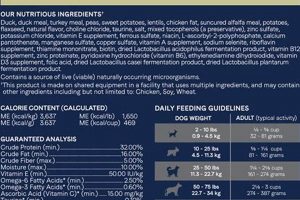
Tip 2: Assess Ingredient Transparency: Scrutinize the product label. A comprehensive list of ingredients, along with a detailed guaranteed analysis, offers insights into the nutritional content and formulation of the diet.
Tip 3: Verify Feeding Trial Substantiation: Look for statements indicating the diet has undergone feeding trials compliant with Association of American Feed Control Officials (AAFCO) protocols. Feeding trials provide empirical evidence of a diet’s nutritional adequacy.
Tip 4: Scrutinize Marketing Claims: Be wary of unsubstantiated marketing claims and focus on evidence-based information regarding the diet’s nutritional profile and benefits.
Tip 5: Consult with a Veterinarian: Seek personalized recommendations from a veterinarian regarding the most appropriate diet for an individual dog’s life stage, breed, health status, and activity level.
Tip 6: Review Scientific Literature: Consult peer-reviewed scientific publications and veterinary textbooks for further insights into canine nutrition and dietary requirements.
Tip 7: Avoid Diets Solely Based on Grain-Free or Raw Trends: These diets may not be nutritionally balanced or appropriate for all dogs, and they may carry potential health risks. Decisions should be based on scientific evidence and veterinary guidance, not solely on marketing trends.
Implementing these guidelines can significantly enhance the probability of selecting a canine diet that meets the stringent nutritional standards essential for maintaining canine health and well-being.
The concluding section will summarize the key elements discussed and reinforce the significance of adhering to established nutritional standards in canine nutrition.
1. Nutritional Expertise

Nutritional expertise forms a cornerstone in the production of canine diets that align with the guidelines established by the World Small Animal Veterinary Association (WSAVA). The application of specialized knowledge in animal nutrition ensures that diets are formulated to meet the specific physiological needs of dogs.
- Role of Board-Certified Veterinary Nutritionists
Board-certified veterinary nutritionists (Diplomates of the American College of Veterinary Nutrition or the European College of Veterinary Comparative Nutrition) possess advanced training in animal nutrition. Their involvement in formulation ensures diets are not only complete and balanced but also tailored to address specific health conditions or life stages. The absence of such expertise can lead to nutritional deficiencies or excesses, potentially compromising canine health.
- Scientific Literature Review
Formulating diets based on current scientific literature ensures adherence to the latest research findings on canine nutritional requirements. Ignoring peer-reviewed studies may result in outdated or inaccurate dietary recommendations. This includes staying abreast of emerging research on nutrient bioavailability, optimal protein levels, and the impact of various ingredients on canine health.
- Formulation for Specific Life Stages and Conditions
Nutritional needs vary substantially based on a dog’s age, breed, activity level, and health status. Expertise is required to develop diets that cater to puppies, adults, senior dogs, and those with specific conditions like kidney disease or diabetes. A one-size-fits-all approach to canine nutrition is inadequate and potentially harmful.
- Ingredient Selection and Quality Control
Expertise extends to the careful selection of ingredients and the implementation of rigorous quality control measures. Understanding the nutritional composition and potential contaminants in raw materials is crucial. Skilled evaluation of ingredient suppliers and meticulous testing protocols are essential to ensure the safety and efficacy of the final product.
These facets of nutritional expertise collectively contribute to the development of canine diets that meet WSAVA guidelines. Manufacturers who prioritize and invest in these areas are more likely to produce diets that adequately support canine health and well-being. The integration of these aspects helps to differentiate nutritionally sound diets from those based solely on marketing trends or cost considerations.
2. Ingredient Quality

Ingredient quality represents a critical determinant in assessing canine diets aligned with the nutritional standards. The direct correlation between ingredient quality and nutritional value dictates the overall health benefits derived from the food. Lower-quality ingredients may lack essential nutrients, be poorly digestible, or contain harmful contaminants, thus undermining the dietary objectives.
For example, a diet relying on inexpensive, poorly defined protein sources may not provide the necessary amino acid profile for muscle maintenance and repair. Similarly, the source and processing of carbohydrates influence blood glucose control and digestive health. The inclusion of rendered by-products or artificial additives, often considered lower-quality ingredients, may introduce potential allergens or toxins, impacting sensitive dogs. Conversely, diets formulated with identifiable, high-quality protein sources, whole grains, and carefully selected fats deliver superior nutritional value and minimize the risk of adverse reactions.
Therefore, scrutiny of the ingredient list is paramount. Consumers should seek diets that specify ingredient origins and processing methods, reflecting a manufacturer’s commitment to quality control and transparency. This understanding underscores the importance of informed decision-making to promote optimal canine health through sound dietary choices, emphasizing ingredient quality as a non-negotiable attribute.
3. Feeding Trials

Feeding trials represent a crucial step in validating the nutritional adequacy of commercially available canine diets. In the context of diets intended to meet established guidelines, these trials provide empirical evidence supporting the diet’s ability to sustain canine health and well-being.
- AAFCO Protocol Adherence
The Association of American Feed Control Officials (AAFCO) provides standardized protocols for conducting feeding trials. Adherence to these protocols ensures consistency and comparability across different diets. Trials following AAFCO guidelines assess various parameters, including weight maintenance, blood values, and overall physical condition. Diets claiming to meet nutritional guidelines should substantiate those claims with AAFCO-compliant feeding trials.
- Demonstrated Nutritional Adequacy
Feeding trials demonstrate whether a diet provides complete and balanced nutrition over a sustained period. Diets that fail to support healthy weight, muscle mass, or organ function during a feeding trial are deemed nutritionally inadequate. Successful completion of a feeding trial serves as tangible evidence that the diet provides the necessary nutrients in bioavailable forms.
- Species-Specific Validation
Feeding trials are conducted specifically on dogs, ensuring that the diet meets the unique nutritional requirements of the canine species. While ingredient lists and nutrient analyses provide information about the composition of a diet, feeding trials validate how those nutrients are utilized by the animal. This in vivo assessment is critical for verifying the practical effectiveness of the diet.
- Long-Term Health Assessment
Ideally, feeding trials should extend over a significant period to assess the long-term impact of the diet on canine health. Short-term trials may not reveal potential deficiencies or imbalances that manifest only after prolonged consumption. Longer trials provide a more comprehensive evaluation of the diet’s ability to support optimal health throughout a dog’s life stages.
The presence of documented feeding trial results, conducted in accordance with established protocols, strengthens the credibility of a diet’s nutritional claims. Consumers should prioritize diets with verifiable feeding trial data to ensure they are selecting a product that has been scientifically proven to meet the nutritional needs of their dogs, thereby contributing to their overall health and well-being.
4. Manufacturing Standards

Stringent manufacturing standards are inextricably linked to the production of canine diets that adhere to established nutritional guidelines. These standards encompass a comprehensive framework of procedures and controls designed to ensure product safety, consistency, and nutritional integrity. Their absence can compromise diet quality, rendering it unable to meet established benchmarks.
- Quality Control Procedures
Robust quality control procedures are essential throughout the manufacturing process. These include rigorous testing of raw materials for contaminants (e.g., mycotoxins, heavy metals) and precise monitoring of nutrient levels in the final product. For example, failing to adequately test incoming ingredients could result in a diet exceeding permissible levels of toxins, even if the formulation is theoretically sound. The implication is a potentially harmful product, regardless of its intended nutritional profile.
- Facility Hygiene and Sanitation
Maintaining high standards of hygiene and sanitation within the manufacturing facility is paramount. Regular cleaning and disinfection protocols minimize the risk of bacterial contamination, such as Salmonella or E. coli. Inadequate sanitation can lead to product recalls and, more seriously, foodborne illness in dogs consuming the contaminated diet, directly contravening established guidelines for pet food safety.
- Ingredient Handling and Storage
Proper handling and storage of ingredients are critical for preserving their nutritional value and preventing spoilage. Temperature and humidity control, as well as appropriate packaging, are necessary to minimize degradation. For instance, improper storage of fats can lead to rancidity, reducing palatability and potentially impacting the bioavailability of fat-soluble vitamins. Such degradation undermines the diet’s intended nutritional benefit.
- Traceability and Recall Protocols
Effective traceability systems are necessary to track ingredients and finished products throughout the supply chain. These systems enable swift and targeted recalls in the event of a safety concern. Without traceability, it is difficult to identify the source of contamination and remove affected products from the market efficiently, potentially exposing a large number of dogs to a compromised diet.
Adherence to these manufacturing standards directly impacts the safety and nutritional integrity of canine diets. Diets manufactured under rigorous standards are more likely to consistently meet nutritional guidelines and support canine health. Conversely, substandard manufacturing practices can compromise diet quality, rendering it inadequate, regardless of its initial formulation.
5. Veterinarian Recommended

The endorsement of canine diets by veterinarians is intrinsically linked to adherence to established nutritional standards. A veterinarian’s recommendation stems from a professional assessment of a diet’s suitability for an individual animal, predicated on factors such as life stage, breed predispositions, existing medical conditions, and activity level. Veterinarians often prioritize diets from manufacturers that follow rigorous guidelines because these products offer a higher degree of confidence in terms of nutritional adequacy and safety.
Consider, for example, a dog diagnosed with chronic kidney disease. A veterinarian would likely recommend a diet specifically formulated to manage this condition, prioritizing reduced phosphorus levels and controlled protein content. Such a diet would ideally come from a manufacturer known for following robust nutritional standards. In another case, a large-breed puppy requires a diet with carefully balanced calcium and phosphorus levels to support proper bone development and minimize the risk of skeletal abnormalities. A veterinarian’s recommendation, therefore, is not merely a preference but a reasoned decision based on expertise and awareness of a diet’s formulation and manufacturing processes.
In conclusion, the “Veterinarian Recommended” label implies a degree of assurance regarding a diet’s quality and appropriateness for a specific animal. While not a guarantee of perfection, it reflects a professional endorsement based on evidence-based nutritional principles and an understanding of a manufacturer’s commitment to established standards. This recommendation serves as a valuable guide for owners seeking to make informed dietary choices, but should not replace ongoing veterinary consultation regarding their pet’s individual needs.
Frequently Asked Questions Regarding Canine Diets Adhering to Established Nutritional Standards
The following section addresses common inquiries concerning canine diets formulated in accordance with widely recognized nutritional guidelines.
Question 1: What specific criteria define canine diets that meet established guidelines?
These diets typically adhere to recommendations from organizations such as the World Small Animal Veterinary Association (WSAVA) and the Association of American Feed Control Officials (AAFCO). Key criteria include formulation by qualified nutritionists, ingredient quality control, feeding trials, and adherence to stringent manufacturing standards.
Question 2: How can one identify manufacturers committed to producing canine diets that meet these standards?
Manufacturers who employ board-certified veterinary nutritionists, conduct and publish feeding trial data, and demonstrate transparency in ingredient sourcing are generally considered reliable. Scrutinizing the product label for detailed ingredient lists and guaranteed analyses is also recommended.
Question 3: Are grain-free canine diets inherently superior in meeting established nutritional guidelines?
Grain-free diets are not necessarily superior. The absence of grains does not automatically equate to improved nutritional value. A well-formulated diet, regardless of its grain content, can meet established guidelines if it provides complete and balanced nutrition.
Question 4: What role do feeding trials play in determining the quality of canine diets?
Feeding trials provide empirical evidence of a diet’s ability to sustain canine health. Diets that have undergone and passed AAFCO-compliant feeding trials offer a greater level of assurance regarding their nutritional adequacy compared to those lacking such validation.
Question 5: Is a “veterinarian-recommended” label a guarantee of a diet’s quality?
While a veterinarian’s recommendation can be a valuable indicator, it is not a definitive guarantee. Veterinarians base their recommendations on individual patient needs and the available information regarding a diet’s formulation and manufacturing practices. It is important to consider the recommendation within the context of a dog’s specific health status.
Question 6: Can homemade canine diets adequately meet established nutritional guidelines?
Preparing nutritionally complete and balanced homemade diets is challenging and requires specialized knowledge. Consultation with a board-certified veterinary nutritionist is essential to ensure the diet meets a dog’s specific needs and avoids potential deficiencies or imbalances.
These answers provide a foundation for understanding key considerations when selecting canine diets. Prioritizing evidence-based information and professional guidance is crucial for promoting canine health through sound dietary choices.
The subsequent section will delve into potential misconceptions surrounding canine nutrition and highlight the importance of critical evaluation.
Conclusion
The preceding discussion has elucidated the salient aspects of canine diets aligning with established nutritional standards. Formulating diets demands adherence to rigorous protocols and the integration of scientific expertise. Ingredient quality, feeding trial substantiation, and adherence to manufacturing benchmarks are not optional considerations but essential determinants of nutritional adequacy. Veterinarian recommendations serve as informed guidance, reflecting a professional assessment of a diet’s suitability.
Selecting canine nutrition is a decision of consequence, directly impacting animal health and well-being. Diligence in scrutinizing product information and seeking professional veterinary counsel are crucial. Ignoring established guidelines introduces the potential for nutritional inadequacies and adverse health outcomes. Continued vigilance and informed decision-making remain paramount in ensuring canine dietary needs are met effectively.