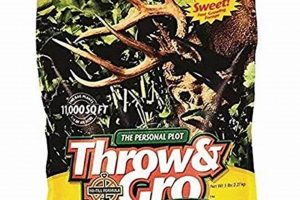
Optimal forage selection for deer management involves strategically cultivated areas designed to attract and sustain deer populations. These cultivated areas typically consist of plant species that provide high nutritional value and palatability, contributing to the overall health and well-being of the animals. An example would be a mixture of clover, brassicas, and cereal grains planted in designated locations within a deer’s habitat.
The strategic planting of these areas can significantly influence deer behavior, distribution, and physical condition. By offering readily available and nutrient-rich food sources, these plots can minimize the impact of seasonal food shortages, increase antler growth in males, and improve reproductive success in females. Historically, landowners and wildlife managers have employed this technique to enhance hunting opportunities and promote healthy deer populations.
The following sections will explore specific plant varieties suitable for these cultivated areas, effective planting strategies, and considerations for long-term maintenance and sustainability, ensuring the consistent provision of optimal nutrition for deer populations.
Tips for Optimizing Deer Forage Plots
The effective establishment and maintenance of cultivated forage areas are critical for maximizing their benefits to deer populations. Careful planning and consistent management practices are essential.
Tip 1: Conduct Soil Testing. Before planting, analyze the soil composition to determine pH levels and nutrient deficiencies. Amend the soil with lime or fertilizer as needed to ensure optimal plant growth.
Tip 2: Select Appropriate Plant Species. Choose plant varieties that are well-suited to the local climate and soil conditions. Consider planting a mix of annuals and perennials to provide year-round forage.
Tip 3: Prepare the Seedbed Thoroughly. Proper seedbed preparation is crucial for successful germination and establishment. Remove weeds, till the soil, and ensure a firm, level surface before planting.
Tip 4: Plant at the Correct Time. Follow recommended planting dates for each plant species. Planting at the wrong time can result in poor germination or plant failure.
Tip 5: Control Weed Competition. Implement effective weed control measures to prevent weeds from competing with desired plants for resources. This may involve herbicides, mowing, or cultivation.
Tip 6: Manage Grazing Pressure. Monitor grazing intensity and adjust planting size or utilize exclosures to prevent overgrazing, allowing plants to recover and persist.
Tip 7: Provide Supplemental Fertilization. Apply fertilizer according to soil test recommendations to maintain nutrient levels and promote vigorous plant growth.
Effective forage plot management requires ongoing effort and attention to detail. By following these tips, landowners and managers can create highly productive areas that contribute to the health and well-being of deer populations.
The concluding section will summarize the key considerations for achieving long-term success in providing optimal forage for deer.
1. Palatability

Palatability, a crucial attribute of effective deer forage, directly influences the extent to which deer consume planted crops. The connection between palatability and optimal deer forage is straightforward: if deer do not find a particular plant species palatable, they will not consume it in sufficient quantities to derive nutritional benefit. Therefore, even the most nutrient-rich plant species is rendered ineffective if it lacks palatability. For example, while some varieties of kale offer excellent nutritional content, deer may avoid them in favor of more palatable options such as clover or brassicas, especially during periods when alternative food sources are available.
The selection of palatable plant species is not solely dependent on inherent deer preferences. Environmental factors, such as soil conditions and the availability of competing food sources, can also influence palatability. For instance, a plant stressed by poor soil conditions may become less palatable due to changes in its chemical composition. Similarly, if abundant natural forage is available, deer may exhibit greater selectivity, only consuming the most palatable cultivated options. Furthermore, the specific plant part and its stage of growth affect the deer preference. Young, tender shoots are often more attractive than mature, fibrous growth.
Understanding the nuances of palatability is essential for effective deer management. Relying solely on nutritional analysis without considering palatability can lead to ineffective forage plot designs. By carefully selecting palatable plant species that thrive in local conditions and managing competing food sources, landowners and managers can maximize the benefits of their forage plots, ensuring deer receive adequate nutrition and contribute to population health. The overall management strategies must balance palatability with factors such as cost-effectiveness and ease of establishment for long-term sustainability of quality food source.
2. Nutritional Value

Nutritional value forms a cornerstone in the selection of optimal deer forage. It directly impacts deer health, reproductive success, and antler development, making it a non-negotiable consideration in forage plot design. Choosing plant species with high nutritional content is crucial for sustaining healthy deer populations.
- Protein Content
Protein is essential for tissue growth, antler development, and milk production in does. Forages with high protein levels, such as legumes (clover, alfalfa, soybeans), are particularly beneficial, especially during periods of antler growth and lactation. Insufficient protein can lead to stunted growth, poor antler development, and reduced reproductive rates.
- Energy (Carbohydrates and Fats)
Energy, derived from carbohydrates and fats, fuels metabolic processes and provides the necessary calories for deer to survive and thrive. Cereal grains (oats, wheat, rye) and brassicas (rape, turnips) are excellent sources of energy. Adequate energy intake is critical during winter months when deer require additional calories to maintain body temperature and survive harsh conditions.
- Mineral Content
Minerals, including calcium, phosphorus, and trace elements, are vital for bone and antler development, as well as various physiological functions. A balanced mineral intake is crucial for overall health and reproductive success. Forage species such as alfalfa and clover are known for their high mineral content. Soil testing and amendments can also play a key role in ensuring adequate mineral availability in forage plots.
- Digestibility
Digestibility refers to the proportion of nutrients in a forage that deer can effectively absorb and utilize. Highly digestible forages provide more energy and nutrients per unit of intake. Factors such as plant maturity and fiber content influence digestibility. Selecting forage species with high digestibility, and managing plots to maintain plants in a vegetative state, can maximize nutrient uptake by deer.
The selection of forage plants based on nutritional value requires a comprehensive understanding of deer nutritional needs and the nutrient profiles of various plant species. Integrating high-protein legumes, high-energy grains and brassicas, and mineral-rich forages into a well-designed food plot can provide deer with the necessary nutrients to maintain health, support reproduction, and achieve optimal antler development. Regularly assessing the nutritional content of forages and adjusting planting strategies accordingly is crucial for ensuring the long-term success of deer management programs.
3. Seasonal Availability
Seasonal availability represents a critical factor in determining optimal deer forage. The nutritional needs of deer fluctuate throughout the year, driven by variations in climate, reproductive cycles, and antler development. The selection of plant species for forage plots must therefore address these seasonal demands to provide consistent and adequate nutrition. A failure to consider seasonal availability results in periods of nutritional stress, impacting deer health, reproduction, and overall population resilience. For instance, a plot solely comprised of warm-season annuals will provide limited benefit during the crucial late-fall and winter months when natural food sources diminish. This creates a nutritional bottleneck affecting deer body condition and survival.
A well-designed forage plot system integrates a diversity of plant species with varying seasonal growth patterns. Spring and summer plantings may focus on high-protein legumes like clover and alfalfa to support lactation in does and antler growth in bucks. Fall plantings often incorporate brassicas such as turnips and rape, which provide highly palatable and energy-rich forage during the late fall and winter. Cereal grains like wheat and rye offer cool-season grazing options. By strategically combining these different forage types, managers ensure a continuous supply of nutrients throughout the year. Furthermore, an awareness of regional climate patterns and average freeze dates is vital for optimizing planting schedules and maximizing the availability of each forage type during its peak period of nutritional value. The ability of certain plants to withstand frost or provide food after snow cover can also dramatically improve availability during the harshest months.
In conclusion, seasonal availability is an indispensable consideration in selecting the most effective deer forage. Understanding and addressing the cyclical nutritional demands of deer populations through strategic planting and management practices is essential for maintaining healthy and thriving herds. Neglecting this facet leads to nutritional deficiencies, population decline, and a failure to achieve the intended benefits of forage plots. The planning process must involve careful matching the life cycles of plants with the biological cycles of deer. This is a continuous process, adjusting plant selection and management strategies according to observed results.
4. Soil Adaptation

The successful establishment of optimal deer forage hinges significantly on soil adaptation. Soil characteristics, including pH levels, nutrient availability, drainage, and texture, exert a primary influence on the growth and productivity of any planted species. Forage plants unable to thrive in the prevailing soil conditions will exhibit reduced yields, diminished nutritional content, and increased susceptibility to disease and pests. This direct causal relationship underscores the fundamental importance of matching plant selection to existing soil properties when designing effective forage plots. A real-life example of this principle in action is the planting of alfalfa in acidic soils. Alfalfa, a highly desirable deer forage known for its protein content, performs poorly in soils with a low pH. Without proper soil amendment, such as liming to raise the pH, alfalfa plantings will be unsuccessful, rendering the investment in seed and labor fruitless. Understanding soil adaptation, therefore, is not merely an academic exercise but a practical imperative for maximizing the return on investment in forage plot establishment.
Further illustrating the practical significance of soil adaptation is the choice of plant species for areas with poorly drained soils. Many desirable forage plants, such as clover and cereal grains, are intolerant of waterlogged conditions. Planting these species in poorly drained areas will result in stunted growth and eventual plant death. A more appropriate selection for such locations would be plants adapted to wet soils, such as certain varieties of switchgrass or chicory, which can tolerate the elevated moisture levels. Furthermore, soil texture, referring to the proportion of sand, silt, and clay, affects drainage and nutrient retention. Sandy soils drain rapidly and are prone to nutrient leaching, necessitating more frequent fertilization. Clay soils, conversely, retain water and nutrients but can become compacted, hindering root growth. The ideal soil texture for most forage plants is a loam, a balanced mixture of sand, silt, and clay, providing adequate drainage and nutrient retention.
In conclusion, soil adaptation constitutes a critical component of optimal deer forage establishment. Failure to consider soil characteristics and select plant species accordingly leads to reduced productivity, increased maintenance costs, and ultimately, the failure of the forage plot to meet its intended objectives. Addressing soil limitations through proper amendment and selecting plant species well-suited to the existing conditions are fundamental steps toward creating a sustainable and nutritious food source for deer populations. While soil adaptation is important to be considered, the challenges of amending vast areas may lead some to accept less-than-ideal soil adaptation, with a focus on native or less-demanding species instead. The ultimate management goal should balance ideal forage qualities with realistic feasibility in the context of the available resources and the long-term sustainability of the land.
5. Planting Strategy
Effective planting strategy directly influences the success of establishing superior deer forage areas. Planting strategy, encompassing timing, technique, and spatial arrangement of plant species, determines the extent to which deer can access and benefit from cultivated forage. A well-considered strategy maximizes forage availability and nutritional value. In contrast, a poorly executed strategy diminishes the effectiveness of even the most nutritionally superior plant selections. For example, broadcasting seed onto unprepared ground, without subsequent incorporation into the soil, often leads to poor germination rates and sparse plant cover, reducing the potential yield significantly. This situation exemplifies the direct causal relationship between planting strategy and the desired outcome of optimal deer forage.
Further illustrating the importance of planting strategy is the consideration of seed size and planting depth. Small seeds, such as those of clover, require shallow planting depths to facilitate germination. Planting these seeds too deeply prevents emergence. Larger seeds, like those of cereal grains, require deeper placement to ensure adequate moisture contact. Employing incorrect planting depths compromises germination rates and overall plant establishment. Spatial arrangement also matters; mixing species, or planting them in alternating rows, can increase the diversity of forage available and extend the grazing period. Furthermore, planting forages in locations accessible to deer, considering factors such as terrain and proximity to cover, encourages usage and maximizes the benefits to the target population. Soil preparation via tilling, fertilization and weed control, are all elements that add to this.
In summary, planting strategy forms a crucial component of providing optimal deer forage. The timing of planting, the selection of appropriate planting techniques, and the spatial arrangement of plant species are all determinants of success. Addressing these factors maximizes germination rates, plant establishment, and the availability of nutritious forage for deer. Neglecting this leads to poor results, regardless of the inherent qualities of the plant species themselves, and can negate investments of time and resources. Consequently, a comprehensive understanding of planting strategy is indispensable for landowners and managers seeking to improve deer nutrition and population health. Ignoring such can lead to ineffective usage of seeds. A well informed approach is required.
Frequently Asked Questions
This section addresses common inquiries regarding the establishment and management of cultivated forage areas intended to enhance deer nutrition and habitat.
Question 1: What constitutes optimal deer forage?
Optimal deer forage comprises plant species exhibiting high palatability, nutritional value, and seasonal availability, while also demonstrating adaptability to local soil conditions. The plant’s ability to attract deer, provide the needed nutrients and thrive in local environments is key.
Question 2: How does planting strategy impact the effectiveness of deer forage plots?
Planting strategy, encompassing timing, technique, and spatial arrangement, significantly influences germination rates, plant establishment, and forage accessibility for deer. All elements influence the end result in regards to the forage plot performance.
Question 3: What role does soil testing play in forage plot management?
Soil testing is critical for determining pH levels and nutrient deficiencies, enabling informed decisions regarding soil amendment and fertilization to optimize plant growth and nutritional content. Soil testing will determine future strategy regarding the plot.
Question 4: What are the key nutritional components to consider when selecting deer forage?
Key nutritional components include protein content, energy (carbohydrates and fats), mineral content, and digestibility, all of which contribute to deer health, antler development, and reproductive success. These elements affect the overall performance of a forage plot.
Question 5: How can weed competition be effectively managed in deer forage plots?
Weed competition can be managed through various methods, including herbicide application, mowing, cultivation, and the selection of plant species that exhibit competitive growth characteristics. Weed control is a critical maintenance consideration.
Question 6: What strategies are employed to mitigate overgrazing in deer forage plots?
Overgrazing can be mitigated by adjusting planting size, utilizing exclosures to protect plants, and implementing rotational grazing strategies to allow plants to recover. All are effective strategies in forage plot maintenance.
Effective forage plot management requires a holistic approach, considering factors ranging from soil characteristics to plant selection and strategic planting practices. The goal is providing nutritious food source.
Conclusion
The determination of optimal forage for deer is a multifaceted endeavor. Factors such as palatability, nutritional value, seasonal availability, soil adaptation, and planting strategy must be carefully considered and integrated to create effective and sustainable food sources. These cultivated areas are valuable tools for managing deer populations and promoting herd health.
The information presented serves as a foundation for informed decision-making in forage plot management. Further research, coupled with ongoing observation and adaptive management practices, remains essential for maximizing the benefits of these cultivated areas and ensuring long-term success in supporting healthy deer populations. Implementing optimal strategies contributes directly to the overall well-being of the animal and success of hunting and wildlife management efforts.