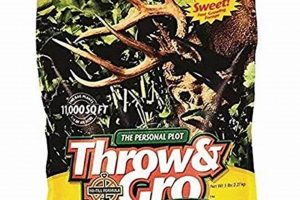
Selecting optimal plant varieties for cultivated areas designed to attract white-tailed deer hinges on understanding nutritional needs, seasonal availability, and regional suitability. This involves carefully choosing seeds that provide both immediate attraction and long-term forage value for the deer population. An example is a blend of brassicas and cereal grains planted in the fall to offer a high-energy food source during colder months.
The implementation of carefully selected plant species in dedicated areas offers significant advantages for wildlife management. It contributes to improved deer health by providing a consistent and nutritious food supply, particularly during periods of natural forage scarcity. Historically, landowners have used cultivated plots to supplement natural habitats and enhance hunting opportunities, recognizing the direct correlation between nutrition and herd quality. Furthermore, these cultivated zones can alleviate pressure on natural vegetation, promoting a healthier overall ecosystem.
A comprehensive approach to establishing these areas requires consideration of several key factors. Evaluating soil conditions, climate, and the specific nutritional demands of the local deer population are all crucial. Subsequent sections will address specific plant types suitable for various regions and seasons, as well as effective planting and management strategies to maximize their success.
Tips for Selecting Optimal Seeds for Deer Forage Areas
The following recommendations provide guidance for choosing plant varieties to establish successful deer forage areas, considering key aspects of deer nutrition and plot management.
Tip 1: Conduct a Soil Test. Prior to planting, analyze the soil composition to determine pH levels and nutrient deficiencies. Amend the soil according to the test results to ensure optimal growing conditions for the selected seed varieties. For instance, lime applications may be necessary to raise the pH for improved nutrient availability.
Tip 2: Consider Regional Climate and Growing Season. Choose varieties adapted to the specific climate and growing season of the planting location. A seed blend suitable for northern climates may not thrive in warmer, southern regions. Factors such as average rainfall and frost dates should inform seed selection.
Tip 3: Prioritize Nutritional Value. Select seeds that provide a high nutritional content to support deer health and antler growth. Legumes, such as clovers and alfalfa, offer high protein levels, while brassicas provide essential vitamins and minerals. A combination of plant types can create a balanced diet for deer.
Tip 4: Evaluate Seed Blends vs. Single-Species Plantings. Consider the benefits of seed blends, which offer a diversity of forage options and can extend the availability of food throughout the growing season. Single-species plantings may be suitable for specific objectives, such as providing a late-season attractant.
Tip 5: Assess Weed Control Strategies. Implement weed control measures to minimize competition for resources and ensure the success of the planted varieties. This may involve pre-emergent herbicides, mowing, or hand-weeding, depending on the specific weed species and the planted crop.
Tip 6: Monitor Forage Utilization. Observe the intensity of deer grazing to determine if the planted varieties are meeting their nutritional needs. Adjust planting strategies in subsequent years based on the observed utilization patterns.
Tip 7: Implement Crop Rotation. Rotate crops periodically to prevent soil depletion and reduce the buildup of pests and diseases. Rotating between legumes and grasses can improve soil fertility and enhance the overall health of the forage area.
Selecting the appropriate seeds is a critical factor in creating effective and sustainable deer forage areas. Careful consideration of soil conditions, climate, nutritional value, and management strategies will contribute to a successful outcome.
These tips provide a foundation for informed decision-making in establishing and maintaining deer forage areas, ultimately supporting the health and sustainability of the local deer population.
1. Palatability and Digestibility

Palatability and digestibility are crucial determinants of the efficacy of cultivated areas designed to attract white-tailed deer. The degree to which deer find a particular forage appealing (palatability) and the efficiency with which they can extract nutrients from it (digestibility) directly influence the value of that forage as a food source. Seeds selected for these areas must prioritize these factors to maximize deer utilization and nutritional benefit.
- Initial Acceptance of Forage
Palatability dictates whether deer will initially consume a given plant. Factors such as taste, texture, and aroma contribute to a plant’s palatability. For instance, clovers are generally highly palatable to deer due to their sweet taste and soft texture, encouraging consumption. Selecting seeds known for high initial acceptance is vital for establishing effective forage areas.
- Nutrient Availability Post-Ingestion
Digestibility refers to the proportion of ingested nutrients that the deer can absorb and utilize. A plant may be palatable, but if it is poorly digestible, the deer will not derive significant nutritional benefit. High-fiber plants, while potentially palatable, can have lower digestibility. Choosing seeds that yield plants with easily broken-down cell walls and readily available nutrients is essential.
- Impact on Forage Preference and Grazing Patterns
Deer will exhibit a preference for forages that offer both high palatability and digestibility. This preference shapes their grazing patterns, leading them to preferentially consume certain plants over others. Understanding these preferences allows for the selection of seed varieties that will be targeted by deer, optimizing the use of the cultivated area. For example, a blend of palatable legumes and highly digestible grasses can create a balanced and attractive food source.
- Influence on Deer Health and Condition
The combination of palatability and digestibility directly impacts deer health and condition. Forages that are both appealing and easily digested provide the nutrients necessary for growth, reproduction, and overall well-being. Choosing seeds that prioritize these qualities contributes to a healthier and more robust deer population. Inadequate attention to these factors can result in malnourished deer, even in areas with abundant forage.
In conclusion, selecting seeds that result in highly palatable and digestible forages is critical for establishing successful deer forage areas. By carefully considering these factors, land managers can create attractive and nutritious food sources that support the health and productivity of the local deer population. Prioritizing both attributes will yield superior results compared to focusing solely on one aspect.
2. Seasonal Nutritional Needs

The selection of optimal seeds for deer forage areas is inextricably linked to the fluctuating nutritional demands of white-tailed deer throughout the year. These needs shift dramatically based on factors such as antler development, pregnancy, lactation, and the availability of natural forage. Failure to address these seasonal variations can result in suboptimal deer health, reduced reproductive success, and increased vulnerability to disease. Therefore, a comprehensive understanding of seasonal nutritional needs is paramount to selecting appropriate seed varieties that provide a consistent and balanced diet.
During spring and summer, antler development in bucks and lactation in does place significant demands on protein and mineral intake. Legumes such as clover and alfalfa are particularly valuable during this period, as they offer high protein content essential for tissue growth and milk production. Furthermore, the availability of natural forage during these seasons often limits the overall nutritional value of the diet. In contrast, the fall and winter months present different challenges. As natural forage diminishes, deer require sources of carbohydrates and fats to build energy reserves for thermoregulation and survival. Brassicas, such as turnips and kale, are well-suited to this period, offering high levels of digestible energy that can sustain deer through harsh winter conditions. Planting a mixture of seed varieties that address these seasonal needs is critical for maintaining herd health.
In conclusion, the success of deer forage areas hinges on aligning seed selection with the dynamic nutritional requirements of the animals throughout the year. By understanding the seasonal shifts in nutritional demand and choosing seed varieties that provide a consistent and balanced diet, land managers can significantly enhance deer health, reproductive success, and overall population resilience. Neglecting the consideration of seasonal needs can lead to imbalances, nutritional deficiencies, and reduced effectiveness of the cultivated areas. Prioritizing this critical aspect is essential for achieving the desired outcomes in deer management.
3. Regional Climate Suitability

The selection of optimal seed varieties for deer forage areas is fundamentally dictated by regional climate suitability. Plant species exhibit varying tolerances to temperature extremes, precipitation patterns, and growing season lengths. Failure to account for these regional variations results in poor germination rates, stunted growth, reduced forage yields, and ultimately, a failure to attract and sustain deer populations. Selecting seeds that are ill-suited to the climate renders any investment in soil preparation or fertilization ineffective.
Consider the contrasting requirements of forage varieties in the arid Southwest versus the humid Southeast. Alfalfa, while highly nutritious, requires substantial irrigation and is therefore generally unsuitable for drier climates. Conversely, certain warm-season grasses that thrive in the Southeast may be unable to withstand the colder temperatures of northern regions. Furthermore, the length of the growing season directly impacts the ability of certain plants to reach maturity and provide sustained forage. For example, long-season corn varieties are impractical in areas with short growing seasons. Choosing drought-resistant species like native grasses or drought-tolerant forbs in arid regions or selecting cold-hardy brassicas and cereal grains in northern climates are critical to success.
Ultimately, the establishment of effective deer forage areas necessitates a thorough understanding of regional climate parameters and the corresponding suitability of specific seed varieties. Successful implementations hinge on selecting plants that not only meet the nutritional needs of deer but also possess the physiological capacity to thrive within the prevailing environmental conditions. Disregarding regional climate suitability leads to wasted resources and ineffective forage production, underscoring the importance of this factor in the broader context of forage area management.
4. Soil Type Compatibility
Soil type compatibility is a foundational element in the establishment of successful deer forage areas. The inherent physical and chemical properties of different soil types directly influence the ability of various plant species to germinate, thrive, and provide sustained forage. Selecting appropriate seed varieties without considering soil type limitations significantly reduces the probability of success.
- Soil Texture and Drainage
Soil texture, defined by the proportions of sand, silt, and clay, impacts water infiltration, drainage, and aeration. Sandy soils, characterized by rapid drainage, often require drought-tolerant species like certain native grasses and forbs. Conversely, clay soils, which retain water but may suffer from compaction, necessitate species that tolerate wet conditions or benefit from improved drainage through soil amendments. Selecting seeds compatible with the soil’s inherent drainage capacity is crucial for plant survival and productivity. For example, planting alfalfa in poorly drained clay soil will likely result in root rot and stand failure.
- Soil pH and Nutrient Availability
Soil pH influences the availability of essential plant nutrients. Acidic soils (low pH) can limit the uptake of phosphorus and calcium, while alkaline soils (high pH) may restrict the availability of iron and manganese. Different plant species exhibit varying tolerances to soil pH levels. Legumes, for instance, generally prefer slightly acidic to neutral soils, whereas some brassicas tolerate more acidic conditions. Performing a soil test and selecting seeds that are adapted to the existing pH levels, or amending the soil to achieve optimal pH, is essential for maximizing nutrient uptake and promoting healthy plant growth.
- Organic Matter Content and Soil Fertility
Organic matter contributes significantly to soil fertility, water-holding capacity, and nutrient retention. Soils with low organic matter content often require supplemental fertilization to support plant growth. Some plant species, such as clovers and other legumes, have the ability to fix atmospheric nitrogen, enhancing soil fertility. Selecting seeds that are well-suited to the existing organic matter content and fertility levels, or incorporating organic amendments like compost or manure, can improve soil health and support robust plant growth. For example, establishing a cover crop of rye or oats prior to planting a forage area can improve soil structure and increase organic matter.
- Soil Depth and Rooting Depth
Soil depth impacts the rooting depth and overall stability of plants. Shallow soils can restrict root development, limiting access to water and nutrients. Selecting seed varieties with shallow root systems or amending the soil to improve depth is crucial in these situations. Conversely, deep-rooted species like alfalfa can access water and nutrients from deeper soil layers, making them more resilient to drought conditions. For example, in areas with shallow, rocky soils, planting a mixture of shallow-rooted grasses and forbs may be more successful than attempting to establish deep-rooted legumes.
The connection between soil type compatibility and the selection of optimal seeds for deer forage areas cannot be overstated. Understanding the specific characteristics of the soil and matching it with seed varieties that are adapted to those conditions is a fundamental principle of successful forage area management. Neglecting this critical aspect will inevitably lead to reduced plant performance, limited forage availability, and a failure to achieve the desired outcomes in attracting and sustaining deer populations. Prioritizing soil testing, amendment strategies, and seed selection based on soil type is essential for maximizing the productivity and longevity of forage areas.
5. Persistence and Yield

Persistence and yield are critical determinants of the long-term effectiveness and overall value of deer forage areas. The capacity of selected plant species to endure over multiple growing seasons (persistence) and their ability to produce substantial biomass (yield) directly influence the sustained availability of forage and the economic viability of establishing and maintaining these cultivated zones.
- Longevity and Stand Establishment
Persistence dictates the duration over which a planted species will remain productive within the forage area. Annual species require replanting each year, incurring additional costs and labor. Perennial species, while potentially more expensive to establish initially, offer multi-year forage production with reduced maintenance. Selecting seeds with a demonstrated capacity for long-term stand establishment ensures a sustained food source for deer, reducing the need for frequent and disruptive replanting. For example, perennial clovers, properly managed, can provide forage for three or more years, whereas annual ryegrass necessitates yearly reseeding.
- Biomass Production and Forage Availability
Yield refers to the quantity of forage produced per unit area. High-yielding species provide a greater abundance of food, supporting a larger deer population or extending the availability of forage during periods of scarcity. Factors influencing yield include soil fertility, water availability, and the inherent genetic potential of the plant species. Selecting seeds known for high biomass production maximizes the carrying capacity of the forage area. For instance, brassicas like turnips and kale are capable of producing substantial biomass in a relatively short period, providing a valuable late-season food source.
- Resilience to Grazing Pressure
Persistence is closely linked to a plant’s ability to withstand grazing pressure. Species that are tolerant of repeated defoliation are better suited to environments with high deer densities. Selecting seeds that result in plants with strong root systems and the capacity to regrow quickly after grazing ensures sustained forage availability even under intense grazing pressure. Certain grasses and legumes exhibit superior grazing tolerance, allowing them to maintain productivity despite frequent browsing. Overgrazing can diminish or eradicate a species entirely.
- Economic Considerations and Cost-Effectiveness
The combined effect of persistence and yield significantly influences the economic viability of deer forage areas. Species with high persistence and yield offer a greater return on investment by minimizing replanting costs and maximizing forage production. Evaluating the long-term cost-effectiveness of different seed varieties requires consideration of both initial establishment expenses and ongoing maintenance requirements. While some high-yielding annuals may appear economically attractive in the short term, the long-term benefits of persistent perennials with moderate yields may ultimately outweigh the initial cost savings.
The interplay between persistence and yield underscores the importance of carefully considering both short-term and long-term objectives when selecting seeds. A balanced approach that prioritizes both sustained forage availability and economic efficiency is essential for creating successful and sustainable deer forage areas. Effective management strategies, such as rotational grazing and fertilization, can further enhance the persistence and yield of selected plant species, maximizing the benefits of these cultivated zones for both deer populations and land managers. Effective maintenance also involves monitoring for unwanted species that can diminish yield.
Frequently Asked Questions Regarding Optimal Seed Selection for Deer Forage Areas
This section addresses common inquiries concerning the selection and utilization of optimal seed varieties in the establishment of deer forage areas, emphasizing factors critical to success.
Question 1: What constitutes an ideal blend of seeds for deer forage areas?
An ideal seed blend incorporates a variety of species that complement each other in terms of nutritional value, seasonal availability, and growth characteristics. A common strategy includes a combination of legumes (for protein), brassicas (for carbohydrates), and cereal grains (for early-season forage). The specific composition will depend on regional climate, soil type, and deer herd management objectives.
Question 2: How frequently should deer forage areas be replanted?
The replanting frequency depends on the persistence of the selected seed varieties. Annual species necessitate replanting each year, while perennial species can persist for multiple seasons. Management practices, such as fertilization and weed control, also influence stand longevity. Monitoring the forage area and replanting when productivity declines is recommended.
Question 3: What are the key considerations for soil preparation prior to planting?
Prior to planting, a soil test is essential to determine pH levels and nutrient deficiencies. Soil amendments, such as lime or fertilizer, should be applied based on the test results. Tilling or disking the soil to create a smooth seedbed is also recommended. Adequate seed-to-soil contact is crucial for successful germination.
Question 4: How does planting time influence forage area success?
Planting time is a critical factor affecting germination and seedling establishment. Cool-season species, such as clovers and brassicas, are typically planted in the fall or early spring, while warm-season species, such as corn and soybeans, are planted in the late spring or early summer. Planting at the appropriate time of year ensures that seedlings have adequate moisture and temperature for growth.
Question 5: What strategies can be employed for weed control in deer forage areas?
Effective weed control strategies include pre-emergent herbicides, post-emergent herbicides, mowing, and hand-weeding. Selecting herbicides that are selective for the desired forage species is essential to avoid damaging the crop. Mowing can help to suppress weed growth and promote tillering in grasses and legumes.
Question 6: How can one assess the success of a deer forage area?
Success can be evaluated by monitoring deer utilization, forage production, and overall herd health. Observing deer browsing patterns and conducting forage biomass measurements can provide valuable insights. Regular monitoring allows for adjustments to planting strategies and management practices to optimize forage production and deer utilization.
In summary, successful establishment and management of deer forage areas require careful planning, attention to detail, and a commitment to ongoing monitoring and adaptation. Selecting appropriate seed varieties, preparing the soil adequately, and implementing effective weed control strategies are essential steps for maximizing forage production and supporting a healthy deer population.
The subsequent section will explore advanced management techniques for optimizing deer forage areas and addressing specific challenges.
Conclusion
The exploration of best seeds for deer food plots reveals a multifaceted challenge requiring careful consideration of nutritional needs, regional climates, soil characteristics, and long-term sustainability. The optimal selection process necessitates a scientific approach, prioritizing informed decisions over anecdotal evidence. A commitment to understanding these critical factors is paramount for achieving desired outcomes in deer herd management and habitat enhancement.
Investing in the acquisition of knowledge regarding suitable plant varieties and implementing sound management practices represents a significant step towards responsible land stewardship and the preservation of healthy wildlife populations. Continued research and adaptation will further refine the understanding of effective strategies, ensuring the enduring success of these dedicated forage areas. Prioritizing ecological balance and responsible resource management remains essential for future initiatives.