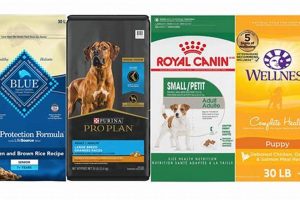
Selecting appropriate canine nutrition is crucial, particularly when managing adverse food reactions. A diet formulated with salmon as the primary protein source and designed for sensitivities represents a strategic approach to mitigating allergic responses in susceptible animals. These diets often feature limited ingredients to minimize potential allergens.
The significance of such diets lies in their potential to alleviate common allergy symptoms like skin irritation, digestive upset, and chronic ear infections. Historically, novel protein sources have been employed to circumvent the immune system’s reaction to commonly used proteins such as beef or chicken. Salmon provides an alternative that many dogs tolerate well, offering essential omega-3 fatty acids beneficial for coat health and inflammation reduction.
Subsequent sections will explore key considerations for selecting a salmon-based diet suitable for sensitive dogs. This includes evaluating ingredient lists, understanding potential cross-contamination risks, and identifying certifications that ensure quality and safety.
Guidance on Selecting Salmon-Based Canine Diets for Managing Allergic Reactions
This section provides essential guidelines for choosing a salmon-based diet intended to minimize allergic responses in canines.
Tip 1: Evaluate the Ingredient List Rigorously: Scrutinize the ingredient list for potential allergens beyond the primary protein source. Common culprits include grains, dairy, and artificial additives. Opt for formulations with a limited number of ingredients to reduce the risk of triggering a reaction.
Tip 2: Verify Salmon Source and Quality: Consider the source of the salmon used in the formulation. Wild-caught salmon may offer a more nutritionally complete profile, while farmed salmon should be sourced from reputable suppliers with stringent quality control measures.
Tip 3: Assess for “Novel” Protein Status: Ensure that salmon constitutes a truly “novel” protein for the dog. Prior exposure to salmon, even in small amounts, may preclude its effectiveness in managing existing allergies. Consult with a veterinarian if unsure.
Tip 4: Consider Omega-3 Fatty Acid Content: Verify the concentration of omega-3 fatty acids (EPA and DHA) in the diet. These nutrients play a crucial role in reducing inflammation and supporting skin health, both vital in managing allergic dermatological conditions.
Tip 5: Inquire About Manufacturing Processes: Investigate the manufacturing processes employed by the diet’s producer. Look for facilities that implement thorough cleaning procedures to prevent cross-contamination with other potential allergens.
Tip 6: Look for Veterinary Dermatologist Endorsement: Diets specifically formulated for allergy management may carry endorsements from veterinary dermatologists, signifying a higher level of clinical validation and efficacy.
Tip 7: Implement a Gradual Transition: When introducing a new salmon-based diet, transition gradually over a period of 7-10 days. This minimizes the risk of digestive upset and allows the dog’s system to adjust to the new food.
Adhering to these recommendations will increase the likelihood of selecting a canine diet that effectively addresses food sensitivities and promotes optimal well-being.
The subsequent section will address potential challenges and long-term considerations associated with managing canine allergies through diet.
1. Ingredient Sourcing

Ingredient sourcing is paramount in formulating effective salmon-based canine diets for managing allergies. The origin and processing of salmon and other ingredients directly impact the final product’s suitability for sensitive animals. Contamination during sourcing or processing can introduce unintended allergens, negating the benefits of a limited-ingredient, novel-protein approach. For instance, salmon harvested from waters with high levels of environmental pollutants may inadvertently introduce irritants. Similarly, processing facilities that handle multiple protein sources are susceptible to cross-contamination, potentially introducing traces of beef or chicken into a salmon-based formula.
Rigorous quality control measures throughout the sourcing process are essential. Reputable manufacturers prioritize partnerships with suppliers who adhere to strict standards for fishing practices, aquaculture management, and processing hygiene. Traceability becomes critical, allowing manufacturers to verify the origin and handling of ingredients, thereby mitigating the risk of contamination. The use of “single-source” protein, where the salmon originates from a single, vetted supplier, further enhances transparency and reduces the potential for unforeseen allergic reactions.
Therefore, ingredient sourcing is not merely a matter of obtaining raw materials but a fundamental component of producing a diet suitable for allergy management. Diligent ingredient scrutiny, robust supplier relationships, and comprehensive traceability are all critical in preventing unintended allergen exposure. Without meticulous attention to these factors, even a well-formulated diet can fail to deliver the intended therapeutic benefits. The selection process must include considering certification and testing of the salmon ingredient to ensure compliance with product label.
2. Limited Ingredient Lists

The efficacy of salmon-based canine diets in allergy management is directly correlated with the principle of limited ingredient lists. A restricted ingredient profile minimizes the potential for exposure to common allergenic substances, increasing the likelihood that the dog’s immune system will not be triggered. For instance, a salmon-based diet with only salmon, potato, and a few essential vitamins and minerals is less likely to cause a reaction compared to one containing salmon, chicken meal, wheat, corn, and soy.
The selection of “best salmon dog food for allergies” necessitates careful scrutiny of the ingredient list. A shorter list inherently reduces the risk of including a hidden allergen. Many commercially available dog foods contain numerous additives, preservatives, and fillers that can provoke an allergic response in sensitive animals. By opting for a limited-ingredient formulation, one proactively avoids these potential triggers. A practical example of this is a dog previously reacting to chicken, beef, and corn improving once switched to a salmon-and-sweet-potato diet with minimal additional ingredients. This outcome underscores the significance of limiting the introduction of multiple novel ingredients simultaneously.
In conclusion, the utilization of limited ingredient lists is a crucial component in choosing a salmon-based diet suitable for managing canine allergies. This approach significantly reduces the likelihood of encountering potential allergens, thereby improving the dog’s overall well-being. The key lies in selecting diets with minimal, identifiable ingredients, and carefully observing the dog for any adverse reactions during the transition period. Veterinary consultation remains essential to determine suitability and monitor for any lingering effects, identifying challenges linked to the ingredient list for better treatment options.
3. Omega-3 Fatty Acids
The incorporation of omega-3 fatty acids is a critical factor in evaluating salmon-based diets designed for canines experiencing allergic responses. Salmon, inherently rich in omega-3 fatty acids, particularly EPA (eicosapentaenoic acid) and DHA (docosahexaenoic acid), offers a dual benefit: providing a novel protein source to minimize allergic reactions and simultaneously delivering essential nutrients that mitigate inflammation, a common symptom associated with allergies. For example, a dog exhibiting pruritus (itching) and dermatitis secondary to food allergies may experience a noticeable reduction in these symptoms upon consuming a salmon-based diet with a high concentration of omega-3 fatty acids. This reduction is attributed to the anti-inflammatory properties of EPA and DHA, which modulate the immune response and reduce the production of inflammatory mediators in the skin.
The practical significance of understanding this connection lies in the ability to select diets that not only avoid triggering allergies but also actively support skin health and reduce discomfort. While salmon provides a natural source of omega-3s, the concentration can vary depending on the salmon’s origin (wild-caught versus farmed) and the processing methods employed. Therefore, analyzing the guaranteed analysis on the food label is essential to ensure adequate levels of EPA and DHA. Supplementation with additional omega-3 fatty acids, such as fish oil or flaxseed oil, may be considered under veterinary guidance to further enhance the anti-inflammatory effects. A real-world application involves monitoring the dog’s coat condition; a dull, dry coat often indicates omega-3 deficiency, whereas a shiny, healthy coat can signify adequate intake.
In summary, omega-3 fatty acids represent a vital component of effective salmon-based diets for managing canine allergies. Their anti-inflammatory properties provide symptomatic relief and support overall skin health. However, the concentration of omega-3s can vary, necessitating careful label review and potential supplementation. Challenges include ensuring the bioavailability of omega-3s and addressing potential concerns regarding fish oil contaminants. Nonetheless, understanding the crucial role of omega-3 fatty acids strengthens the rationale for selecting salmon as a key ingredient in canine allergy management strategies.
4. Hypoallergenic Formulation

A hypoallergenic formulation represents a cornerstone of “best salmon dog food for allergies”. Its presence signifies a deliberate effort to minimize the inclusion of common allergenic ingredients, thereby reducing the likelihood of triggering an adverse immune response in susceptible canines. This formulation strategy prioritizes single, novel protein sources, such as salmon, coupled with limited carbohydrate sources and the exclusion of artificial additives, preservatives, and common allergens like beef, chicken, dairy, wheat, corn, and soy. The cause-and-effect relationship is direct: the elimination of potential allergens diminishes the probability of allergic reactions. The importance of a hypoallergenic formulation is underscored by its direct impact on a dog’s well-being, manifesting as reduced skin irritation, improved digestion, and lessened susceptibility to ear infections. For instance, a canine previously experiencing chronic pruritus and gastrointestinal distress on a conventional diet may exhibit marked improvement when transitioned to a truly hypoallergenic salmon-based food.
The practical significance of understanding this connection lies in the ability to critically evaluate pet food labels. Consumers should meticulously examine ingredient lists, seeking out products specifically labeled “hypoallergenic” and verifying the absence of known allergens. Furthermore, the manufacturing processes employed by the pet food company should be considered. Reputable manufacturers utilize dedicated production lines or implement stringent cleaning protocols to minimize cross-contamination between different food formulations. This reduces the risk of trace amounts of allergens inadvertently finding their way into the hypoallergenic product. The selection process should also incorporate consideration of the specific type of salmon used, as variations in sourcing and processing can affect the purity and allergenicity of the final product. An example may involve preferring wild-caught salmon from certified sustainable fisheries or scrutinizing manufacturing processes to avoid cross-contamination.
In summary, a hypoallergenic formulation is an indispensable element of any “best salmon dog food for allergies.” This approach significantly mitigates the risk of adverse reactions by carefully selecting ingredients and implementing manufacturing practices designed to prevent allergen contamination. Challenges include accurately identifying all potential allergens for a specific dog and ensuring the transparency and integrity of pet food labeling. Veterinary consultation remains crucial to determine suitability and monitor for any lingering effects, identifying challenges and ensuring nutritional completeness with treatment options.
5. Veterinary Consultation
Veterinary consultation is a crucial component in identifying and managing canine food allergies, directly influencing the selection of a suitable diet. The causal relationship stems from the fact that a veterinarian possesses the expertise to accurately diagnose allergies through methods like elimination diet trials and allergy testing. This diagnosis is a prerequisite for effectively choosing a salmon-based diet. The importance of veterinary guidance arises from the complexity of allergy management; a veterinarian can differentiate between food allergies and other conditions presenting similar symptoms, such as environmental allergies or skin infections. Furthermore, veterinarians provide informed recommendations on specific salmon-based diets appropriate for the individual dog, considering factors like age, breed, health status, and the severity of the allergy. For example, a dog exhibiting severe gastrointestinal signs coupled with skin lesions necessitates a different approach than a dog with mild skin irritation only. This highlights the critical role of veterinary expertise.
The practical significance of integrating veterinary consultation into the selection process lies in several key areas. First, a veterinarian can help interpret pet food labels and identify potential allergens that may be overlooked by the owner. Second, they can guide the owner through the transition to a new diet, monitoring for any adverse reactions and adjusting the feeding plan as needed. Third, a veterinarian can address nutritional deficiencies that may arise from restrictive diets, recommending appropriate supplements to maintain optimal health. For instance, a dog on a limited-ingredient salmon diet may require supplemental omega-3 fatty acids or vitamin E, depending on the specific formulation. Consider the example of a dog initially showing improvement on a salmon diet but later developing a dull coat and decreased energy; veterinary assessment may reveal a need for dietary adjustments or targeted supplementation.
In summary, veterinary consultation is indispensable in selecting a diet suitable for allergy-prone dogs. The veterinarian’s diagnostic expertise, personalized recommendations, and ongoing monitoring ensure the diet is both effective in managing the allergy and nutritionally complete. Challenges include the cost of veterinary care and the time commitment required for diagnostic testing and follow-up appointments. Nonetheless, involving a veterinarian from the outset significantly increases the likelihood of successfully managing canine food allergies and improving the dog’s quality of life.
Frequently Asked Questions
This section addresses common inquiries regarding the use of salmon-based diets in managing canine allergies. The information provided is intended to offer clarity and guidance, but it should not substitute for professional veterinary advice.
Question 1: Is “best salmon dog food for allergies” universally effective for all dogs with sensitivities?
Salmon-based diets offer a viable option for managing food allergies in some canines. However, effectiveness varies. Some dogs may react to other ingredients in the diet, or may have developed sensitivities to salmon itself. Individual response dictates success.
Question 2: How long before improvements are observed after switching to the “best salmon dog food for allergies”?
The timeline for noticeable improvements varies. Some dogs exhibit reduced itching or digestive upset within a few weeks. Others may require several months for full symptom resolution. Consistent adherence to the diet and close monitoring are essential. Reintroduction of other food will not make this effective.
Question 3: Are there potential drawbacks to feeding a dog “best salmon dog food for allergies” long-term?
Long-term feeding of any limited-ingredient diet carries the risk of nutritional imbalances if the formulation is not carefully balanced. Veterinary guidance is recommended to ensure the diet meets the dog’s complete nutritional needs over time.
Question 4: Can “best salmon dog food for allergies” prevent allergies from developing in puppies?
While early exposure to a variety of ingredients may potentially reduce the risk of developing allergies later in life, there is no guarantee. Hypoallergenic diets are not necessarily preventative and are primarily intended for managing existing allergies, but may have some help.
Question 5: Is it possible for a dog to develop a salmon allergy even when consuming “best salmon dog food for allergies”?
Yes, it is possible for a dog to develop an allergy to any protein source, including salmon, after repeated exposure. If symptoms worsen or new symptoms arise after starting a salmon-based diet, veterinary attention is warranted.
Question 6: Are all “best salmon dog food for allergies” created equal in terms of quality and safety?
No. Significant variations exist among commercially available salmon-based diets. Factors such as ingredient sourcing, manufacturing processes, and quality control measures can impact the final product’s suitability for sensitive dogs. Careful research and evaluation of the brand’s reputation are advisable.
In conclusion, the use of salmon-based diets requires informed decision-making and careful monitoring. While offering a potential solution for managing food allergies, it is not a panacea and necessitates a thorough understanding of individual canine needs and potential risks.
The subsequent section will summarize the key considerations discussed and offer concluding remarks.
Selecting Optimal Canine Nutrition
The preceding analysis has underscored the importance of careful ingredient selection, limited ingredient lists, omega-3 fatty acid content, hypoallergenic formulations, and veterinary consultation when considering best salmon dog food for allergies. A rigorous approach to each of these factors is paramount in mitigating allergic responses and supporting canine health.
The information presented aims to empower informed decisions regarding canine dietary management. While salmon-based diets can offer a valuable tool in addressing sensitivities, responsible implementation demands a commitment to ongoing observation, veterinary collaboration, and a critical evaluation of available product options. Prioritizing these elements represents the most effective strategy for achieving positive outcomes.