



The mineral residue remaining after the combustion of organic matter in cat food during the manufacturing process is often referred to as “ash.” This residue comprises inorganic substances like calcium, phosphorus, magnesium, and other essential minerals. An example is the leftover material when a sample of cat food is completely burned in a laboratory setting to determine its mineral content.
The presence of this mineral content is vital for feline health. Minerals are crucial for various physiological functions, including bone development, nerve function, and enzyme activity. Historically, “ash” content has been used as a rough indicator of the overall mineral composition of pet food. The mineral composition contributes significantly to a cats well-being and supports essential bodily functions.
The subsequent discussion will delve into the specific types of minerals found within this residual material, their roles in feline nutrition, and the regulatory considerations surrounding their inclusion in commercial cat food formulations. Furthermore, potential implications of excessively high or low levels of this mineral content will be examined.
Considerations Regarding Mineral Content in Feline Diets
The following points offer guidance on interpreting and understanding the mineral composition of cat food, as indicated by the residual component often referred to as “ash” content on product labels.
Tip 1: Understand Label Information: Pet food labels list a guaranteed analysis, including maximum “ash” content. This figure serves as an indicator of total mineral quantity but does not specify the types or bioavailability of those minerals.
Tip 2: Prioritize Balanced Mineral Ratios: The ratio of minerals like calcium to phosphorus is critical. An imbalance can lead to health problems, especially in growing kittens. Consult a veterinarian to ensure appropriate ratios based on the cat’s life stage and health condition.
Tip 3: Consult with a Veterinarian: Discuss the cat’s dietary needs with a veterinary professional. Individual health conditions may necessitate adjustments in mineral intake to address specific deficiencies or prevent the exacerbation of existing issues.
Tip 4: Recognize Breed-Specific Needs: Certain cat breeds may be predisposed to specific mineral-related deficiencies or sensitivities. Research breed-specific dietary recommendations and consult with a veterinary nutritionist.
Tip 5: Consider Life Stage Requirements: Kittens, adult cats, and senior cats have varying mineral requirements. Growth, maintenance, and age-related changes influence the optimal mineral intake for each life stage. Select food formulated for the appropriate stage.
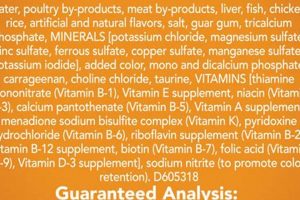
Tip 6: Analyze Ingredient Lists: While the “ash” percentage provides overall mineral content, the ingredient list offers clues about the sources of those minerals. Look for identifiable mineral sources like bone meal or specific mineral supplements.
Tip 7: Monitor for Adverse Reactions: Observe the cat for any adverse reactions to a new food, such as digestive upset, skin problems, or changes in urination. These signs could indicate mineral imbalances or sensitivities. Discontinue use and consult a veterinarian if any adverse reactions occur.
Correct interpretation of the “ash” content of feline diets allows for informed decision-making when selecting food. Prioritizing balance, consulting with veterinary professionals, and monitoring a cats health will contribute to optimal mineral nutrition and overall wellbeing.
The subsequent section will elaborate on the regulatory standards governing the inclusion of minerals in commercially available cat food, and what manufacturers are doing to ensure these nutritional guidelines are being followed.
1. Mineral Residue

The term “mineral residue” is inextricably linked to understanding what is commonly referred to as “ash” in cat food. It represents the inorganic materials left behind after the organic components of the food have been completely combusted, typically during laboratory analysis to determine nutritional composition. This residue is not simply inert waste; it comprises essential minerals crucial for feline health.
- Composition and Analysis
The mineral residue primarily consists of elements such as calcium, phosphorus, magnesium, potassium, sodium, zinc, iron, and copper. Analytical processes involve heating a sample of cat food to a high temperature (around 550-600C) until all organic matter is burned away, leaving only the inorganic minerals. The weight of this remaining material, expressed as a percentage of the original food weight, constitutes the “ash” content on the product label. This analysis quantifies the total mineral content but does not detail specific mineral types or bioavailability.
- Nutritional Significance
These minerals play vital roles in various physiological processes within a cat’s body. Calcium and phosphorus are essential for bone and teeth development and maintenance. Potassium and sodium are critical for nerve function, muscle contraction, and fluid balance. Magnesium is involved in enzyme activity and protein synthesis. Trace minerals like zinc, iron, and copper are necessary for immune function, red blood cell formation, and antioxidant defense. Therefore, an adequate amount of mineral residue, reflecting sufficient mineral intake, is crucial for optimal feline health.
- Dietary Imbalance Implications
Both deficiencies and excesses of mineral residue (and thus minerals) can have detrimental effects on a cat’s health. Insufficient mineral intake can lead to skeletal abnormalities, impaired nerve function, and weakened immune response. Conversely, excessive mineral intake, particularly of calcium and phosphorus, can contribute to the formation of urinary crystals, kidney problems, and skeletal issues. Maintaining the correct balance of minerals is therefore crucial.
- Regulatory Considerations and Labeling
Pet food regulations mandate the listing of maximum “ash” content on product labels, serving as an indicator of total mineral quantity. However, this information alone is insufficient to fully assess mineral quality or bioavailability. It is essential to consider the ingredient list and consult with a veterinarian or veterinary nutritionist to ensure that the cat food provides a balanced and appropriate mineral profile tailored to the cat’s specific needs and life stage. Regulatory bodies such as the Association of American Feed Control Officials (AAFCO) provide guidelines for appropriate mineral levels in cat food.
In summary, mineral residue, represented by the “ash” content in cat food, is not an undesirable byproduct. It is a reflection of essential mineral nutrients necessary for feline health. Understanding its composition, nutritional significance, potential imbalances, and regulatory context is crucial for making informed decisions about cat food selection and ensuring optimal feline well-being.
2. Inorganic Components

The relationship between inorganic components and what is commonly referred to as “ash” in cat food is fundamental to understanding the nutritional composition and overall quality of the product. “Ash” itself represents the total amount of inorganic materials remaining after the combustion of organic matter. These components are not mere fillers; they are essential minerals vital for various physiological functions in cats.
- Mineral Composition and Diversity
Inorganic components consist of various minerals, each with a specific role in feline health. Examples include calcium and phosphorus, critical for bone and teeth development; potassium and sodium, which regulate fluid balance and nerve function; and trace minerals such as iron, zinc, and copper, necessary for enzyme activity and immune function. The diversity of these minerals is essential to support different aspects of a cat’s physiology. The specific mineral composition can vary depending on the ingredients used in the cat food formulation, but the overall presence is crucial.
- Contribution to Nutritional Balance
The inorganic components, as represented by the “ash” content, play a vital role in maintaining nutritional balance within a cat’s diet. An adequate level of these minerals is necessary to support metabolic processes, maintain skeletal integrity, and ensure proper nerve and muscle function. However, it is critical to achieve a balance, as excessive or deficient levels of specific minerals can lead to health problems. For instance, an imbalance in the calcium-to-phosphorus ratio can contribute to urinary issues or skeletal abnormalities.
- Source and Bioavailability
The source of inorganic components significantly impacts their bioavailability, which refers to the extent to which the minerals can be absorbed and utilized by the cat’s body. Minerals derived from high-quality, easily digestible ingredients are generally more bioavailable than those from less digestible sources. Manufacturers often add mineral supplements to ensure that cat food meets the required nutritional standards. The bioavailability of these supplements, however, can vary depending on the form in which they are added, influencing the overall nutritional value of the food.
- Analytical Measurement and Labeling
The measurement of inorganic components, expressed as “ash” content on the product label, provides consumers with an indicator of the total mineral content in the cat food. Analytical techniques such as combustion and gravimetric analysis are used to quantify the amount of mineral residue remaining after organic matter has been removed. While the “ash” content provides a general overview, it does not specify the exact amounts or types of individual minerals present. Regulatory agencies mandate that pet food labels include a guaranteed analysis, which includes the maximum percentage of “ash,” to help consumers make informed decisions.
In conclusion, the inorganic components represented by “ash” in cat food are not merely a residual byproduct; they are essential nutrients that contribute significantly to a cat’s health and well-being. Understanding the composition, balance, source, and analytical measurement of these components is crucial for evaluating the nutritional quality of cat food and making informed choices that meet the specific dietary needs of felines.
3. Nutritional Indicator
The ‘ash’ content in cat food functions as a primary nutritional indicator, reflecting the total mineral composition present. This mineral residue, the inorganic component remaining after combustion, provides a broad estimate of essential nutrients such as calcium, phosphorus, magnesium, and trace elements. A higher ‘ash’ percentage generally suggests a greater concentration of these minerals. For instance, cat foods formulated for bone growth often exhibit elevated ‘ash’ levels due to increased calcium and phosphorus content, directly supporting skeletal development. Conversely, specialized diets designed for cats with kidney issues may have reduced ‘ash’ content to minimize mineral buildup and strain on renal function.
Interpreting ‘ash’ content requires careful consideration. It does not reveal the specific types or bioavailability of minerals, only their total quantity. A cat food with a high ‘ash’ percentage might contain minerals from less digestible sources, rendering them less useful than a food with a lower ‘ash’ percentage but higher quality mineral sources. Pet food manufacturers employ the ‘ash’ measurement as a key quality control check during production, ensuring the food meets minimum mineral requirements. Consumers, in turn, can use the ‘ash’ value as a starting point when comparing different cat food options, but it should be viewed in conjunction with the ingredient list and the guaranteed analysis.
Ultimately, while the ‘ash’ value serves as a convenient nutritional indicator, relying solely on this metric has limitations. Challenges arise from variations in mineral bioavailability and the need for balanced mineral ratios. A comprehensive evaluation necessitates considering the cat’s individual needs, consulting with veterinary professionals, and scrutinizing the overall formulation of the food. Proper utilization of the ‘ash’ indicator contributes to informed dietary choices and better feline health outcomes, but only when viewed as part of a holistic assessment.
4. Label Representation

The declared “ash” content on a cat food label offers a quantifiable representation of the total inorganic mineral matter present within the product. Regulations mandate the inclusion of “ash” within the guaranteed analysis, providing consumers with a numerical value reflecting mineral concentration. This figure, expressed as a percentage of the food’s total weight, serves as an initial indicator, allowing for a rudimentary comparison between different formulations. For instance, a label stating “ash: 8%” suggests a greater concentration of minerals compared to a product labeled “ash: 6%,” assuming all other factors are equal. It is also important to note that the mineral composition of cat food affects the level of “ash” in the resulting food.
However, reliance solely on label representation of “ash” presents inherent limitations. The declared percentage fails to differentiate between specific mineral types or their bioavailability. A higher “ash” value does not inherently equate to superior nutritional quality. For example, a cat food utilizing less digestible mineral sources might exhibit an elevated “ash” percentage without providing commensurate nutritional benefits. The ingredient list offers supplementary information regarding mineral sources, such as bone meal, mineral supplements, or naturally occurring minerals within other components. Examination of these elements allows for a more nuanced assessment beyond the quantitative “ash” figure. The “ash” value can affect the dietary choices for some cat owners who monitor mineral-related conditions.
In summation, label representation of “ash” provides a foundational, albeit incomplete, understanding of mineral content in cat food. While it allows for preliminary comparisons, a thorough evaluation necessitates considering mineral sources, ingredient quality, and the individual cat’s nutritional requirements. The “ash” percentage should be viewed as one component within a comprehensive assessment, rather than a definitive indicator of overall nutritional superiority. Consulting a veterinarian is recommended to ensure dietary choices align with the specific health needs of the feline.
5. Essential Minerals

Essential minerals represent a critical component of feline nutrition and are intrinsically linked to what is commonly referred to as “ash” in cat food. “Ash,” representing the inorganic residue remaining after the combustion of organic matter, serves as a general indicator of the presence and quantity of these vital minerals. Understanding this connection is paramount for assessing the nutritional adequacy of feline diets.
- Macrominerals and Bone Health
Macrominerals, such as calcium and phosphorus, are essential for maintaining skeletal integrity in cats. They contribute to bone density and strength, supporting physical activity and overall structural health. In the context of “ash” content, higher levels often indicate a greater concentration of these macrominerals. However, the ratio between calcium and phosphorus is also crucial; an imbalance can lead to skeletal abnormalities or urinary issues. Cat foods formulated for growing kittens typically exhibit higher “ash” levels with balanced ratios to support bone development.
- Electrolytes and Physiological Function
Electrolytes, including sodium, potassium, and chloride, play vital roles in maintaining fluid balance, nerve function, and muscle contraction in cats. These minerals contribute to the “ash” content in cat food and are essential for regulating various physiological processes. Deficiencies can lead to dehydration, muscle weakness, or neurological problems. Therefore, adequate levels of these electrolytes are crucial for overall health and are carefully monitored in commercial cat food formulations.
- Trace Minerals and Enzyme Activity
Trace minerals, such as iron, zinc, copper, and manganese, are required in small quantities but are essential for enzyme activity, immune function, and various metabolic processes in cats. These minerals are also reflected in the “ash” content and contribute to overall nutritional adequacy. For example, iron is necessary for red blood cell formation, while zinc supports skin health and wound healing. A deficiency in any of these trace minerals can lead to specific health problems, highlighting the importance of balanced and adequate mineral intake.
- Bioavailability and Mineral Sources
The bioavailability of essential minerals is a critical consideration when evaluating cat food. While the “ash” content provides a general indication of mineral quantity, it does not reflect how well these minerals can be absorbed and utilized by the cat’s body. Mineral sources, such as chelated minerals or naturally occurring minerals in animal-based ingredients, can significantly impact bioavailability. Selecting cat food with highly bioavailable mineral sources ensures that cats can effectively utilize the nutrients, regardless of the overall “ash” percentage.
In summary, the essential minerals found within the “ash” content of cat food are indispensable for feline health. These minerals, encompassing macrominerals, electrolytes, and trace minerals, support bone health, physiological function, and enzyme activity. However, the bioavailability and balance of these minerals are equally crucial. Therefore, it is necessary to consider both the quantitative “ash” content and the qualitative aspects of mineral sources and formulations to ensure optimal feline nutrition.
6. Dietary Implications

The presence and concentration of “ash” in feline diets carry significant implications for overall health, influencing mineral absorption, physiological function, and long-term well-being. The “ash” content, representing the inorganic mineral residue, dictates the mineral balance and availability within the food, subsequently affecting feline health.
- Mineral Bioavailability and Absorption
The bioavailability of minerals within the “ash” content determines the extent to which a cat can absorb and utilize these essential nutrients. Minerals derived from certain sources are more readily absorbed than others, impacting their effectiveness. Diets with high “ash” content from poorly bioavailable sources may lead to mineral deficiencies despite seemingly adequate levels. Conversely, lower “ash” content from highly bioavailable sources can provide superior nutritional benefits. Calcium carbonate, for instance, may have different bioavailability compared to calcium citrate.
- Impact on Urinary Tract Health
Excessive mineral concentrations, reflected in high “ash” content, can contribute to urinary tract problems in cats, particularly the formation of crystals and stones. Specific minerals like magnesium and phosphorus, when present in high amounts and elevated urine pH levels, can precipitate out of the urine and form struvite crystals. Dietary formulations with controlled “ash” content and appropriate acidification can help mitigate this risk, promoting urinary tract health. Some cat foods are specifically formulated to have a low “ash” content to support urinary health.
- Influence on Bone Development and Maintenance
Adequate levels of calcium and phosphorus, key components of “ash,” are essential for proper bone development and maintenance, particularly during kittenhood. Imbalances in these minerals, whether due to deficiency or excess, can lead to skeletal abnormalities or weakened bone structure. The “ash” content should reflect a balanced ratio of calcium to phosphorus to ensure optimal bone health throughout the cat’s life stages. An excess of phosphorus can also lead to long term bone damage.
- Effects on Enzyme Activity and Metabolic Processes
Various trace minerals found within the “ash” content, such as zinc, iron, and copper, play critical roles in enzyme activity and metabolic processes. Deficiencies in these minerals can impair enzyme function, leading to a range of health problems, including immune dysfunction, skin issues, and anemia. Balanced “ash” content that includes adequate levels of these trace minerals supports optimal metabolic function and overall health. Mineral sources that are easily digested and absorbed are key for ensuring the cat receives the proper amount of trace minerals.
Therefore, dietary implications of “ash” in cat food extend beyond simple mineral quantity, encompassing bioavailability, balance, and the specific mineral types present. Formulating feline diets with carefully controlled “ash” content, considering mineral sources and ratios, ensures optimal nutrient utilization, supports targeted health outcomes, and mitigates the risk of mineral-related health problems.
Frequently Asked Questions
The following questions address common inquiries regarding the presence and significance of “ash” in feline diets, providing clarity on its composition and nutritional implications.
Question 1: What constitutes “ash” in the context of cat food?
The term “ash” refers to the inorganic mineral residue remaining after the combustion of organic matter in cat food during laboratory analysis. This residue comprises essential minerals such as calcium, phosphorus, magnesium, and potassium.
Question 2: Why is “ash” listed on cat food labels?
Pet food regulations mandate the inclusion of “ash” content in the guaranteed analysis on product labels. It serves as an indicator of the total mineral content present in the food, assisting consumers in assessing its nutritional composition.
Question 3: Does a high “ash” content indicate superior cat food quality?
A high “ash” content does not automatically signify better quality. It solely indicates the quantity of minerals present. The bioavailability and source of those minerals are more critical factors in determining nutritional value.
Question 4: How does “ash” affect a cat’s health?
“Ash” contributes essential minerals necessary for various physiological functions, including bone development, nerve function, and enzyme activity. Maintaining a balanced mineral intake is crucial for overall health and well-being.
Question 5: Can high “ash” content be detrimental to a cat’s health?
Excessive mineral levels, reflected in high “ash” content, can potentially contribute to health problems such as urinary tract issues, particularly in cats predisposed to crystal formation. Moderation and balance are paramount.
Question 6: Where can one obtain guidance on appropriate “ash” levels for a specific cat?
Consultation with a veterinarian or veterinary nutritionist is recommended to determine the appropriate mineral levels and “ash” content for a cat, considering its age, health status, and specific dietary needs.
The “ash” content in cat food offers a glimpse into the mineral composition, yet a holistic approach considering mineral quality, balance, and individual feline needs is essential for informed dietary choices.
The subsequent section will delve into the regulatory standards governing the inclusion of minerals in commercially available cat food.
What is Ash in Cat Food
The preceding analysis has illuminated the multifaceted nature of “what is ash in cat food.” It is understood to be the inorganic mineral residue remaining after the combustion of organic matter during the pet food manufacturing process. Though presented as a single figure on pet food labels, the “ash” content represents a complex mixture of essential minerals, critical for various physiological functions in felines. Its significance extends from bone development and nerve function to enzyme activity and overall metabolic health.
Effective comprehension of “what is ash in cat food,” its constituent elements, and its dietary implications is paramount for informed decision-making in feline nutrition. Pet owners are encouraged to consider the “ash” content not as an isolated metric, but in conjunction with the ingredient list, guaranteed analysis, and, most importantly, the guidance of a veterinary professional. Prioritizing a balanced mineral intake, tailored to the individual cat’s needs, ensures optimal health and well-being.
![Easy Homemade Gravy Cat Food Recipe [DIY] | World’s Most Delicious Foods: Must-Try Dishes from Every Country](https://lisasfoods.com/wp-content/uploads/2026/04/th-168-300x200.jpg "Easy Homemade Gravy Cat Food Recipe [DIY] World’s Most Delicious Foods: Must-Try Dishes from Every Country")