



Cat food formulated with genuine animal muscle tissue, as opposed to plant-based proteins or rendered by-products, constitutes a significant segment of the feline nutrition market. An example would be a product prominently featuring chicken, beef, or fish as its primary ingredient, clearly listed on the packaging’s ingredient panel, and contributing substantially to the food’s overall protein content.
The inclusion of high-quality animal protein sources in a cat’s diet is considered essential for optimal health and well-being. These protein sources provide the necessary amino acids for muscle development, immune function, and overall energy levels. Historically, felines have evolved as obligate carnivores, necessitating a diet rich in animal-derived nutrients for survival and proper physiological function.
The subsequent sections of this article will delve into the specific advantages associated with diets that prioritize animal-based proteins. Further analysis will examine the differences between various protein sources, methods for evaluating product quality, and potential considerations for cat owners when selecting the most appropriate nutritional regimen for their feline companions.
Selecting Feline Nutrition with Animal Protein
This section provides guidance on choosing appropriate cat food, prioritizing products with genuine animal muscle tissue as a primary protein source. Informed decisions contribute to the feline’s overall health and well-being.
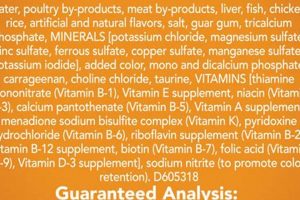
Tip 1: Ingredient List Scrutiny: Analyze the ingredient panel. The initial listed ingredients comprise the largest proportion of the product. Look for named animal proteins (e.g., chicken, salmon, beef) as the first or second ingredient.
Tip 2: Protein Percentage Evaluation: Examine the guaranteed analysis for protein content. Cats require a relatively high protein intake compared to other animals. Ensure the product meets or exceeds the minimum recommended protein percentage for the cat’s life stage (kitten, adult, senior).
Tip 3: By-Product Avoidance: Limit or avoid products listing generic “meat by-products” or “animal digest.” These ingredients are often of lower nutritional value and less digestible than named animal proteins.
Tip 4: Taurine Consideration: Verify the inclusion of taurine, an essential amino acid for feline health. A deficiency in taurine can lead to serious health issues, including cardiac and retinal degeneration. Most reputable manufacturers supplement their products with taurine.
Tip 5: Life Stage Appropriateness: Choose a formula specifically designed for the cat’s current life stage. Kitten formulations have higher protein and calorie content than adult formulations, while senior formulations may contain specific additives to address age-related health concerns.
Tip 6: Monitor Fecal Consistency: Observe the cat’s stool. A well-formulated diet with digestible animal proteins typically results in firm, consistent stools. Diarrhea or excessive stool volume may indicate poor ingredient quality or intolerance.
Tip 7: Consult Veterinarian: Consult with a veterinarian to determine the optimal dietary plan for the cat, especially if the animal has pre-existing health conditions or dietary sensitivities. A veterinarian can provide personalized recommendations based on the cat’s individual needs.
Prioritizing feline nutrition with animal-based protein is crucial for feline health. This approach can improve vitality, coat quality, and overall well-being through improved nutrient absorption and dietary support.
This concludes the guidance. The final section will summarize the article and offer concluding remarks.
1. Species Appropriateness

Species appropriateness, within the context of feline nutrition, refers to the alignment of a cat’s diet with its evolutionary and physiological needs as an obligate carnivore. Diets predominantly composed of genuine animal protein sources are inherently more species-appropriate for felines than those relying heavily on plant-based proteins or rendered by-products. This is primarily due to the specific amino acid profiles and nutrient bioavailability found in animal tissues, which are more readily utilized by the feline digestive system. The digestive systems of cats are shorter and less adapted to digest plant material compared to omnivores or herbivores. Lack of species appropriate dietary sources will contribute to digestive upsets and malnutrition. For instance, a diet deficient in taurine, an amino acid found almost exclusively in animal tissues, can lead to dilated cardiomyopathy and retinal degeneration in cats. A diet where majority of protein content is plant-based leads to inadequate nutrient absorption.
The practical significance of understanding species appropriateness lies in mitigating the risk of nutritional deficiencies and related health problems. Commercial cat foods formulated with high percentages of plant-based ingredients may not adequately meet the cat’s specific requirements for certain amino acids, vitamins (like vitamin A, which cats cannot efficiently synthesize from plant precursors), and fatty acids. Furthermore, the higher fiber content in plant-based diets can negatively impact nutrient absorption efficiency in cats. Choosing cat foods where muscle meat protein sources are high will enhance nutrition and digestive health. The selection of ingredients with consideration for feline physiology is a fundamental element of responsible pet ownership and contributes to long-term health outcomes.
In summary, the concept of species appropriateness underscores the importance of prioritizing genuine animal protein in feline diets. The selection of cat food should consider the feline’s unique physiology and the inherent nutritional composition of animal tissues. By selecting diets aligned with the cat’s evolutionary needs, owners can contribute to improved health outcomes, enhanced digestive function, and a reduced risk of nutritional deficiencies. Addressing the challenges associated with understanding and implementing species-appropriate feeding strategies requires careful label reading, an understanding of ingredient quality, and consultation with veterinary professionals.
2. Amino Acid Profile

The amino acid profile of a cat food is directly related to the quality and source of its protein, with “real meat cat food” intrinsically linked to a more complete and bioavailable amino acid composition. Felines, as obligate carnivores, possess specific dietary requirements for certain amino acids that are predominantly found in animal tissues. These amino acids, such as taurine, are essential for vital functions including cardiac health, retinal function, and reproductive processes. A diet deficient in these essential amino acids can lead to severe health consequences.
Consider, for example, a cat food primarily composed of plant-based proteins. While such a food may meet the minimum protein percentage requirement, the amino acid profile is likely to be incomplete. Plant-based proteins often lack sufficient quantities of taurine and may have imbalanced ratios of other essential amino acids. Consequently, even if a cat consumes an adequate quantity of the plant-based food, it may still suffer from amino acid deficiencies. Conversely, “real meat cat food,” derived from sources such as chicken, beef, or fish, provides a more naturally complete and balanced amino acid profile, better meeting the feline’s physiological needs. The inclusion of organ meats, such as liver and heart, further enhances the amino acid content, as these tissues are particularly rich in essential nutrients. Manufacturers often supplement cat food with synthetic taurine to compensate for deficiencies in ingredients, however, the overall balance of amino acids is still better in animal based protein sources.
In conclusion, the amino acid profile is a critical determinant of a cat food’s nutritional value, with “real meat cat food” offering a significant advantage in providing a complete and bioavailable source of essential amino acids. Understanding the relationship between protein source and amino acid composition enables informed decisions regarding feline nutrition. The practical significance of this understanding lies in mitigating the risk of amino acid deficiencies and promoting optimal health outcomes for feline companions. Pet owners should prioritize products with named animal protein sources high on the ingredient list to maximize the likelihood of providing a nutritionally complete diet. Challenges remain in interpreting complex ingredient labels and understanding individual feline needs, emphasizing the importance of veterinary consultation.
3. Digestibility Metrics

Digestibility metrics are crucial in evaluating the nutritional efficacy of any cat food, particularly those emphasizing genuine animal protein sources. These metrics quantify the extent to which a cat can break down and absorb nutrients from the food, thereby influencing its overall health and well-being. The higher the digestibility, the greater the proportion of nutrients available for the cat’s physiological functions.
- Protein Digestibility
Protein digestibility specifically measures the percentage of protein broken down into absorbable amino acids. Real meat cat food, typically derived from animal muscle tissue, generally exhibits higher protein digestibility compared to plant-based alternatives due to the inherent amino acid composition and the feline digestive system’s adaptation to animal-sourced protein. For example, studies demonstrate that chicken protein exhibits a digestibility rate exceeding 90% in cats, while certain plant proteins may fall below 70%. Lower protein digestibility results in a greater proportion of undigested protein being excreted, reducing the food’s overall nutritional value and potentially leading to digestive issues.
- Dry Matter Digestibility
Dry matter digestibility refers to the proportion of the food’s total dry matter (excluding water) that is absorbed by the cat. It provides a comprehensive assessment of the digestibility of all components, including proteins, carbohydrates, and fats. A cat food composed primarily of real meat tends to have a higher dry matter digestibility because animal tissues are naturally more digestible for felines than many plant-based fillers or by-products. A food with a dry matter digestibility of 85% indicates that 85% of the food’s dry components are absorbed and utilized by the cat, whereas the remaining 15% is excreted as waste.
- Fat Digestibility
Fat digestibility quantifies the percentage of fat that is broken down and absorbed. Fats are an essential energy source for cats, and their efficient digestion is critical for maintaining optimal health. The fat content in real meat cat food often comes from animal sources, which are typically highly digestible for felines. For instance, fats from chicken or fish are generally well-digested by cats. In contrast, certain vegetable oils or rendered fats may exhibit lower digestibility, leading to inefficient energy utilization and potential digestive upset. High digestibility of fat from animal proteins means a good amount of energy for the animal
- Nitrogen Retention
Nitrogen retention serves as an indirect measure of protein utilization. When a cat digests protein, nitrogen is released. A higher nitrogen retention rate indicates that the cat is efficiently using the amino acids from the protein source for tissue maintenance and growth, rather than excreting them. Real meat cat food, with its highly digestible protein, tends to promote better nitrogen retention compared to foods with lower-quality or less digestible protein sources. Improved nitrogen retention signifies enhanced protein utilization and a more efficient metabolic process.
In summary, digestibility metrics provide crucial insights into the nutritional value of real meat cat food. Higher protein, dry matter, and fat digestibility, along with improved nitrogen retention, collectively demonstrate the superior nutrient utilization associated with diets rich in genuine animal protein. These factors underscore the importance of considering digestibility when evaluating cat food options and selecting the most appropriate diet for optimal feline health and well-being.
4. Nutritional Completeness
Nutritional completeness in feline diets refers to the provision of all essential nutrients in adequate proportions to meet a cat’s physiological requirements across its lifespan. The relationship between nutritional completeness and real meat cat food is significant, as genuine animal protein sources inherently contribute to meeting many of these essential nutritional needs. While real meat provides a foundational element, a truly complete diet requires careful formulation to ensure all nutrient requirements are met.
- Essential Amino Acids
Real meat cat food inherently contains a profile of essential amino acids vital for feline health. Taurine, for instance, is almost exclusively found in animal tissues and is crucial for cardiac function, vision, and reproduction. A deficiency in taurine can lead to serious health problems. While some plant-based protein sources may provide certain amino acids, they often lack the full complement or the appropriate ratios necessary for cats. Therefore, diets heavily reliant on real meat are more likely to provide a foundation for complete amino acid nutrition.
- Vitamins and Minerals
Animal tissues are naturally rich in certain vitamins and minerals important for feline health. For example, liver is a significant source of vitamin A, which is essential for vision and immune function. Fish is a source of vitamin D and iodine. The bioavailability of these nutrients from real meat sources is typically higher than from plant-based alternatives. A diet composed primarily of real meat, therefore, contributes to meeting the vitamin and mineral requirements, although supplementation is often necessary to achieve complete and balanced nutrition as defined by regulatory bodies like AAFCO.
- Essential Fatty Acids
Real meat cat food provides essential fatty acids, such as omega-3 and omega-6 fatty acids, which are critical for skin and coat health, immune function, and brain development. Fish-based real meat cat food, in particular, is a good source of omega-3 fatty acids like EPA and DHA. The ratio of omega-6 to omega-3 fatty acids is also important, as an imbalance can contribute to inflammatory conditions. While some plant oils also contain essential fatty acids, the specific types and ratios may not be optimal for feline health. Therefore, real meat sources play a vital role in providing these essential fats in a bioavailable form.
- Digestibility and Bioavailability
The nutritional completeness of a cat food is not solely determined by its nutrient content but also by the digestibility and bioavailability of those nutrients. Real meat cat food typically exhibits higher digestibility compared to diets relying heavily on plant-based ingredients. This is because the feline digestive system is adapted to efficiently break down and absorb nutrients from animal tissues. Higher digestibility means that a greater proportion of the nutrients in the food are actually utilized by the cat, contributing to its overall nutritional status. Lower digestibility can result in nutrient deficiencies, even if the food appears to be nutritionally complete based on its label.
In conclusion, real meat cat food provides a strong foundation for nutritional completeness due to its inherent content of essential amino acids, vitamins, minerals, and fatty acids. However, achieving true nutritional completeness requires careful formulation and often involves supplementation to ensure that all of a cat’s dietary needs are met in appropriate proportions. Pet owners should select cat foods that are labeled as “complete and balanced” by AAFCO and consult with a veterinarian to ensure that their cat’s specific nutritional needs are being met.
5. Ingredient Sourcing

Ingredient sourcing, in the context of feline nutrition, is directly pertinent to the quality and safety of “real meat cat food”. The origin and processing methods of animal protein sources significantly impact the final product’s nutritional value and potential risks.
- Animal Welfare Standards
Ingredient sourcing dictates adherence to animal welfare standards in livestock production. Real meat cat food derived from suppliers with stringent animal welfare protocols ensures the animals are raised in humane conditions, free from unnecessary suffering. For instance, sourcing chicken from farms with ample space and access to outdoor environments contrasts with sourcing from factory farms prioritizing maximum output over animal well-being. Ethical considerations aside, animals raised in less stressful environments may yield higher quality meat with a more favorable nutritional profile. The traceability of ingredients allows consumers to make informed choices aligned with their values.
- Geographic Origin and Traceability
The geographic origin of ingredients influences the potential presence of contaminants and the overall safety of real meat cat food. For example, sourcing fish from waters known to be polluted with heavy metals poses a higher risk than sourcing from pristine, well-regulated fisheries. Transparent sourcing practices, including clear labeling of the origin of meat ingredients, enable manufacturers to trace ingredients back to their source and implement appropriate quality control measures. Traceability is vital in the event of a product recall due to contamination or other safety concerns.
- Processing and Preservation Methods
Processing and preservation methods employed during the production of real meat cat food ingredients can significantly impact their nutritional value and safety. Harsh processing techniques, such as high-heat rendering, can denature proteins and reduce the bioavailability of essential nutrients. Sourcing meat ingredients that have undergone gentle processing methods, such as freeze-drying or low-temperature cooking, helps preserve their nutritional integrity. Additionally, the use of artificial preservatives can introduce potential health risks. Opting for natural preservatives, such as vitamin E or rosemary extract, is preferable.
- Supplier Audits and Certifications
Ingredient sourcing relies on supplier audits and certifications to ensure consistent quality and adherence to safety standards. Reputable real meat cat food manufacturers conduct regular audits of their suppliers to verify compliance with established protocols for animal welfare, food safety, and environmental sustainability. Certifications from recognized organizations, such as the Global Food Safety Initiative (GFSI), provide independent validation of a supplier’s commitment to quality and safety. Prioritizing suppliers with robust audit programs and certifications minimizes the risk of sourcing contaminated or substandard ingredients.
In summary, ingredient sourcing is a multifaceted aspect of real meat cat food production that directly impacts animal welfare, product safety, and nutritional value. Transparent sourcing practices, adherence to ethical standards, and rigorous quality control measures are essential for ensuring that real meat cat food provides a safe and nutritious diet for feline companions. The selection of ingredients directly correlates with a commitment to provide quality nutrients. Considerations of ingredient origin and production standards will help improve the selection.
Frequently Asked Questions
The following addresses common inquiries and misconceptions surrounding feline diets that prioritize genuine animal protein sources.
Question 1: Is “real meat cat food” inherently superior to all other types of cat food?
The presence of animal protein, while beneficial, does not automatically equate to superiority. Overall formulation, digestibility, and ingredient sourcing are additional determinant factors. A balanced diet, meeting all nutrient requirements as defined by organizations such as AAFCO, is paramount, regardless of the protein source.
Question 2: Can a cat subsist solely on “real meat cat food” without additional supplementation?
A diet consisting solely of muscle meat is unlikely to provide complete and balanced nutrition. Muscle meat lacks sufficient quantities of certain essential nutrients, such as calcium and some vitamins. Commercial “real meat cat food” formulas are typically supplemented with these nutrients to ensure they meet a cat’s nutritional needs. Verify that any chosen product is labeled as “complete and balanced” by AAFCO or a similar regulatory body.
Question 3: Is “real meat cat food” more expensive than other types of cat food?
Generally, products with a high percentage of animal protein tend to be priced higher than those relying heavily on plant-based ingredients. The cost reflects the price of raw materials and the processing techniques involved. However, price should not be the sole determinant factor. Evaluate the ingredient list and nutritional profile to assess the overall value of the product.
Question 4: Are there any risks associated with feeding a cat “real meat cat food”?
Potential risks are minimal if appropriate precautions are taken. Ensure the product is properly processed to eliminate harmful bacteria. Look for reputable brands that adhere to stringent quality control standards. Transition to a new food gradually to minimize digestive upset. Raw meat diets, while considered “real meat,” carry a higher risk of bacterial contamination and require careful handling.
Question 5: How can I determine if a cat food truly contains “real meat” as its primary ingredient?
Carefully examine the ingredient list on the packaging. Ingredients are listed in descending order by weight. Look for named animal protein sources, such as chicken, beef, or fish, as the first or second ingredient. Avoid products that list generic terms like “meat by-products” or “animal digest” as primary ingredients.
Question 6: Is “real meat cat food” appropriate for all cats, regardless of age or health condition?
While generally beneficial, the suitability of a particular diet depends on the individual cat’s needs. Kittens, adult cats, and senior cats have different nutritional requirements. Cats with specific health conditions, such as kidney disease or diabetes, may require specialized diets. Consult with a veterinarian to determine the optimal dietary plan for the cat.
Prioritizing diets with clear animal protein sources and understanding the ingredient list enhances the likelihood of complete cat nutrition. This knowledge will improve feline dietary wellness.
The subsequent section will explore case studies of cats that have thrived on diets with high real meat content.
real meat cat food
This exploration has examined “real meat cat food” from multiple perspectives, underscoring its potential benefits for feline health when incorporated into a balanced diet. The analysis has encompassed amino acid profiles, digestibility metrics, nutritional completeness, and ingredient sourcing, establishing that the inclusion of animal protein is a significant factor in meeting the unique dietary needs of obligate carnivores. However, the importance of careful formulation and consideration of individual animal requirements is paramount.
The responsible selection of feline nutrition requires diligent label review, an understanding of sourcing practices, and consultation with veterinary professionals. While “real meat cat food” offers advantages, the ultimate determinant of a cat’s well-being rests on a holistic approach to dietary management. Ongoing research and a commitment to transparency within the pet food industry are crucial for advancing feline health and ensuring informed consumer choices.
![Easy Homemade Gravy Cat Food Recipe [DIY] | World’s Most Delicious Foods: Must-Try Dishes from Every Country](https://lisasfoods.com/wp-content/uploads/2026/04/th-168-300x200.jpg "Easy Homemade Gravy Cat Food Recipe [DIY] World’s Most Delicious Foods: Must-Try Dishes from Every Country")