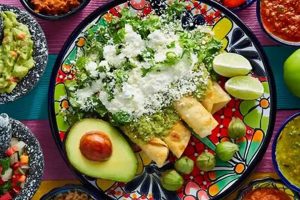
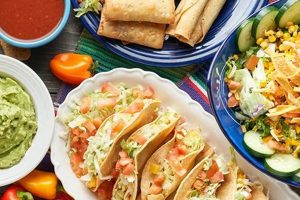
Culinary traditions emanating from the state on Mexico’s Pacific coast are diverse and deeply rooted in indigenous ingredients and techniques. This regional cuisine showcases a blend of seafood, locally grown produce, and distinct preparations, often characterized by bold flavors and vibrant colors. Pozole verde, relleno de puerco, and tlacoyos exemplify the area’s gastronomic identity.
Its significance lies in its reflection of the region’s cultural heritage, environmental resources, and historical influences. Sustaining these culinary practices preserves local traditions and contributes to the economic well-being of communities involved in agriculture, fishing, and food preparation. The unique flavors and dishes offer a tangible link to the past and a source of pride for the people.
A detailed exploration of specific dishes, regional variations, and key ingredients reveals the depth and breadth of this gastronomic landscape. Subsequent discussion will delve into specific preparations, showcasing the unique flavors and techniques that define this element of Mexico’s culinary tapestry. Further analysis will examine the socio-economic implications and cultural significance of these foodways.
Tips for Experiencing Authentic Guerrero Cuisine
To fully appreciate the flavors and traditions, consider these guidelines when exploring the area’s distinctive food offerings.
Tip 1: Prioritize Local Markets. Patronizing markets provides direct access to regional ingredients and culinary practices. Engaging with vendors often yields valuable insights into traditional preparations and flavors.
Tip 2: Seek Out Family-Run Restaurants. Establishments managed by local families often preserve recipes and techniques passed down through generations, offering a more authentic experience than larger commercial enterprises.
Tip 3: Inquire About Regional Specialties. Each region within Guerrero boasts unique dishes. Researching local specialties prior to travel allows for targeted exploration of distinct flavors.
Tip 4: Sample Street Food Responsibly. Street food provides an affordable and accessible introduction to the local diet. Prioritize vendors with visible hygiene practices and high customer turnover to mitigate health risks.
Tip 5: Understand Spice Levels. The region is known for its use of chili peppers. Inquire about the spice level of dishes before ordering to avoid discomfort.
Tip 6: Try Pozole Verde. This unique variation of pozole, distinct to Guerrero, is a must-try dish that exemplifies the region’s culinary identity.
Tip 7: Embrace Seasonal Offerings. Utilizing ingredients that are in season ensures optimal flavor and freshness while supporting local agriculture.
Adhering to these suggestions enhances the potential for a culturally enriching and gastronomically satisfying exploration. Understanding the nuances of food traditions fosters a deeper appreciation for the region’s cultural heritage.
The article will now proceed to discuss specific recipes and culinary destinations within the region, providing further avenues for experiencing the authentic taste.
1. Coastal Seafood Abundance

The extensive coastline of Guerrero significantly shapes its culinary identity. The accessibility of diverse marine life directly influences the preparation and consumption of various dishes, contributing substantially to the region’s gastronomic profile.
- Variety of Seafood
The Pacific Ocean provides a diverse array of seafood, including fish, shrimp, lobster, octopus, and shellfish. This abundance is reflected in the prevalence of seafood dishes throughout the region, from simple grilled fish to elaborate seafood stews.
- Pescado a la Talla
A representative example of Guerrero’s coastal cuisine is Pescado a la Talla. A whole fish, typically snapper or sea bass, is butterflied, marinated in a chili paste, and grilled over an open flame. The preparation highlights the freshness of the seafood and the bold flavors characteristic of the region.
- Economic Impact
Fishing is a major economic activity in coastal communities, providing livelihoods for many residents. The availability of seafood influences local markets, restaurant menus, and the overall culinary experience for visitors and locals alike.
- Regional Variations
Different coastal areas within Guerrero exhibit distinct seafood preparations. Acapulco is known for its ceviche, while other regions might specialize in different types of seafood stews or grilled preparations, reflecting localized culinary traditions and available ingredients.
The dependence on coastal resources is integral to understanding food from this area. Dishes showcase fresh ingredients from the ocean, thus defining regional gastronomy. These dishes reflect not only the geography but also the history and cultural practices.
2. Pozole Verde Variations

Pozole Verde’s relationship to the cuisine is central to defining its unique identity. This specific variant of pozole is not merely a dish consumed within the state; it represents a culinary emblem inextricably linked to the region’s cultural heritage and agricultural resources. The dish’s distinctiveness stems from its base of green ingredients, including tomatillos, epazote, and various green chili peppers, cultivated extensively within Guerrero. These elements impart a characteristic flavor profile differentiating it from other pozole varieties found throughout Mexico. The cause-and-effect relationship is evident: Guerrero’s specific agricultural conditions facilitate the cultivation of ingredients essential for Pozole Verde, resulting in its prevalence and significance as a regional specialty. The importance lies in its role as a cultural marker and a symbol of regional pride. For example, local celebrations and festivals often feature Pozole Verde prominently, reinforcing its significance within the cultural landscape.
Variations within the broader category of Verde reflect micro-regional adaptations and family traditions. Some preparations incorporate pumpkin seeds (pepitas) for added richness and texture, while others feature different types of green chilies, affecting the level of spiciness. The meat component, typically pork or chicken, may also vary depending on local availability and preference. A practical application of understanding these variations lies in appreciating the nuances of Guerrero’s culinary landscape. Knowing the ingredients and preparation techniques employed in different regions within the state provides a deeper appreciation for the diversity of flavors and textures. Furthermore, the use of locally sourced ingredients highlights the sustainability of the culinary practices, contributing to the economic viability of local farmers and producers.
In summary, Verde acts as a tangible link to the state’s agricultural heritage and cultural identity. Challenges lie in preserving traditional methods of cultivation and preparation amidst modernization and globalization. This dish represents an integral component, showcasing local ingredients and techniques, serving as a cultural symbol, and contributing to the economic well-being of local communities. The preservation and promotion of these variations ensure the continued relevance of this dish as a defining element of the rich culinary traditions of this mexican state.
3. Indigenous Corn Influence

The influence of indigenous corn varieties on the cuisine of Guerrero is pervasive and foundational. This is not simply an ingredient; it is a cornerstone of the region’s foodways. The reliance on native corn varieties is a direct result of centuries of cultivation and adaptation by indigenous communities within the state. These corn types, often distinct from commercially available varieties, offer unique flavors, textures, and nutritional profiles that define many traditional Guerrero dishes. This has a cascading effect, influencing agricultural practices, culinary techniques, and cultural identity. For instance, blue corn (maz azul) is used to create tlacoyos, imparting a distinctive color and flavor unavailable when using standard yellow corn. The nixtamalization process, an ancient technique, further enhances the nutritional value of the corn and is essential for preparing masa, the base for tortillas, tamales, and other staples. The very existence of these traditional dishes is contingent upon the availability and utilization of indigenous corn varieties.
The practical significance of understanding this lies in appreciating the interconnectedness of agriculture, food, and culture in Guerrero. Supporting the cultivation and preservation of indigenous corn varieties is crucial for maintaining the authenticity and diversity of the region’s cuisine. This necessitates recognizing and valuing the knowledge of indigenous farmers who have safeguarded these varieties for generations. Further, this understanding has practical implications for tourism and culinary promotion. Showcasing the unique flavors and stories behind dishes made with indigenous corn can attract visitors interested in authentic cultural experiences and sustainable food practices. This appreciation also drives demand, which in turn incentivizes farmers to continue cultivating these varieties despite the pressures of globalization and commercial agriculture. Efforts to promote regional gastronomy should prioritize the preservation of agricultural heritage to protect the local food system.
In conclusion, the influence of indigenous corn on the state’s culinary traditions is profound. It is not merely an ingredient but an integral part of the foodways, culture, and economy. Challenges related to preserving these heirloom varieties and traditional farming practices necessitate a concerted effort to support indigenous farmers, promote sustainable agriculture, and educate consumers about the value of these ingredients. This connection is a linchpin to the preservation of the state’s rich culinary heritage.
4. Mole's Complex Flavors

Mole, a complex sauce central to Mexican cuisine, assumes particular significance within the context of Guerrero’s regional food. The diverse mole preparations in Guerrero reflect a confluence of indigenous traditions, local ingredients, and historical influences, contributing substantially to the area’s culinary identity. The diverse range illustrates a dedication to complex culinary traditions.
- Ingredients and Preparation
Mole preparations involve a myriad of ingredients, including chili peppers, nuts, seeds, spices, chocolate (in some variations), and fruits. The preparation process is laborious, often requiring toasting, grinding, and simmering the ingredients over extended periods. The combination of elements imparts depth and layers of flavors, characteristic of authentic Mexican cuisine.
- Regional Variations of Mole in Guerrero
Guerrero boasts several distinct mole variations. Mole rojo, with its rich red color derived from specific chili peppers, is a common preparation. Mole verde, a variant found throughout Mexico, also manifests in unique regional forms, often incorporating local herbs and vegetables. A mole negro, usually reserved for special occasions due to its high cost of ingredients and extensive preparation time, might be found, though it is more typical of Oaxaca.
- Cultural Significance of Mole
Mole transcends mere sustenance, functioning as a cultural symbol deeply intertwined with celebrations and rituals. Serving mole at weddings, baptisms, and other important life events reflects its importance in Guerrero’s social fabric. Recipes are often passed down through generations, preserving culinary traditions and family heritage.
- Economic Impact of Mole Production
The production of mole contributes to the economic livelihoods of many communities in Guerrero. Cultivating chili peppers, nuts, and other ingredients sustains local agriculture, while the preparation and sale of mole provides income for families and small businesses. Promoting and preserving traditional mole recipes also encourages culinary tourism, which in turn bolsters the local economy.
These facets illustrate how mole’s complex flavors are intertwined with cultural, economic, and agricultural practices. Specific dishes, variations, culinary heritage all demonstrate its impact. Preserving traditional recipes and promoting local ingredients are critical to supporting the unique flavors of Mexican gastronomy.
5. Regional Culinary Festivals

The regional culinary festivals of Guerrero serve as vital platforms for showcasing and celebrating the area’s distinct gastronomic identity. These events are not merely showcases of food; they function as engines of cultural preservation and economic stimulus, deeply intertwined with the traditions and practices surrounding food. A direct cause-and-effect relationship exists between these festivals and the perpetuation of Guerrero’s culinary heritage: festivals generate interest in regional specialties, incentivizing the continuation of traditional cooking methods and the use of local ingredients. The importance of these festivals lies in their capacity to transmit culinary knowledge across generations, fostering a sense of regional pride and identity. For instance, the annual Pozole Festival in Chilpancingo provides a venue for showcasing various regional variations of pozole, allowing visitors to sample and appreciate the dish’s complexity and cultural significance.
The practical significance of understanding this connection extends to tourism development and economic empowerment. By attracting visitors interested in authentic cultural experiences, these festivals generate revenue for local businesses, farmers, and artisans. Culinary festivals create an ecosystem that promotes the production, distribution, and consumption of regional food, fostering sustainable development. For example, smaller festivals focusing on specific ingredients like mangoes or coffee can provide a direct platform for producers to market their products and connect with consumers, fostering economic opportunity. Moreover, these festivals provide opportunities for chefs and culinary professionals to showcase their talents, further enhancing the region’s reputation as a culinary destination. These also stimulate collaboration between communities, enhancing community relations.
In conclusion, regional culinary festivals are integral components of Guerrero’s food landscape. They serve as critical venues for the promotion, preservation, and celebration of regional cuisine. Challenges related to maintaining authenticity, ensuring sustainability, and managing tourist impact require careful planning and community engagement. These festivals are also critical for Guerrero cuisine since they showcase the food, ingredients, and techniques that highlight the states gastronomical identity.
Frequently Asked Questions
The following addresses common inquiries regarding the culinary landscape of Guerrero, Mexico. These questions are designed to clarify aspects of this region’s distinctive food culture.
Question 1: What distinguishes Guerrero Mexico food from other regional Mexican cuisines?
Culinary traditions in Guerrero are defined by a confluence of indigenous influences, coastal access, and the prominence of specific ingredients like pozole verde and indigenous corn varieties. These factors result in distinct flavor profiles and culinary techniques not replicated elsewhere in Mexico.
Question 2: What are some of the most commonly used ingredients?
Chili peppers are fundamental, along with tomatillos, epazote, various herbs, and locally sourced meats such as pork and chicken. Seafood, given the extensive coastline, is also a prominent component. Furthermore, indigenous varieties of corn are integral to the preparation of tortillas, tlacoyos, and other staple dishes.
Question 3: Is Guerrero Mexico food generally spicy?
Spice levels vary widely. While many dishes incorporate chili peppers, the intensity is not uniformly high. Inquiring about spice levels prior to ordering is advisable for those sensitive to heat.
Question 4: Are there vegetarian options available?
Vegetarian options can be limited in some areas, but dishes like tlacoyos filled with beans or vegetables, and certain preparations of pozole verde without meat, offer alternatives. Direct communication with restaurant staff regarding dietary restrictions is recommended.
Question 5: What are some of the most authentic places to experience Guerrero Mexico food?
Local markets, family-run restaurants, and smaller establishments that prioritize traditional recipes offer more authentic culinary experiences. Exploring different regions within Guerrero can also reveal diverse culinary specialties.
Question 6: How can the preservation of traditional Guerrero Mexico food recipes be ensured?
Supporting local producers, patronizing establishments that prioritize traditional methods, and documenting and sharing recipes are crucial steps. Culinary festivals and educational initiatives also play a vital role in preserving culinary heritage.
Understanding these fundamental aspects provides a clearer appreciation of the culinary traditions unique to this region.
The following section provides a summary of “Guerrero Mexico food” topic.
Conclusion
This exploration has revealed that “guerrero mexico food” is not simply a collection of dishes; it is a reflection of the region’s history, geography, and culture. From the seafood-rich coast to the mountainous interior, diverse ingredients and techniques converge to create a distinctive gastronomic landscape. Indigenous corn varieties, mole preparations, and regional specialties like pozole verde all contribute to its unique culinary identity. The examination of regional culinary festivals shows how these events support the region. Also shows the regional tourism of what “guerrero mexico food” creates.
Recognizing the importance of preserving culinary traditions, supporting local producers, and promoting sustainable practices is essential. Further research, exploration, and appreciation will ensure that this important aspect of Guerrero’s cultural heritage continues to thrive for generations to come. There should be recognition of regional agriculture to have “guerrero mexico food” continue.