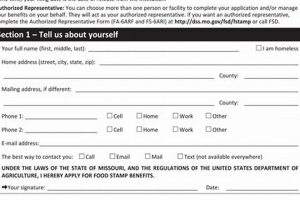
Eligibility for and enrollment in the Supplemental Nutrition Assistance Program (SNAP) in Missouri, particularly regarding ongoing eligibility maintenance, represent a critical aspect of food security for low-income individuals and families. Maintaining active participation requires periodic verification of income, household composition, and other relevant factors as determined by the Missouri Department of Social Services. For example, a household’s continued access to benefits hinges on successful completion of required paperwork and interviews at specified intervals.
Sustained access to these nutritional benefits provides a crucial safety net, mitigating food insecurity and improving health outcomes for vulnerable populations within the state. Historically, these programs have played a significant role in reducing poverty and improving the overall well-being of Missouri residents facing economic hardship. The consistent availability of food assistance allows individuals to allocate limited financial resources towards other essential needs, such as housing, utilities, and healthcare.
The following sections will delve into the specific requirements for maintaining eligibility, the potential impact of policy changes, and the resources available to individuals navigating the renewal process in Missouri. This will include information on reporting changes in circumstances, understanding verification requirements, and accessing support services to ensure continuous participation in the program.
Maintaining Missouri SNAP Benefits
This section provides crucial guidance for ensuring continued eligibility and uninterrupted access to the Supplemental Nutrition Assistance Program (SNAP) benefits in Missouri.
Tip 1: Promptly Report Changes: Any alterations to household income, composition, or residency must be reported to the Missouri Department of Social Services within ten days of occurrence. Failure to do so can jeopardize benefit eligibility.
Tip 2: Understand Verification Requirements: Familiarize yourself with the specific documentation required for ongoing verification. This may include pay stubs, bank statements, and proof of address.
Tip 3: Attend Scheduled Interviews: Mandatory interviews are a critical component of the renewal process. Missing a scheduled interview without prior notification can result in benefit termination.
Tip 4: Respond to Information Requests: The Department of Social Services may request additional information or documentation. Respond promptly and thoroughly to all inquiries.
Tip 5: Keep Accurate Records: Maintain organized records of all submitted documents, correspondence, and interview dates. This provides a valuable reference in case of discrepancies.
Tip 6: Utilize Available Resources: Contact the Missouri Department of Social Services or local social service agencies for clarification or assistance with the renewal process.
Sustained vigilance regarding reporting requirements and proactive engagement with the Department of Social Services are paramount for maintaining continuous access to vital nutritional assistance.
The subsequent section will address potential challenges and offer strategies for navigating the complexities of the Missouri SNAP program.
1. Eligibility Verification

Eligibility verification serves as the cornerstone of Missouri’s Supplemental Nutrition Assistance Program (SNAP), directly determining an individual’s initial and continued “mo food stamp status.” This process ensures that benefits are allocated appropriately to those who genuinely meet the program’s established criteria. Rigorous assessment protects the integrity of the system and maximizes its effectiveness.
- Income Assessment
Income assessment involves a meticulous review of all financial resources available to a household. This includes wages, salaries, self-employment income, unemployment benefits, and other forms of monetary assistance. For example, a household exceeding the established income thresholds, even by a small margin, may be deemed ineligible or have their benefit amount reduced, directly impacting their “mo food stamp status.” The accuracy of reported income is paramount; misrepresentation can lead to penalties.
- Household Composition
The composition of a household significantly influences eligibility. The program defines a household as individuals who live together and purchase and prepare meals together. Changes in household size, such as the addition or departure of a member, must be promptly reported. For instance, a child turning 18 and obtaining employment may alter the household’s “mo food stamp status” due to increased income or their exclusion from the eligible group. Verification often requires documentation like birth certificates or school records.
- Resource Limits
Missouri SNAP imposes limits on countable resources, such as bank accounts, stocks, and bonds. These limits are designed to ensure that individuals with significant assets rely on those resources before accessing public assistance. If a household’s assets exceed the allowable threshold, their “mo food stamp status” is negatively affected. For instance, a substantial inheritance or the sale of property could impact eligibility. Certain assets, such as a primary residence and personal vehicles (within certain limitations), are typically excluded from resource calculations.
- Identity and Residency Confirmation
Confirming the identity and residency of all applicants is crucial for preventing fraud and ensuring that benefits are distributed to legitimate Missouri residents. Acceptable forms of identification include driver’s licenses, state-issued identification cards, and passports. Residency verification typically requires documentation like utility bills, lease agreements, or mortgage statements. Establishing a verifiable connection to a Missouri address is a prerequisite for maintaining “mo food stamp status.”
These multifaceted elements of eligibility verification collectively shape the determination of “mo food stamp status.” A comprehensive and accurate assessment of income, household composition, resources, identity, and residency is essential for ensuring the equitable distribution of SNAP benefits and upholding the program’s integrity.
2. Renewal Timelines

The adherence to specified renewal timelines is intrinsically linked to an individual’s or household’s “mo food stamp status” within Missouri. These timelines dictate the intervals at which recipients must re-verify their eligibility to continue receiving benefits. Failure to comply with these timelines directly results in the termination or suspension of benefits, consequently altering the “mo food stamp status” from active to inactive. The Missouri Department of Social Services establishes these renewal schedules based on factors such as household composition, income stability, and employment status. For instance, households with fluctuating income may be subject to more frequent renewal periods than those with stable employment. Understanding these specific timelines is therefore paramount for maintaining continuous access to SNAP benefits.
The timely submission of required documentation, including proof of income, residency, and household composition, is essential for successful renewal. The Department sends notifications regarding upcoming renewal deadlines, outlining the necessary steps and providing contact information for assistance. However, the ultimate responsibility for ensuring compliance rests with the recipient. Consider the scenario of a single mother who fails to submit her renewal paperwork by the deadline due to unforeseen circumstances. Her “mo food stamp status” would immediately be affected, resulting in a temporary cessation of benefits until the required documents are processed and eligibility is re-established. This interruption, even if brief, can have significant consequences for her family’s food security.
In conclusion, renewal timelines are a critical determinant of “mo food stamp status” in Missouri. Diligent adherence to these schedules, coupled with prompt submission of accurate documentation, is necessary to avoid disruptions in benefits and maintain a consistent level of food security. The consequences of non-compliance underscore the importance of understanding and prioritizing renewal requirements. Overcoming challenges, such as difficulty gathering documentation or understanding the renewal process, necessitates proactive engagement with the Department of Social Services or community-based assistance programs to ensure continued participation in the SNAP program.
3. Income Thresholds

Income thresholds are a fundamental determinant of “mo food stamp status” in Missouri. These thresholds represent the maximum gross and net income limits a household can possess to qualify for Supplemental Nutrition Assistance Program (SNAP) benefits. A direct, inverse relationship exists: exceeding these thresholds, whether gross or net, disqualifies a household or reduces the benefit amount, thereby altering the “mo food stamp status.” Consequently, comprehension of these income limits is crucial for both prospective applicants and current recipients. For instance, a family experiencing a temporary increase in income due to overtime or a short-term job could inadvertently surpass the allowed income threshold, leading to a temporary suspension or reduction in their SNAP benefits. The program’s design seeks to provide assistance to those most in need, and income serves as a primary indicator of that need.
The practical significance of understanding these income limits extends to budgeting and financial planning. Households approaching the income thresholds can strategize to maintain eligibility by managing expenses or pursuing income opportunities that do not push them over the limit. Furthermore, knowledge of these thresholds enables individuals to accurately assess their eligibility before applying, potentially saving time and resources. Consideration must be given to both gross income, which is income before deductions, and net income, which is income after allowable deductions such as housing costs, medical expenses, and dependent care. These deductions play a crucial role in determining a household’s “mo food stamp status,” as they effectively lower the countable income and may allow a household to qualify even if their gross income exceeds the limit.
In summary, income thresholds are inextricably linked to “mo food stamp status,” serving as a critical gatekeeper for eligibility. Understanding these limits and their interplay with household circumstances is essential for both accessing and maintaining benefits. Challenges arise when income fluctuates or documentation requirements are complex. However, a clear understanding of these financial boundaries empowers individuals to make informed decisions and navigate the SNAP program effectively, safeguarding their access to vital nutritional assistance. This intricate relationship highlights the necessity of accurate income reporting and a comprehensive understanding of the program’s regulations to ensure continued eligibility.
4. Reporting Changes

The connection between “Reporting Changes” and “mo food stamp status” is direct and consequential. Accurate and timely reporting of changes in circumstances is a fundamental obligation for recipients of Supplemental Nutrition Assistance Program (SNAP) benefits in Missouri, directly influencing their “mo food stamp status.” Failure to report changes, whether intentional or unintentional, can lead to inaccuracies in benefit calculations, potential overpayments or underpayments, and ultimately, alterations to the individual’s or household’s “mo food stamp status.” The importance of this reporting requirement stems from the program’s need to accurately assess ongoing eligibility and adjust benefit levels to reflect current circumstances. For example, if a recipient obtains new employment, the resulting increase in income must be reported to the Department of Social Services. This change may lead to a reduction in benefit amount or, in some cases, ineligibility. Conversely, a loss of employment must also be reported, as it may result in an increase in benefit amount.
The practical significance of understanding this connection extends beyond merely complying with regulations. Accurate reporting ensures that benefits are aligned with actual need, maximizing the program’s effectiveness in combating food insecurity. It also protects recipients from potential penalties, such as repayment of overpaid benefits or even legal action in cases of fraud. Consider a scenario where a family experiences a change in household composition due to a child moving out. Failing to report this change would result in the family receiving benefits based on the previous household size, leading to an overpayment. Upon discovery, the Department would likely require repayment of the excess benefits, potentially creating a financial hardship for the family. The requirement for reporting changes is not arbitrary; it is a crucial mechanism for maintaining program integrity and ensuring equitable distribution of resources.
In summary, “Reporting Changes” is an integral component of maintaining a valid “mo food stamp status.” The cause-and-effect relationship is clear: changes in circumstances necessitate reporting, and failure to do so can negatively impact “mo food stamp status.” While the reporting process may present challenges, such as understanding what constitutes a reportable change or navigating the reporting system, the consequences of non-compliance underscore its importance. Proactive communication with the Department of Social Services and seeking clarification when uncertainties arise are essential strategies for navigating this crucial aspect of the SNAP program and safeguarding continued access to vital nutritional assistance.
5. Benefit Calculation

Benefit calculation forms the cornerstone of determining “mo food stamp status,” dictating the amount of Supplemental Nutrition Assistance Program (SNAP) benefits a household receives. This process involves a complex algorithm that considers household income, size, and certain expenses to arrive at a monthly benefit amount. The resulting figure directly impacts an individual’s or household’s ability to purchase nutritious food, thereby establishing and influencing their “mo food stamp status.”
- Gross Income Assessment
Gross income, which encompasses all earnings before deductions, serves as the initial point of assessment. Missouri SNAP applies maximum gross income limits based on household size. Exceeding these limits can result in ineligibility, regardless of expenses. For instance, a family of four with a gross monthly income exceeding the established limit may be denied benefits, even if they face significant expenses. This initial assessment profoundly shapes their “mo food stamp status” by determining whether they proceed to the next stage of the calculation process.
- Net Income Determination
Following the gross income assessment, the process transitions to calculating net income. This involves subtracting allowable deductions from the gross income, providing a more accurate reflection of available resources. Deductions include items such as 20% of earned income, a standard deduction, dependent care expenses, and excess shelter costs. A household with a high gross income may still qualify if these deductions reduce their net income below the established limits. The resulting net income directly influences the benefit amount, shaping the ultimate “mo food stamp status.”
- Standard Deduction and Shelter Costs
The standard deduction and shelter cost deductions play a significant role in benefit calculation. The standard deduction is a fixed amount based on household size, while the shelter cost deduction considers housing expenses exceeding 50% of the household’s income after other deductions. High housing costs can significantly increase the shelter cost deduction, potentially leading to higher benefit amounts and influencing the “mo food stamp status.” For example, a household renting in an expensive urban area may receive a larger benefit due to the shelter cost deduction.
- Maximum Benefit Allotment
Even after calculating net income and deductions, benefit amounts are ultimately capped by the maximum benefit allotment for a given household size. This maximum allotment is determined by the USDA and is designed to provide a baseline level of food security. If the calculated benefit amount exceeds the maximum allotment, the household receives only the maximum, impacting their “mo food stamp status.” Therefore, benefit calculation not only determines eligibility but also caps the level of assistance provided.
These interconnected facets of benefit calculation gross income, net income, standard deduction, shelter costs, and maximum benefit allotment collectively define the “mo food stamp status” of individuals and households in Missouri. An understanding of this process is essential for both recipients and administrators to ensure accurate and equitable distribution of SNAP benefits and to effectively combat food insecurity within the state.
6. Compliance Requirements

Compliance requirements are inextricably linked to maintaining active “mo food stamp status” within Missouri. These mandates, set forth by the Department of Social Services, govern recipient behavior and documentation, directly affecting eligibility for continued benefits. Failure to adhere to these requirements can result in suspension or termination of assistance, thus altering the “mo food stamp status.”
- Work Requirements
Certain SNAP recipients are subject to work requirements, mandating participation in job training programs or a minimum number of work hours per week. Individuals failing to meet these criteria without a valid exemption risk losing their “mo food stamp status.” For example, an able-bodied adult without dependents (ABAWD) in a non-waiver county must work at least 20 hours per week or participate in a qualifying work program to maintain eligibility. Non-compliance can lead to a three-month limit on SNAP benefits within a three-year period.
- Accurate Reporting
Maintaining accurate and timely reporting of changes in household income, composition, and address is paramount. Failure to report changes within the stipulated timeframe can result in overpayments, underpayments, and potential fraud investigations. Such inaccuracies directly impact the “mo food stamp status.” For instance, if a recipient secures employment but fails to report the increased income, the Department may later determine an overpayment occurred, requiring repayment and potentially suspending future benefits.
- Cooperation with Reviews
Recipients are obligated to cooperate fully with periodic eligibility reviews and verification requests from the Department of Social Services. This includes providing requested documentation, attending scheduled interviews, and answering questions truthfully. Non-cooperation can lead to immediate termination of benefits, thereby affecting the “mo food stamp status.” Refusal to provide requested bank statements, for example, may be interpreted as a concealment of assets, resulting in a cessation of benefits.
- Abstinence from Fraudulent Activity
Engaging in fraudulent activity, such as providing false information on applications, misusing SNAP benefits, or trafficking SNAP cards, carries severe penalties, including criminal prosecution and permanent disqualification from the program. Any substantiated instance of fraud invariably leads to a change in “mo food stamp status,” rendering the individual ineligible for future assistance. Selling SNAP benefits for cash, for example, constitutes fraud and will result in permanent ineligibility.
These multifaceted compliance requirements collectively define the framework within which Missouri SNAP recipients operate. Adherence to these mandates ensures program integrity, promotes responsible benefit usage, and safeguards continued access to vital nutritional assistance. Conversely, non-compliance can jeopardize eligibility, highlighting the critical connection between responsible participation and maintaining a stable “mo food stamp status.”
Frequently Asked Questions Regarding Missouri SNAP Status
The following questions and answers address common inquiries and misconceptions concerning eligibility, maintenance, and changes affecting participation in the Supplemental Nutrition Assistance Program (SNAP) in Missouri, thereby affecting an individual’s “mo food stamp status”.
Question 1: What constitutes a reportable change that may affect my “mo food stamp status”?
Changes in income, household composition (births, deaths, individuals moving in or out), address, and resources (e.g., bank account balances) must be reported to the Missouri Department of Social Services. Failure to report these changes within ten days can affect eligibility and benefit levels.
Question 2: How often must eligibility be renewed to maintain continuous “mo food stamp status”?
Renewal periods vary based on individual circumstances but typically occur every six to twelve months. The Missouri Department of Social Services will provide notification of upcoming renewal deadlines and required documentation.
Question 3: What are the income limits for SNAP eligibility, and how do they impact “mo food stamp status”?
Income limits vary based on household size and are subject to change. Both gross and net income are considered. Exceeding the applicable income limits may result in reduced benefits or ineligibility.
Question 4: What happens if a scheduled interview is missed, and how does this affect “mo food stamp status”?
Missing a scheduled interview without prior notification can lead to suspension or termination of benefits. Contacting the Department of Social Services promptly to reschedule is crucial.
Question 5: Are there work requirements associated with SNAP benefits, and how do they relate to “mo food stamp status”?
Certain recipients, particularly able-bodied adults without dependents (ABAWDs), are subject to work requirements. Failure to meet these requirements, without a valid exemption, can result in a three-month limit on SNAP benefits within a three-year period.
Question 6: What resources are available to assist with the SNAP application or renewal process and ensure sustained “mo food stamp status”?
The Missouri Department of Social Services offers online resources, phone support, and local offices to assist with applications, renewals, and reporting changes. Community-based organizations also provide assistance with navigating the SNAP program.
Accurate information and proactive engagement with the Missouri Department of Social Services are essential for navigating the complexities of the SNAP program and ensuring continued access to vital nutritional assistance and maintaining your “mo food stamp status”.
The following section will explore common challenges faced by Missouri SNAP recipients and strategies for overcoming them.
Understanding Missouri SNAP Status
Throughout this exploration, the multifaceted nature of “mo food stamp status” has been thoroughly examined. From initial eligibility verification, contingent upon income, household composition, and resource limitations, to the ongoing requirements of reporting changes and adhering to renewal timelines, maintaining consistent access to SNAP benefits demands diligence and awareness. The impact of compliance requirements, work mandates, and accurate benefit calculation methods all converge to define an individual’s or household’s standing within the program. Effective navigation of these complex processes is paramount for ensuring continuous access to vital nutritional support.
Ultimately, the consistent availability of these resources significantly influences the well-being of Missouri’s most vulnerable populations. The ability to access and maintain “mo food stamp status” is not merely an administrative procedure; it is a lifeline that empowers individuals and families to meet their basic needs and improve their overall quality of life. Understanding the intricacies of the program, coupled with proactive engagement with the Department of Social Services and community resources, is crucial for ensuring that those who qualify receive the support they need to thrive. Addressing systemic barriers to access and promoting greater awareness of the program’s requirements remain essential steps towards strengthening food security throughout the state.