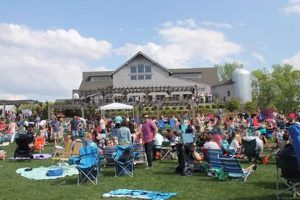
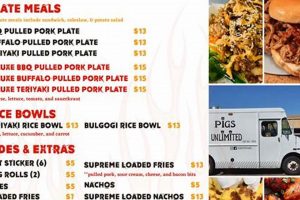
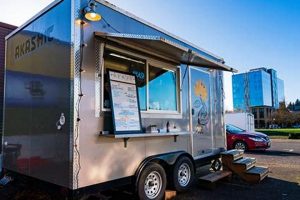
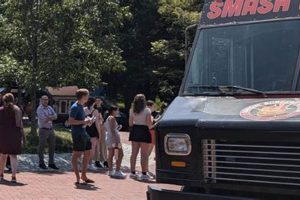
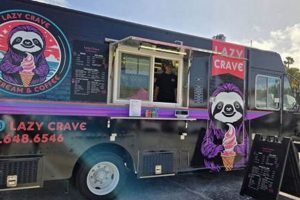
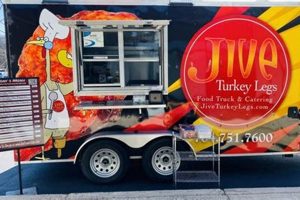
Mobile culinary services offer a versatile catering option for celebratory events and gatherings hosted at private residences or venues. These businesses provide a range of cuisines and service styles, operating out of specially equipped vehicles that can be deployed to almost any location. The presence of a fully functional kitchen on wheels allows for fresh food preparation and service, adding a unique dimension to event catering.
The appeal of these mobile vendors lies in their ability to provide customized menus and experiences, often at competitive price points compared to traditional catering services. Their popularity stems from the increasing demand for experiential events and the desire to provide guests with unique and memorable culinary offerings. The evolution of the mobile food industry has transformed it from a niche market into a mainstream option for event planning, providing convenience, flexibility, and diverse food selections.
The following sections will delve into various aspects of engaging these services, including selection criteria, logistical considerations, menu planning, and contract negotiation, providing a comprehensive guide for those seeking to incorporate this innovative catering solution into their event.
Essential Considerations for Mobile Catering Engagements
Careful planning is crucial when securing mobile culinary services for private gatherings. Attention to detail ensures a seamless and successful event.
Tip 1: Location Assessment: Prior to booking, conduct a thorough site survey. Ensure adequate space for the vehicle, taking into account turning radius and potential obstructions. Verify accessibility for loading and unloading equipment and supplies.
Tip 2: Power Requirements: Determine the electrical needs of the vendor. Mobile kitchens often require significant power. Confirm the availability of sufficient amperage at the location or arrange for a generator. Discuss power sources with the vendor and confirm if they can source on there own.
Tip 3: Menu Customization and Dietary Needs: Collaborate with the vendor to create a menu that caters to the specific preferences and dietary restrictions of guests. Offer a range of options, including vegetarian, vegan, and gluten-free choices. Clearly communicate any allergy concerns.
Tip 4: Service Style and Staffing: Clarify the service style, whether it be buffet, plated, or family-style. Confirm the number of staff provided and their responsibilities. Ensure adequate personnel for food preparation, service, and cleanup.
Tip 5: Permits and Regulations: Investigate any necessary permits or licenses required for mobile food vending in the specific locality. Confirm that the vendor possesses the appropriate documentation and complies with all relevant health and safety regulations. The event organiser should work with the vendor.
Tip 6: Waste Disposal: Establish a plan for waste disposal. Provide designated receptacles for trash and recycling. Coordinate with the vendor to ensure proper disposal of food waste and other materials.
Tip 7: Contractual Agreements: Develop a comprehensive contract outlining all terms and conditions, including payment schedule, cancellation policy, and liability coverage. Review the contract carefully and seek legal counsel if necessary.
Following these guidelines helps facilitate a smooth and enjoyable dining experience for all attendees, maximizing the benefits of incorporating this unique catering option.
The subsequent section will explore potential challenges and mitigation strategies, offering further insights into optimizing mobile culinary experiences at private events.
1. Menu Customization

Menu customization represents a pivotal element in the context of mobile culinary services for private events. It enables hosts to curate dining experiences aligned with specific preferences, themes, and dietary considerations, thereby enhancing the overall event atmosphere and guest satisfaction.
- Dietary Accommodation
This facet concerns the adaptation of menus to address the varying dietary needs of guests, including allergies, intolerances, and specific dietary preferences (e.g., vegetarian, vegan, gluten-free). Mobile vendors must demonstrate the capability to provide accurate allergen information and prepare meals that cater to these requirements without compromising taste or quality. For example, a private party with a significant number of vegan attendees may require a fully plant-based menu or clearly labeled vegan options.
- Theme Integration
Menu customization facilitates the integration of culinary offerings with the event’s overall theme. Mobile caterers can design menus that reflect specific cuisines, cultural traditions, or historical periods, thereby contributing to an immersive and cohesive event experience. A Hawaiian-themed luau, for instance, may feature a menu incorporating traditional Hawaiian dishes such as Kalua pig and poi.
- Service Style Adaptation
The degree of menu customization influences the service style employed at the event. A highly customized menu may necessitate plated service to ensure accurate portioning and presentation, while a more streamlined menu may lend itself to buffet-style service for greater efficiency. Considerations of staffing levels and space limitations play a significant role in determining the optimal service approach.
- Ingredient Sourcing
Menu customization can extend to the sourcing of ingredients. Clients may request locally sourced, organic, or sustainably harvested ingredients to align with their values or to highlight regional culinary specialties. Mobile vendors must possess the capability to procure these specialized ingredients and adapt their recipes accordingly, potentially impacting pricing and menu availability.
The ability to effectively customize menus represents a key differentiator among mobile culinary vendors catering to private events. Such adaptation ensures that dining is both enjoyable and inclusive, further underscoring the benefits of opting for mobile solutions over more conventional catering options.
2. Space Requirements

Successful deployment of mobile culinary vendors at private gatherings is intrinsically linked to adequate space allocation. The physical dimensions of these vehicles, coupled with operational necessities, dictate the minimum area required for safe and efficient service. Failure to adequately assess and accommodate spatial demands can result in logistical impediments, service disruptions, and potential safety hazards. For example, a standard-sized catering vehicle might require a level surface area of at least 20 feet in length and 10 feet in width, plus additional clearance for maneuvering and customer access. Insufficient space can impede the vehicle’s ability to set up properly, hindering service speed and efficiency. The availability of adequate space directly influences the feasibility and success of incorporating mobile vendors into private event settings.
Furthermore, spatial considerations extend beyond the vehicle’s footprint. Adequate space must also be allocated for pedestrian traffic, queuing guests, and any associated equipment, such as tables, chairs, or waste receptacles. Consider a scenario where a high-volume event lacks sufficient queuing space; this may lead to congestion, frustration, and a negative impact on the overall guest experience. Additionally, access to utilities, such as power outlets or water sources, must be factored into the spatial planning. These elements all contribute to a functional and aesthetically pleasing service environment. Real-world applications demonstrate that effective space management is often a determining factor in client satisfaction and repeat business for mobile catering companies.
In summary, the correlation between space requirements and the seamless integration of mobile culinary options into private events is undeniable. Careful assessment of vehicle dimensions, operational needs, and guest flow is paramount to ensuring a successful outcome. Overlooking spatial considerations can lead to logistical challenges and detract from the overall event experience. Therefore, proactive spatial planning represents a crucial element in maximizing the benefits and minimizing the potential pitfalls associated with mobile catering solutions.
3. Permitting Process

Compliance with local regulations is essential when engaging mobile food vendors for private events. The permitting process ensures adherence to health and safety standards, thereby safeguarding public well-being. Understanding the intricacies of this process is crucial for event organizers to avoid potential legal and operational complications.
- Health Department Regulations
Local health departments typically mandate permits for mobile food operations to ensure compliance with food safety guidelines. These regulations often encompass requirements for food storage, preparation, and handling, as well as waste disposal. For instance, a vendor operating without a valid permit may face fines or closure, disrupting the event and potentially exposing attendees to health risks. The scope of regulation also includes proper and consistent temperatures of all the food supplied.
- Zoning Ordinances
Zoning ordinances may restrict the operation of mobile food vendors in certain areas, particularly residential zones. Event organizers must verify that the chosen location permits such activity or obtain a temporary use permit. Failure to comply with zoning regulations can result in citations or legal action, interrupting the event. Zoning also may require that permission from neighbours is acquired, or that a fixed distance is maintained.
- Fire Safety Inspections
Mobile food vendors often utilize propane or other flammable materials, necessitating fire safety inspections to ensure compliance with fire codes. These inspections verify the proper installation and maintenance of fire suppression equipment, as well as adherence to safe operating procedures. Non-compliance can pose a significant safety hazard and may lead to the immediate shutdown of the vendor’s operations. Inspections may mandate fixed distances from buildings and other flammable materials.
- Business Licenses
In addition to health and safety permits, mobile food vendors are generally required to possess a valid business license to operate legally within a jurisdiction. This license confirms that the vendor is registered with the relevant authorities and has met all applicable business requirements. Operating without a valid business license can result in fines and legal penalties. Often this involves background checks.
Navigating the permitting process requires careful planning and coordination between the event organizer and the mobile food vendor. Proactive engagement with local authorities can ensure compliance with all applicable regulations, thereby mitigating potential risks and ensuring a successful and safe event. The permitting process represents a critical component of responsible event planning when incorporating mobile food services.
4. Power Accessibility

The availability of sufficient electrical power represents a critical logistical consideration when incorporating mobile culinary services into private events. Mobile kitchens rely on electricity to operate essential equipment, including cooking appliances, refrigeration units, lighting, and point-of-sale systems. Inadequate power infrastructure can significantly impede the vendor’s ability to provide seamless service, potentially disrupting the event and compromising guest satisfaction.
- Amperage Requirements
Mobile food vendors typically require a substantial amperage draw to operate their equipment effectively. Standard household outlets may not provide sufficient power to meet these demands, necessitating the use of dedicated circuits or generators. Failure to provide adequate amperage can result in tripped breakers, equipment malfunctions, and service delays. For instance, a fully equipped vehicle might require a 50-amp, 240-volt power supply to operate all appliances simultaneously. This needs to be confirmed before the event.
- Generator Solutions
In situations where sufficient on-site power is unavailable, generators offer a viable alternative. Generators must be properly sized to meet the vendor’s power requirements, and safety precautions must be taken to prevent carbon monoxide poisoning and fire hazards. Furthermore, noise levels from generators can be disruptive, necessitating the use of noise-dampening equipment or strategic placement away from event areas. The power source would also require an appropriate fuel, which can also lead to environmental concerns.
- Voltage Compatibility
Ensuring voltage compatibility between the vendor’s equipment and the available power supply is essential to prevent damage. Mobile kitchens may operate on different voltage systems (e.g., 120 volts, 240 volts), requiring the use of step-up or step-down transformers to ensure proper operation. Incorrect voltage can lead to equipment failure and potential safety hazards. Mobile vendors typically will provide this information, but it is useful to confirm this information with the event site provider.
- Extension Cord Safety
The use of extension cords to connect mobile kitchens to power sources can pose safety risks if not handled properly. Extension cords must be appropriately rated for the amperage draw of the equipment, and they should be free from damage and properly grounded to prevent electrical shocks. Overloaded or improperly used extension cords can overheat and cause fires. Use appropriately rated and approved cables, and only use when necessary.
Addressing power accessibility proactively is crucial for a successful mobile catering engagement. Thoroughly assessing the vendor’s power requirements and the available infrastructure ensures smooth operation and minimizes the risk of disruptions. Proper planning, in conjunction with the mobile catering and event site organizer, can prevent this pitfall. The absence of adequate power can severely impact the event’s operation and enjoyment. Prioritizing this is extremely important.
5. Budget Considerations

Effective budgetary planning is paramount when integrating mobile culinary services into private events. The financial allocation directly influences the scope of services, menu options, and overall event quality. Prudent fiscal management ensures optimal value while aligning with the event’s objectives.
- Menu Selection and Pricing Tiers
Menu choices significantly impact the overall expenditure. Mobile vendors often offer tiered pricing structures corresponding to varying menu complexity and ingredient quality. Opting for premium ingredients or elaborate dishes will invariably increase costs. A pragmatic approach involves balancing culinary aspirations with budgetary constraints, perhaps by prioritizing a smaller selection of high-quality items over an extensive, less refined offering. The selection should be aligned with the amount allocated in the budget.
- Service Duration and Staffing Costs
The duration of service directly affects staffing requirements and associated expenses. Longer service periods necessitate more personnel, leading to increased labor costs. Careful consideration should be given to the event’s timeline and the optimal service window. Streamlining the service schedule and minimizing idle time can contribute to significant cost savings. A budget must also be allocated to this.
- Travel Fees and Location Surcharges
Mobile vendors typically incorporate travel fees into their pricing structure, reflecting the distance and time required to reach the event location. Furthermore, certain locations may incur additional surcharges due to accessibility challenges or logistical complexities. Transparent communication with the vendor regarding these potential expenses is essential for accurate budget forecasting. These must also be considered and included in the cost.
- Contingency Funds for Unexpected Expenses
Prudent budgetary planning necessitates the allocation of contingency funds to address unforeseen circumstances, such as equipment malfunctions, inclement weather, or unexpected increases in guest attendance. A buffer of 10-15% of the total budget can provide a financial safety net and mitigate potential disruptions. A budget is not complete until a contingency has been included.
In summary, thoughtful budget considerations are integral to realizing the potential of mobile catering at private gatherings. A comprehensive understanding of pricing variables, service requirements, and potential contingencies enables event organizers to make informed decisions that align with both financial constraints and desired outcomes. Effective budget management is not about curtailing expenses; rather, it involves strategically allocating resources to maximize value and ensure a memorable and successful event experience.
Frequently Asked Questions
This section addresses common inquiries regarding the engagement of mobile culinary vendors for private gatherings. It provides factual and objective responses to assist in informed decision-making.
Question 1: Are permits invariably required for mobile vendors at private events?
The necessity for permits varies based on local regulations. Jurisdictions often mandate permits to ensure compliance with health and safety standards. It is the responsibility of the event organizer and/or the vendor to ascertain and adhere to applicable requirements.
Question 2: What constitutes an adequate space allocation for these mobile units?
Space requirements depend on the dimensions of the specific vehicle and operational needs. A minimum level surface area of 20 feet in length and 10 feet in width is generally recommended, in addition to clearance for maneuvering and customer access.
Question 3: How is menu customization typically handled?
Menu customization is facilitated through direct consultation with the vendor. Options may include dietary accommodations, theme integration, and ingredient sourcing. Pricing adjustments may apply based on the extent of customization.
Question 4: What power provisions are essential for operating these mobile kitchens?
Power demands vary based on the vendor’s equipment. Dedicated circuits or generators may be necessary to provide sufficient amperage. Ensuring voltage compatibility is crucial to prevent equipment damage.
Question 5: How does the booking process commonly unfold?
The booking process typically involves an initial consultation, menu selection, contract negotiation, and deposit payment. A detailed contract outlining all terms and conditions is essential for both parties.
Question 6: What measures mitigate potential risks associated with food safety?
Risk mitigation strategies include selecting vendors with valid permits, adhering to proper food handling practices, providing adequate refrigeration, and ensuring compliance with local health department regulations.
In conclusion, careful planning and proactive communication are vital for a successful mobile catering experience. Addressing these frequently asked questions helps to facilitate a seamless and enjoyable event.
The subsequent section offers a consolidated checklist for engaging mobile culinary vendors, providing a structured framework for effective planning.
Food Trucks for Private Parties
This exploration of “food trucks for private parties” has underscored the critical elements necessary for successful integration. From meticulous space assessment and power provision to the complex permitting process and nuanced menu customization, careful planning is paramount. Budgetary considerations further dictate the feasibility and scope of such engagements, demanding a pragmatic approach to resource allocation.
As mobile culinary services continue to evolve, event organizers must remain cognizant of the multifaceted challenges and opportunities they present. A comprehensive understanding of logistical requirements and regulatory frameworks is essential for ensuring both a safe and satisfying experience. The effective utilization of “food trucks for private parties” hinges on informed decision-making and unwavering attention to detail, paving the way for innovative and memorable event experiences.