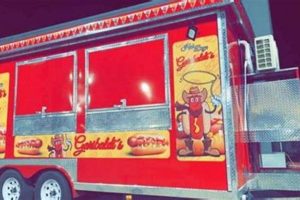
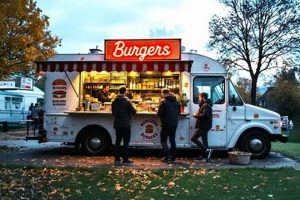
The operational structure of a mobile food service business can be categorized by its primary driver. In certain instances, the business’s strategic direction and operational decisions stem from the vehicle itself and its capabilities. These considerations often dictate menu offerings, service locations, and overall business model. For example, a vintage vehicle with limited cooking capacity may specialize in pre-prepared items or require a specific event permit to secure a suitable operating space.
This approach to business strategy allows for unique branding opportunities and can cater to niche markets that appreciate the distinct character of the mobile unit. The vehicle’s visual appeal and functionality contribute significantly to customer perception and brand recognition. Historically, this operational model has allowed entrepreneurs to enter the food service industry with lower initial investment compared to traditional brick-and-mortar establishments. Moreover, it facilitates adaptable business strategies based on event schedules, location demographics, and customer preferences.
The following discussion will explore various elements of this operational model, encompassing technological integrations, logistical planning, and effective marketing techniques to optimize the functionality and profitability of a mobile food service enterprise. Specifically, it will analyze the factors that contribute to success in a competitive market and identify emerging trends in the mobile food industry.
Strategic Guidance for Mobile Food Businesses
The subsequent recommendations are geared toward enhancing operational efficiency and profitability in mobile food service ventures. Adherence to these strategies facilitates streamlined processes and increased customer satisfaction.
Tip 1: Operational Capacity Assessment: Conduct a thorough analysis of the vehicle’s physical limitations. Understanding the spatial constraints and equipment capacity dictates menu diversification and inventory management. For example, a smaller vehicle may necessitate a curated menu featuring streamlined preparation processes.
Tip 2: Route Optimization and Location Analysis: Implement route planning strategies to minimize fuel consumption and maximize exposure at high-traffic locations. Analyze permit requirements for each desired operating location to ensure legal compliance and consistent service availability.
Tip 3: Menu Engineering for Efficiency: Design a menu that aligns with available equipment and preparation time. Minimize food waste by incorporating versatile ingredients that can be utilized across multiple menu items. Conduct regular menu performance analysis to identify and eliminate underperforming items.
Tip 4: Inventory Control and Supply Chain Management: Establish a robust inventory management system to prevent stockouts and minimize spoilage. Negotiate favorable pricing agreements with suppliers and explore opportunities for bulk purchasing to reduce overall food costs.
Tip 5: Technology Integration for Order Management: Implement a point-of-sale (POS) system that streamlines order processing, payment collection, and inventory tracking. Utilize online ordering platforms to expand customer reach and facilitate pre-ordering options.
Tip 6: Regulatory Compliance and Safety Protocols: Maintain strict adherence to all applicable health and safety regulations. Implement regular equipment maintenance schedules to prevent breakdowns and ensure consistent operational performance.
These guidelines underscore the importance of meticulous planning and resource allocation in the mobile food industry. By implementing these strategies, businesses can optimize operational efficiency, minimize costs, and enhance overall profitability.
The ensuing sections will delve into specific aspects of marketing strategies and customer engagement techniques tailored for mobile food service businesses.
1. Vehicle Core Strategy

The vehicle core strategy, within the context of a mobile food business, refers to the operational and strategic decisions that are fundamentally influenced by the characteristics and capabilities of the food truck itself. This approach prioritizes the inherent features of the vehicle, dictating aspects ranging from menu offerings to target market selection. It is intrinsic to the “food truck led” operational model.
- Equipment Configuration and Menu Adaptation
The installed equipment and its configuration within the truck directly influence the menu. Limited cooking surfaces, oven capacity, or specialized appliances necessitate a menu tailored to those constraints. For example, a truck equipped primarily with fryers might specialize in fried foods, while one with a wood-fired oven could focus on pizzas and baked goods. This dictates not only the product offerings but also the required skill set of the staff and the necessary supply chain.
- Spatial Constraints and Operational Workflow
The interior dimensions of the food truck impose limitations on the number of staff that can work comfortably and efficiently. The layout determines the workflow, impacting order processing speed and overall customer service. Compact spaces often require pre-preparation of ingredients and streamlined assembly processes. In contrast, larger vehicles may permit more elaborate food preparation techniques and expanded storage capacity.
- Mobility Limitations and Location Selection
The size, weight, and maneuverability of the vehicle impact its ability to access various locations. Steep inclines, narrow streets, or limited parking spaces can restrict potential operating sites. This influences the selection of events, festivals, and street corners where the truck can effectively operate. The vehicle’s fuel efficiency also contributes to location planning, factoring in travel costs and operational range.
- Aesthetic Design and Brand Identity
The visual appearance of the food truck serves as a critical element of the brand’s identity. The paint scheme, graphics, and overall design contribute to customer perception and brand recognition. A vintage-style truck might evoke nostalgia and attract customers seeking a particular type of experience, while a modern, sleek design could appeal to a different demographic. The vehicle’s aesthetic becomes an integral part of the marketing strategy, communicating the brand’s values and culinary focus.
These interwoven facets highlight how the vehicle’s characteristics become central to all strategic decisions within a “food truck led” enterprise. The mobile unit’s limitations and attributes are not merely constraints but rather shaping forces that define the business model and ultimately influence its success.
2. Menu constraints

Menu constraints, within the “food truck led” paradigm, are restrictions and limitations imposed on a mobile food business’s offerings due to the operational characteristics of the truck itself. These limitations shape the business model and impact customer experience.
- Equipment Limitations and Menu Diversity
The available cooking equipment within a food truck directly limits menu diversity. A truck with limited fryer capacity cannot effectively offer numerous fried items. Likewise, the absence of an oven restricts the menu’s baked good offerings. Menu planning becomes an exercise in optimizing available equipment for maximum culinary impact.
- Space Restrictions and Ingredient Versatility
Limited storage space within a food truck necessitates prioritizing versatile ingredients that can be used across multiple menu items. This approach minimizes waste and simplifies inventory management. Menus often feature items that utilize common base ingredients prepared in different ways to create distinct dishes. For example, a single protein source might be used in tacos, salads, and sandwiches.
- Preparation Time and Service Speed
The speed at which food can be prepared and served directly influences customer satisfaction and throughput. Complex dishes requiring extensive preparation are often impractical for a food truck environment, where speed and efficiency are paramount. Menus tend to favor items that can be assembled quickly, allowing for higher customer volume.
- Mobility and Ingredient Sourcing
The mobile nature of food trucks can impose challenges on ingredient sourcing. Maintaining a consistent supply of fresh, high-quality ingredients requires careful planning and coordination. Menus may be influenced by the availability of local produce or specialty items that can be readily accessed along the truck’s operational routes.
These interconnected factors underscore the inherent relationship between the physical limitations of the food truck and the composition of its menu. Successful “food truck led” businesses recognize these constraints and strategically design menus that maximize efficiency, minimize waste, and cater to customer preferences within the boundaries of their mobile environment.
3. Limited mobility

The inherent characteristic of restricted maneuverability significantly defines the operational parameters of a “food truck led” business. This limitation necessitates strategic planning across multiple facets of the enterprise, from site selection to logistical considerations.
- Restricted Geographic Reach and Location Dependency
The physical dimensions and operational requirements of a food truck inherently limit its ability to access certain locations. Factors such as street width, turning radius, and parking availability constrain potential service areas. A “food truck led” operation must carefully evaluate these limitations when selecting service locations, prioritizing accessibility and visibility within its restricted geographic reach. Example: Historic districts or pedestrian-only zones may be inaccessible, necessitating alternative site selection.
- Infrastructure Dependency and Utility Access
Food trucks often require access to external infrastructure, such as power sources, water hookups, and waste disposal facilities. Limited mobility dictates a reliance on locations that can provide these essential utilities. The availability of these resources influences the operational capacity and menu offerings of the truck. Example: Insufficient power supply restricts the use of high-energy appliances, impacting food preparation capabilities.
- Logistical Constraints and Supply Chain Management
Limited cargo space and infrequent restocking opportunities necessitate efficient supply chain management. The restricted mobility of the food truck impacts the frequency and volume of deliveries. Inventory planning must account for these constraints, balancing the need for variety with the limitations of storage capacity. Example: Perishable items require careful monitoring and frequent replenishment to avoid spoilage and ensure product quality.
- Weather Dependency and Seasonal Operations
Adverse weather conditions can significantly impact the operational viability of a food truck. Limited mobility restricts the ability to relocate to sheltered areas during inclement weather. Seasonal variations in customer traffic and environmental conditions also influence operational schedules. Example: Outdoor events may be canceled due to rain, resulting in lost revenue and potential food waste. A “food truck led” operation needs to strategize for seasonality and climate’s challenges.
These constraints inherent in “limited mobility” serve as pivotal determinants in shaping the operational model of any food truck enterprise. Successful ventures recognize and proactively address these challenges through meticulous planning and adaptive strategies, ensuring both operational efficiency and customer satisfaction within the boundaries of their mobile environment. Additional strategies to overcome limited mobility include partnerships with local businesses to use their spaces for access to resources, and scheduling events around road accessibility.
4. Event driven

The operational tempo of a “food truck led” business is often dictated by scheduled events. This dependency shapes many aspects of the enterprise, from inventory management to staffing requirements. The success of a mobile food vendor frequently hinges on its ability to secure profitable placements at festivals, concerts, sporting events, and private gatherings. Event attendance directly correlates with revenue generation, creating a cyclical relationship: strategic event selection drives profitability, which in turn sustains the business.
A practical example of this connection is evident in the case of food trucks specializing in seasonal cuisine. A truck offering pumpkin spice-themed items, for instance, will prioritize placements at autumn festivals and community events. Similarly, a truck serving cold beverages will target summer concerts and outdoor gatherings. Securing permits and navigating event logistics become critical components of the business strategy. The ability to anticipate event schedules and adapt menus to suit specific audiences is paramount to maximizing revenue potential. Furthermore, marketing efforts are often concentrated around upcoming events, leveraging social media and local advertising to drive customer awareness.
In conclusion, the “event driven” nature of many “food truck led” businesses underscores the importance of strategic event planning and logistical preparedness. The inherent challenges, such as competition for prime locations and fluctuating attendance, necessitate a proactive approach to event selection and marketing. Ultimately, the ability to capitalize on event opportunities is a key determinant of success in this segment of the mobile food industry. The challenges involved must be accounted for in operational strategies.
5. Brand embodiment

In the “food truck led” model, the physical vehicle transcends its functional role as a mobile kitchen; it becomes a tangible representation of the brand itself. This phenomenon, referred to as brand embodiment, dictates that every aspect of the truck, from its exterior design to its interior layout and the staff’s attire, actively communicates the brand’s identity and values. The vehicle is not merely a means of delivering food; it is a mobile billboard and a physical manifestation of the brand promise. For instance, a truck specializing in organic, locally sourced cuisine might feature a rustic, wood-paneled exterior and staff wearing eco-friendly uniforms, reinforcing its commitment to sustainability.
The importance of brand embodiment in a “food truck led” operation stems from the limited opportunities for traditional marketing. Unlike brick-and-mortar restaurants, food trucks often rely on visual appeal and word-of-mouth to attract customers. The vehicle’s aesthetic becomes a primary marketing tool, conveying the brand’s personality and culinary focus at a glance. Consider the case of “The Grilled Cheese Truck,” whose iconic melting cheese logo and vibrant yellow exterior have become synonymous with gourmet grilled cheese. The truck’s design is instantly recognizable and effectively communicates its core product offering, generating brand awareness and attracting customers at events and street locations.
Effective brand embodiment in a “food truck led” business requires a holistic approach, integrating every element of the vehicle’s design and operation. This includes careful consideration of color schemes, typography, and imagery, as well as the selection of equipment and utensils. Consistency is paramount; every detail must align with the brand’s overall message. In conclusion, the vehicle operates as more than just the method of providing a service and becomes a vital element of the company’s presentation, which requires planning. By embracing the concept of brand embodiment, mobile food vendors can create a memorable and compelling brand experience, fostering customer loyalty and driving business growth in a competitive market.
Frequently Asked Questions
This section addresses common inquiries regarding the operational model where the characteristics of the mobile food unit primarily dictate business strategy. These questions aim to clarify the nuances and complexities associated with “food truck led” enterprises.
Question 1: What distinguishes a “food truck led” business from other mobile food operations?
The distinguishing factor lies in the degree to which the food truck’s inherent attributes influence strategic decision-making. In a “food truck led” model, the vehicle’s limitations and capabilities are central to menu design, location selection, and overall brand identity. Other mobile food operations may prioritize market demand or culinary innovation over the vehicle’s specific characteristics.
Question 2: How do menu constraints impact the profitability of a “food truck led” business?
Menu constraints can influence profitability both positively and negatively. Limited equipment and storage capacity may restrict menu diversity, potentially impacting customer appeal. However, a streamlined menu can also reduce food waste, simplify inventory management, and accelerate service times, ultimately enhancing profitability through efficiency.
Question 3: What strategies can be employed to overcome the limitations of mobility in a “food truck led” operation?
Several strategies can mitigate the challenges posed by limited mobility. These include meticulous route planning, securing permits for strategic locations, establishing partnerships with local businesses for utility access, and implementing weather-contingency plans to minimize disruptions due to inclement conditions.
Question 4: How does the “event driven” nature of many “food truck led” businesses impact revenue stability?
Reliance on scheduled events can create revenue volatility. Event cancellations or low attendance can significantly impact earnings. To mitigate this risk, businesses should diversify their event portfolio, cultivate relationships with event organizers, and explore alternative revenue streams, such as catering services or partnerships with local businesses.
Question 5: What are the key elements of effective brand embodiment in a “food truck led” model?
Effective brand embodiment requires a holistic approach that integrates every aspect of the vehicle’s design and operation. This includes careful consideration of color schemes, typography, imagery, staff attire, and menu presentation. Consistency is paramount; every detail must align with the brand’s overall message and values.
Question 6: How does technology integration enhance the efficiency of a “food truck led” enterprise?
Technology can streamline various operational aspects, from order processing to inventory management. Point-of-sale (POS) systems facilitate efficient order taking and payment collection, while online ordering platforms expand customer reach. Inventory tracking software helps minimize waste and optimize purchasing decisions. These technological integrations contribute to enhanced efficiency and profitability.
In summary, understanding the nuances of the “food truck led” operational model is crucial for achieving sustainable success. By addressing the challenges and leveraging the opportunities presented by this approach, mobile food businesses can thrive in a competitive market.
The following section will provide case studies illustrating the principles discussed in this article.
Conclusion
The preceding exploration of “food truck led” operations reveals a business model where the mobile unit’s intrinsic properties exert considerable influence over strategic decisions. Factors such as vehicle size, equipment configuration, and mobility limitations directly impact menu offerings, location selection, and brand presentation. Successful implementation of this model necessitates a comprehensive understanding of these constraints and a proactive approach to mitigating associated challenges.
The long-term viability of “food truck led” enterprises hinges on adaptability and innovation. Continued assessment of operational efficiency, strategic deployment of technology, and a sustained commitment to brand integrity remain crucial for navigating the evolving landscape of the mobile food industry. Further research into emerging technologies and evolving consumer preferences will undoubtedly inform future iterations of this dynamic business model.